[Asia Economy Reporter Jeong Hyunjin] As the spread of the novel coronavirus infection (COVID-19) prolongs and employment insecurity grows, an analysis suggests that the impact of COVID-19 on employment and the responses will differ depending on the labor market flexibility in countries such as the United States, Europe, and South Korea. The higher the flexibility, the greater the risk of unemployment during a crisis, but the faster the recovery once the crisis ends.
On the 29th (local time), Bloomberg reported that there is a debate about which social model is better for the labor markets of the United States and Europe during the COVID-19 crisis. The flexible labor market in the U.S. and the relatively more rigid European labor market show differences in the impact caused by COVID-19.
JPMorgan forecasted that the U.S. unemployment rate will rise from 3.5% in the first quarter of this year to 8.3% in the second quarter. During the same period, Europe is expected to increase from 7.7% to 8.4%. The U.S. unemployment rate more than doubled, showing a faster rise than Europe. Bruce Kasman, JPMorgan’s chief economist, said, "Due to differences such as short-term job programs and subsidies related to temporary layoffs, a larger increase in unemployment is expected in the U.S."
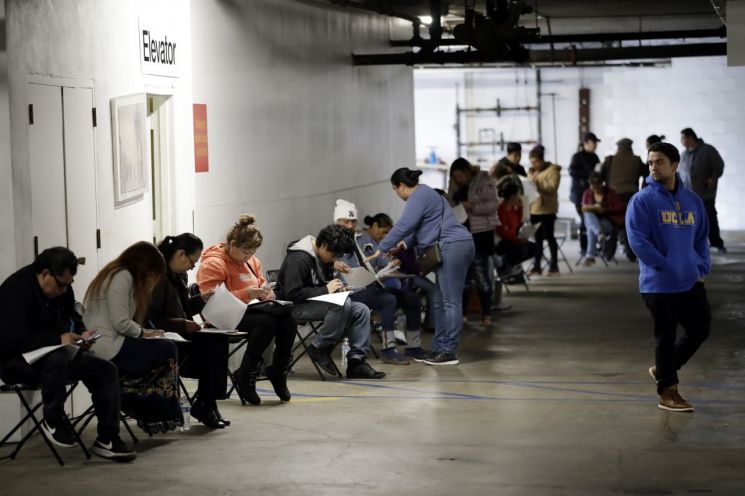
This phenomenon was confirmed by the sharp increase in new unemployment benefit claims announced by the U.S. Department of Labor on the 26th. The number of unemployment benefit claims for the third week of this month (15th?21st) was recorded at 3.283 million, far surpassing the previous record of 695,000 set during the second oil shock in 1982, marking an all-time high. Catherine Mann, Citigroup’s chief economist, pointed out, "The starting points of the two systems are very different," adding, "Europe has a better social safety net to support people, while the U.S. needs more support for individuals and businesses."
Bloomberg also reported that South Korea and Japan have somewhat more rigid labor market structures compared to the U.S., making them more resilient to the COVID-19 crisis. Bloomberg stated, "Although less than before, the corporate culture characteristic of 'lifetime employment' still remains in these two countries (South Korea and Japan)," and evaluated that "during the 2008?2009 global financial crisis, the unemployment rates in these two countries were lower than in the U.S. or Europe, which helped lay the foundation for economic recovery."
Bloomberg analyzed that due to the difficulty of layoffs, companies are more likely to choose wage cuts rather than eliminating jobs. Justin Jimenez, a Bloomberg economist, said, "Low unemployment rates can be a factor that helps faster economic recovery," and added, "The structural rigidity of labor markets in countries like South Korea and Japan has kept unemployment increases at a relatively manageable level during crises."
These structural differences in labor markets also influence government COVID-19 measures. In the U.S., where temporary layoffs have surged due to COVID-19, the approach was to provide individuals with $1,200 each. This was to ensure that individuals who lost their jobs could survive. On the other hand, in Europe, where social dismissal requirements are strict, policies supporting companies to maintain jobs despite the COVID-19 crisis were introduced in abundance.
Jacob Funk Kirkegaard, senior fellow at the Peterson Institute for International Economics, predicted that if COVID-19 ends within three months, the European labor market will be able to withstand the impact. He forecasted that if the crisis lasts more than three months, even European-style subsidy policies will struggle to maintain corporate cash flow, leading to a rapid wave of temporary layoffs.
However, many forecasts suggest that the more flexible U.S. will recover quickly after the COVID-19 crisis. JPMorgan expects the U.S. unemployment rate to fall from 8.3% in the second quarter to 6.0% by the first quarter of next year, while Europe is expected to maintain 8.4% from the second quarter through the first quarter of next year. Chief economist Mann predicted, "The U.S. will experience a sharp economic downturn in the second quarter and fall deeply, but it will also recover faster."
© The Asia Business Daily(www.asiae.co.kr). All rights reserved.

















