Gold Fund Returns Also on the Rise Trend
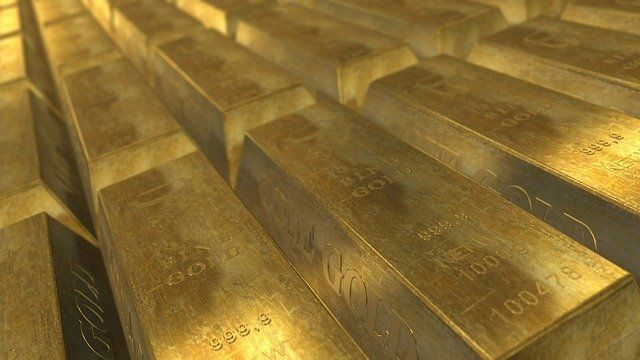
[Asia Economy Reporter Kum Boryeong] Although the price of gold, a representative safe-haven asset, plummeted due to the novel coronavirus infection (COVID-19) pandemic, it is gradually stabilizing.
On the 26th (local time), the international gold price recorded $1,651.20 per troy ounce on the New York Commodity Exchange (COMEX). Compared to the drop to $1,485.90 on the 16th amid the spread of COVID-19, it has risen by 10% in just 10 days.
As the gold price recovers, gold funds have also started to generate profits again. According to fund rating agency FnGuide, the one-day average return of 12 gold funds with assets under management exceeding 1 billion KRW is 7.36% as of the previous day. Although the one-month return is still negative at -9.01%, the one-week return shows an upward trend at 5.65%.
The gold price fell sharply for several days due to the impact of COVID-19. With a retreat in safe-haven preference, the international gold price, which was in the high $1,600s per troy ounce, dropped by 3-4% in a single day during the second and third weeks of this month. The decline in oil prices was also a cause. The sharp drop in oil prices raised concerns about profit decreases and liquidity crunches among U.S. energy-related companies, leading to dollar liquidity issues. Hwang Byungjin, a researcher at NH Investment & Securities, explained, "In the fear of a global economic recession caused by COVID-19, indiscriminate sell-offs occurred not only in risky assets such as stocks and commodities but also in safe assets like bonds and gold."
It is analyzed that the strong economic stimulus measures announced by major countries worldwide are factors behind the rebound in gold prices. In the U.S., the Federal Reserve (Fed) announced unlimited quantitative easing, and a $2 trillion fiscal stimulus package passed Congress. The European Union (EU) decided to establish a 25 billion euro fund, and in Asia, countries such as Korea, China, and Japan also introduced economic stimulus measures.
Park Kwangrae, a researcher at Shinhan Financial Investment, said, "Economic stimulus measures implemented globally are likely to lead to a decline in real interest rates and an increase in money supply. Gold prices show a negative correlation with real interest rates and a positive correlation with global money supply," adding, "Since gold demand is more weighted toward jewelry and investment rather than industrial use, concerns about price declines due to demand reduction are less than for other commodities."
© The Asia Business Daily(www.asiae.co.kr). All rights reserved.
![User Who Sold Erroneously Deposited Bitcoins to Repay Debt and Fund Entertainment... What Did the Supreme Court Decide in 2021? [Legal Issue Check]](https://cwcontent.asiae.co.kr/asiaresize/183/2026020910431234020_1770601391.png)
















