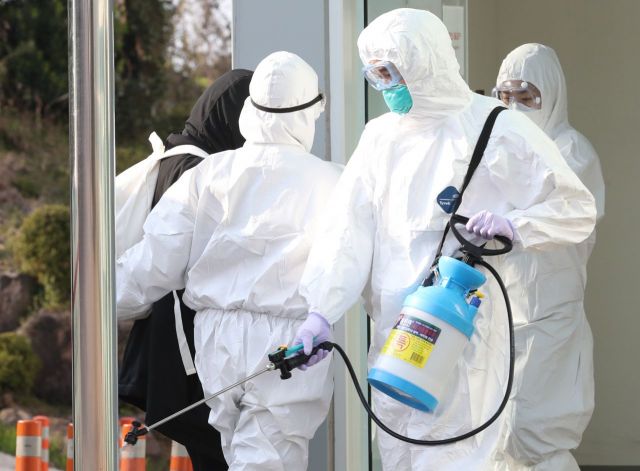
[Asia Economy Reporters Choi Dae-yeol and Kim Heung-soon] The local community in Jeju was shocked after a Korean international student who had returned from the United States was diagnosed with COVID-19 following a family trip to Jeju Island immediately after returning home. As the proportion of imported cases among new domestic infections continues to rise, voices criticizing the 'deviant' behavior of some inbound travelers are growing louder, as cases emerge where domestic and foreign nationals entering from COVID-19 epidemic countries ignore government and health authorities' requests to 'refrain from going out' and test positive.
Returned from US Study, Stayed 4 Nights 5 Days Visiting 20 Places
38 Contacts Identified...Strong Criticism
Governor: "Will Track Legal Responsibility and Take Firm Measures"
According to Jeju Province on the 26th, a 19-year-old woman who tested positive for COVID-19 in Gangnam-gu, Seoul, her place of residence, the day before, traveled to Jeju with three others including her mother for a 4-night, 5-day trip starting on the 20th. The province confirmed through the patient's statements, CCTV footage, and card usage message records that the group visited a total of 20 locations in Jeju. They used the airport, restaurants, accommodation, theme parks, seafood direct sales markets, convenience stores, cafes, and boats, and it was confirmed that they did not wear masks when visiting resort facilities and nearby marts. So far, 38 contacts have been identified. All contacts have been instructed to self-quarantine.
The patient, an international student at a university in the Boston area, returned home on the 15th after a school closure order was issued. She reported muscle pain and sore throat symptoms to the health center starting on the afternoon of the 20th. Despite showing suspicious symptoms, she proceeded with the Jeju trip. Although it is difficult to hold her accountable for traveling to Jeju before the government mandated mandatory self-quarantine for arrivals from the US starting at midnight on the 27th, there are concerns about her inappropriate response since health authorities had urged arrivals to stay at their residence for two weeks after returning.
Jeju Governor Won Hee-ryong criticized at a briefing that day, saying, "Traveling to Jeju without following the government's recommendation to self-quarantine for 14 days is a serious moral hazard and the worst case," adding, "The anger of the residents is great." He emphasized, "Jeju is not a refuge," and stated, "We will thoroughly track any legal responsibility for visitors who do not follow quarantine guidelines and take firm measures."
57 New Imported Cases...Continuing Increase
Emergency ManagementLocal Governments Strengthen Self-Quarantine and Testing Standards
Not only Korean nationals but also foreigners residing in Korea who traveled abroad and then used public transportation, restaurants, and marts before testing positive have been reported. One such case was a 35-year-old male (Polish) confirmed positive in Yongsan-gu, Seoul, on the 12th. He returned on the 10th, took the subway home, and visited local marts, convenience stores, restaurants, hospitals, and banks before testing positive two days later.
Although the government and health authorities decided to strengthen quarantine by focusing on self-quarantine and diagnostic testing for arrivals from Europe and the US, cases have also emerged among arrivals from other countries, prompting some local governments to establish their own management systems. Daegu City raised its standards above government guidelines by requiring all arrivals to self-quarantine and undergo diagnostic testing within three days, and only lifting quarantine after a negative retest at the end of the two-week self-quarantine period.
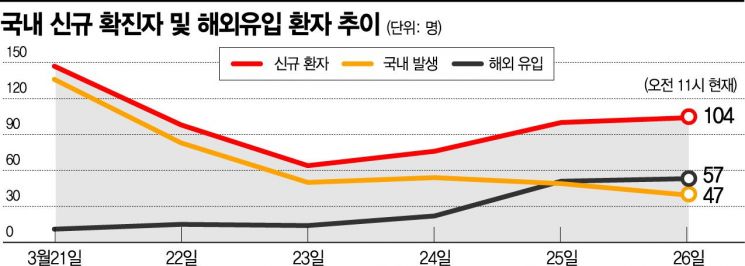
Meanwhile, as of midnight that day, 104 new domestic cases were reported, bringing the total to 9,241. Among these, 57 were imported cases identified through airport quarantine and local government investigations, the highest number.
© The Asia Business Daily(www.asiae.co.kr). All rights reserved.


















