Strengthening Fresh Food to Rediscover the True Identity of the Mart
Specialty Vegetable Zone and Experiential Seafood Corner Gain Popularity
Optimizing Product Composition Using AI
[Asia Economy Reporter Lim Hye-seon] "To overcome a crisis, we must find our fundamental core competitiveness."
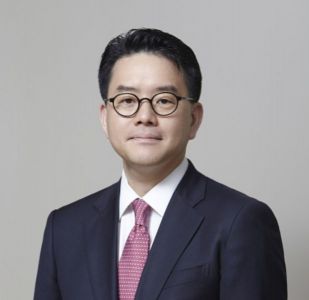
At the beginning of this year, Chung Yong-jin, Vice Chairman of Shinsegae Group, gave this directive to Kang Hee-seok, CEO of Emart (pictured). Having consulted for Emart since 2009 and shared Vice Chairman Chung’s concerns, CEO Kang immediately formulated a strategy. The retail market has become increasingly competitive over time, and with the added impact of the COVID-19 pandemic, Emart faced an existential crisis.
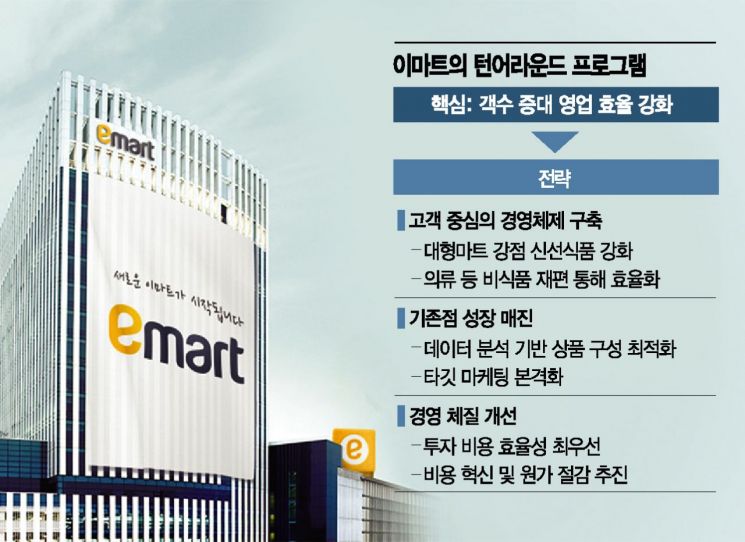
◆ Kang Hee-seok’s 'TA Strategy'= According to the retail industry on the 26th, CEO Kang has defined the business and established a 'Turnaround (TA) Strategy' to strengthen the 'essence of the business' as one of the essential conditions for Emart to survive the competition. The core of the turnaround program is 'increasing customer traffic' and 'enhancing operational efficiency.' Through about 20 different items, the strategy identifies key structural changes and improvement tasks across the company and continuously pursues them to maximize results. Currently, Emart is focusing on increasing execution by having CEO Kang personally review each item of the TA strategy. The investment of a total of 160 billion KRW in store renovations is also part of this effort.
The CEO has aligned Emart’s growth engine with 'strengthening grocery (fresh food).' Emart is expanding fresh food, a strength of large marts, while boldly restructuring non-food items such as clothing to improve efficiency. Unlike the past when the focus was on higher-margin non-food items instead of fresh food, Emart aims to return to the original image of a large mart.
◆ Reborn as a Grocery Department Store= Emart is expanding the variety of fruits and vegetables to broaden customer choices. At Emart, the number of tomato varieties, a seasonal fruit, has increased to 11. It is also a success that domestic farms growing overseas varieties like Honey Tomato and Apple Tomato were found. These two crops, each grown in only one location in Hwaseong and Sangju respectively, can be purchased through Emart. Previously, Emart proved that increasing the variety of strawberries sold could boost sales. By securing various domestic strawberry varieties and creating a separate 'Strawberry Zone,' total strawberry sales from December 1 last year to January 29 this year increased by 5% compared to the same period last year. Premium strawberry sales especially rose by 21.1%.
The 'specialty vegetable' corner selling exotic vegetables is also expanding. Starting with improvements to the 'Specialty Vegetable Zone' in 12 representative stores in the Seoul metropolitan area such as Seongsu and Wangsimni branches, Emart plans to introduce specialty vegetable corners in about 30 stores this year. Typical Emart stores sell 20 to 30 types of exotic vegetables focusing on well-known specialty vegetables like celery, kohlrabi, and asparagus. Stores with newly renovated specialty vegetable zones sell about 50 types of exotic vegetables including various herbs, fennel, shallots, and endive. From January to February, sales of specialty vegetables in these 12 stores increased by 31.7% year-on-year. The sales growth rate of assorted leafy vegetables including fennel, shallots, and aloe vera reached 153.6%.
◆ Experiential Seafood Corner Gains Popularity= Efforts to reorganize stores from the customer’s perspective are also accelerating. After remodeling in January this year, the seafood corner at Emart Wolgye branch saw a 10% increase in sales after being transformed into an experiential store. Emart introduced new fixtures and display methods to create the atmosphere of a seaside fishing village or traditional market in the seafood corner. The strategy is to delight customers’ eyes by providing not only simple product purchases but also a sense of place and vividness of seafood production areas.
Along with this, Emart is enhancing personalization and sales accuracy through targeted marketing. Stores are reorganized according to customer demands, and product composition is optimized based on data analysis using artificial intelligence (AI) and big data. CEO Kang is also working on improving management structure for future food investments. Business feasibility is reviewed with priority on investment and cost efficiency, and cost innovation and cost reduction are promoted from a mid- to long-term perspective to fundamentally improve management structure and strengthen operational efficiency.
An Emart official explained, "The turnaround program is a mid- to long-term plan, and the goal is to create a unique system for Emart that builds solid competitiveness resilient to external environments."
© The Asia Business Daily(www.asiae.co.kr). All rights reserved.


















