Measures Unseen Even During the Foreign Exchange and Financial Crises
Unlimited Liquidity Supply to Financial Institutions
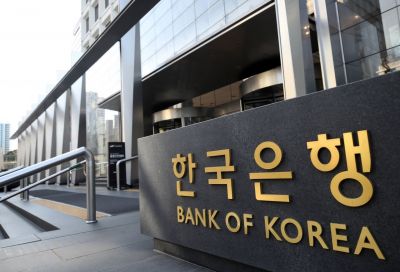
[Asia Economy Reporters Eunbyeol Kim and Sehee Jang] The Bank of Korea (BOK) has finally unveiled the 'unlimited money supply' card. This move aims to mitigate the real and financial shocks caused by the novel coronavirus disease (COVID-19) by leveraging the BOK's note-issuing power to inject liquidity. Although the funds are supplied indirectly through financial institutions, the fact that liquidity will be provided regularly every week without limits means this can be seen as quantitative easing. This is the first time in history that the BOK has decided to supply unlimited liquidity, a measure never taken even during past foreign exchange or financial crises. The background for the BOK's decision to utilize its note-issuing power also includes the U.S. Federal Reserve's declaration of 'unlimited quantitative easing' and the limitations of support that commercial banks and policy financial institutions can provide.
On the morning of the 26th, the BOK held a Monetary Policy Board meeting and approved amendments to the 'Bank of Korea's Open Market Operation Regulations and Financial Institution Loan Regulations,' focusing on unlimited repurchase agreement (RP) purchases and the expansion of eligible institutions and securities for open market operations. Traditionally, the BOK conducted RP purchases as needed through resolutions by the Monetary Policy Board, but from now on, it will open RP purchase windows weekly and supply unlimited funds to financial institutions requiring liquidity. The interest rate ceiling is set at 0.85%, which is 0.1 percentage points above the base rate (annual 0.75%). The bidding method will allocate the full amount requested without any limit. The bid rate will be announced separately for each auction. A BOK official stated, "After July, we will decide whether to extend the measures based on market conditions and auction results."
The BOK will also expand the eligible institutions for borrowing money through open market operations. Eleven securities companies will be added to the list of eligible institutions, increasing the number of non-bank institutions eligible for RP transactions from the current five to sixteen. This means securities companies that previously found it difficult to borrow from the BOK will now be able to do so. The eligible securities will also be expanded to include eight special bonds issued by public institutions. Bonds issued by Korea Electric Power Corporation, Korea Expressway Corporation, Korea Gas Corporation, Korea Land and Housing Corporation, Korea Railroad Corporation, Korea Rail Network Authority, Korea Water Resources Corporation, and Small and Medium Business Corporation will be added. The expansion of eligible securities that can be used as collateral when borrowing means there are now more ways to borrow funds.
The BOK's measures will further strengthen the government's 'Livelihood and Financial Stability Package Program' worth over 100 trillion won. To create a support program exceeding 100 trillion won, contributions from financial institutions are essential, but many financial institutions have been reluctant to support due to concerns about profitability deterioration amid the COVID-19 crisis and low interest rate environment. A BOK official said, "We have decided to supply unlimited liquidity to meet all liquidity demands so that the government can operate the 'Livelihood and Financial Stability Package Program' in a timely manner." A Ministry of Economy and Finance official also commented, "If the central bank actively plays a role by implementing policy responses never before seen even during the foreign exchange crisis, it will greatly help stabilize the financial market," adding, "The effect of policy coordination will be even greater."
However, it remains to be seen how private financial institutions will evaluate the conditions and volume of RP purchases proposed by the BOK. Another future challenge is how banks that receive unlimited liquidity will efficiently channel funds into the real economy.
Meanwhile, on the same day, the BOK and financial authorities announced measures to secure foreign currency liquidity for financial institutions. The foreign currency liquidity coverage ratio (LCR) will be lowered from the current 80% to 70%, and to reduce overseas borrowing costs for financial companies, the foreign currency soundness charge will be waived for the next three months. This is intended to facilitate domestic foreign currency liquidity supply amid ongoing instability in international financial markets and a heightened preference for the dollar due to COVID-19. Kim Yong-beom, First Vice Minister of Economy and Finance, stated, "We will temporarily apply a 70% foreign currency liquidity coverage ratio regulation to domestic banks for three months until the end of May, enabling banks to respond proactively and flexibly to foreign currency liquidity supply and ensuring smooth support for trade finance."
The government also decided to exclude financial companies from the foreign currency soundness charge for the next three months. For charges confirmed last year and scheduled for collection this year, payment deferrals will be allowed through expanded installment payments. The temporary exemption of the foreign currency soundness charge reduces the cost of borrowing foreign currency for financial institutions such as banks, securities firms, insurance companies, and card companies. Previously, the government had also decided to expand banks' forward foreign exchange position limits by 25% to prevent difficulties in foreign currency procurement for companies and financial institutions.
© The Asia Business Daily(www.asiae.co.kr). All rights reserved.

















