"Significant Differences in Industry Impact... Focused Support on Affected Sectors Rather Than Universal Aid"
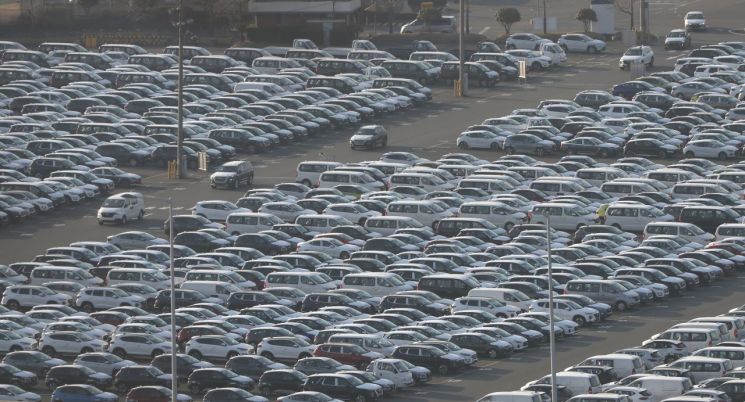 On the 18th, completed vehicles are waiting in the yard of Hyundai Motor Company's Ulsan plant. (Photo by Yonhap News)
[Asia Economy Reporter Moon Chae-seok] As the damage caused by the novel coronavirus infection (COVID-19) varies significantly by industry, an analysis has emerged suggesting the need for tailored support by sector and class rather than a universal disaster basic income.
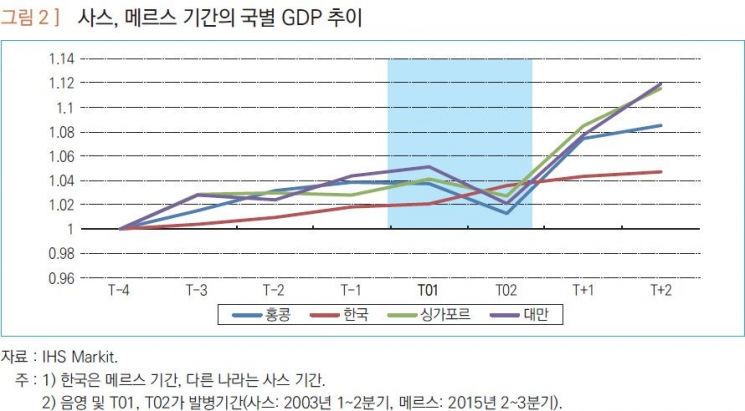
On the 22nd, the Korea Institute for Industrial Economics and Trade stated this in its report titled "The Impact of Epidemic Infectious Diseases on the Economy and Industry." It compared and analyzed the economic damage caused by COVID-19 with past cases such as Severe Acute Respiratory Syndrome (SARS) and Middle East Respiratory Syndrome (MERS).
Common points of SARS and MERS included ▲damage being limited to the short term and ▲damage being concentrated in certain service sectors such as food and accommodation.
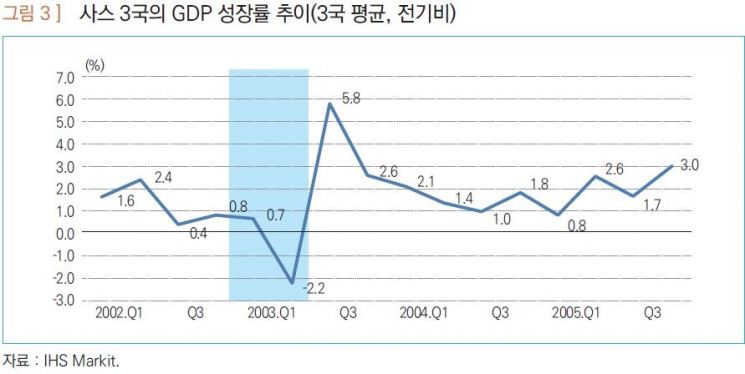
In Hong Kong, which suffered significant damage from SARS, the gross domestic product (GDP) growth rate fell by 2.4 percentage points during the second quarter but recovered quickly thereafter.
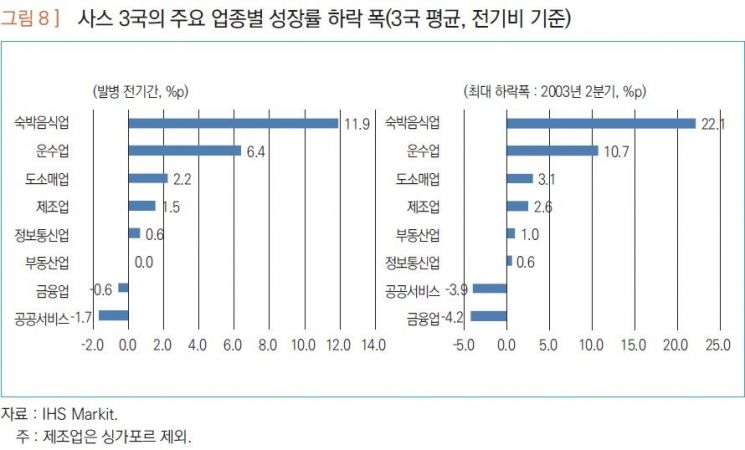
Even the "SARS three countries"?Hong Kong, Singapore, and Taiwan?that were directly hit by SARS saw most industries except accommodation and food services, which experienced a quarterly growth rate drop of over 20 percentage points, avoid visible damage.
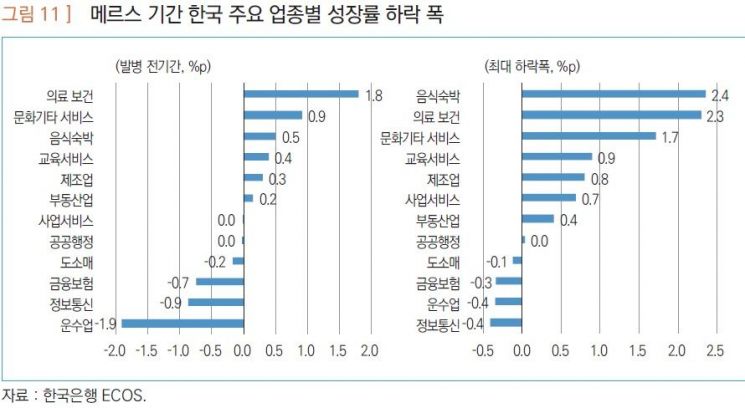
In South Korea, which was affected by MERS, service sectors such as food and accommodation experienced some slowdown, but manufacturing suffered less internal damage.
However, it is difficult to predict whether COVID-19 will follow the pattern of "short-term shock followed by rapid recovery" seen in SARS and MERS cases.
On the contrary, since COVID-19 has spread globally, it is highly likely to have a significant negative impact on exports and manufacturing. The range of affected industries is also expected to be broader than during SARS and MERS.
It is highly probable that service sectors such as food, accommodation, tourism, and leisure will be the most severely affected industries, similar to SARS and MERS.
The Korea Institute for Industrial Economics and Trade recommends prioritizing resource allocation efforts to suppress the spread of the disease.
It calls for mobilizing resource allocation methods comparable to a wartime economic system within the scope manageable by the government's administrative capacity. However, it emphasizes the need to seek a division of roles with the market to achieve this.
To support the real economy, it is necessary to ▲stimulate aggregate demand to prevent transition into a recession ▲provide liquidity support to affected businesses and self-employed individuals ▲offer livelihood support to workers in affected industries and vulnerable groups.
Kang Doo-yong, senior research fellow at the Korea Institute for Industrial Economics and Trade, said, "Considering the nature of the COVID-19 shock, there is a high possibility of significant variation in the degree of damage across industries and sectors," adding, "Rather than universal support like the disaster basic income recently discussed, it seems more appropriate to focus support on major affected industries and groups."
© The Asia Business Daily(www.asiae.co.kr). All rights reserved.
![User Who Sold Erroneously Deposited Bitcoins to Repay Debt and Fund Entertainment... What Did the Supreme Court Decide in 2021? [Legal Issue Check]](https://cwcontent.asiae.co.kr/asiaresize/183/2026020910431234020_1770601391.png)

















