[Monthly Aviation Editor-in-Chief Kim Jae-han]Amid this year’s defense budget reaching a record high of 50 trillion won, the most notable area is the aviation projects. This is because aviation projects account for the largest portion, 6.3804 trillion won, out of the 16.6915 trillion won allocated for defense capability enhancement. This amount is more than twice the size of the second-largest segment, the naval shipbuilding projects. This indicates the presence of many significant projects. In particular, this year, these major aviation projects are expected to face important decision-making points, which is a key point to watch.
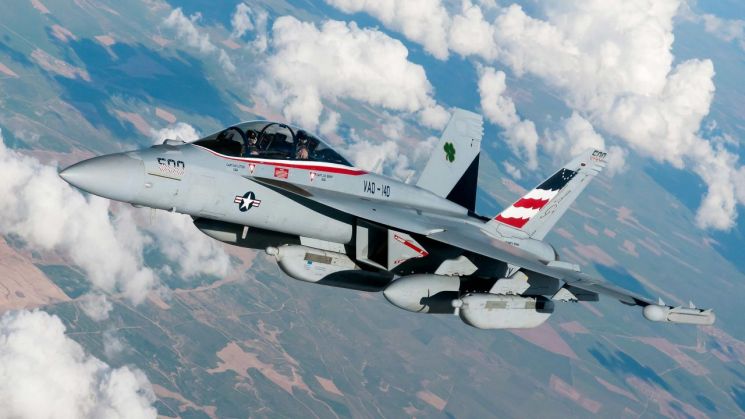
The Air Force’s first electronic warfare aircraft acquisition project is expected to have its project implementation strategy decided this year. Electronic warfare aircraft are, as the name suggests, aircraft capable of disrupting enemy radio wave usage to neutralize radar, communication networks, and more. The EA-18G Growler, currently operated by the U.S. Navy, is a representative example of an electronic warfare aircraft. The electronic warfare aircraft project involves acquiring four such aircraft, and the Defense Acquisition Program Administration conducted preliminary research through the Defense Technology Quality Institute last year and is expected to decide on the project implementation strategy this year.
According to industry insiders, the electronic warfare aircraft acquisition project is already heavily weighted toward domestic research and development following the preliminary research recommendations. Of the total project cost, known to be about 2 trillion won, approximately 500 billion won will be spent on developing electronic warfare equipment, and the remaining approximately 1.5 trillion won will be used for airframe procurement and other expenses.
Regarding the platform, both business jets and large transport aircraft have been mentioned, with the Air Force and the Agency for Defense Development showing differing positions. The Air Force prefers the faster business jets, whereas the Agency for Defense Development is known to favor transport aircraft like the C-130, which offer spacious interiors that facilitate equipment integration and expansion.
For example, the U.S. Air Force’s EC-130H Compass Call is a representative transport-based electronic warfare aircraft. The EC-130H, operated with 14 units until recently, began service in 1981 and has carried out nearly continuous missions in conflicts such as Afghanistan, Iraq, and Syria. However, as the airframes aged, the U.S. Air Force signed a contract in September 2017 to remove major electronic warfare equipment from the EC-130H and install it on the EC-37B, which is based on the G550 business jet.
Meanwhile, if the project implementation strategy proceeds with domestic research and development, it is expected that the Agency for Defense Development will develop the electronic warfare equipment, and domestic companies will perform system integration on the selected platform. In this context, competition among companies such as KAI and Korean Air to secure system integration contracts is also a noteworthy point to watch.
© The Asia Business Daily(www.asiae.co.kr). All rights reserved.

















