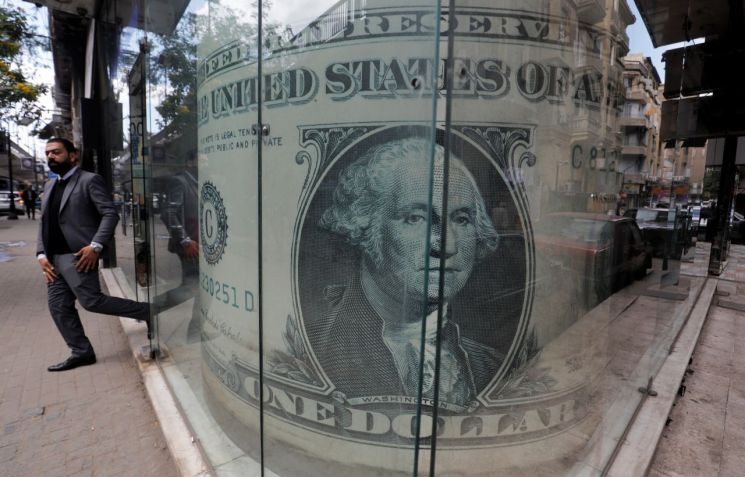
[Asia Economy Reporter Jeong Hyunjin] Emerging countries are struggling as funds flock to the dollar amid the spread of the novel coronavirus infection (COVID-19). Although it is necessary to lower the benchmark interest rate to stimulate the economy due to the clear economic downturn caused by COVID-19, these countries are caught in a 'dilemma' as the value of their currencies plummets to record lows daily due to foreign capital outflows.
According to Bloomberg and others on the 18th (local time), the Indonesian rupiah exchange rate surpassed 15,000 rupiah per dollar for the first time this month, and the Mexican peso closed at 23.93 pesos per dollar, marking an all-time high closing rate. The Brazilian real also exceeded 5 reals for the first time in history and surged to 5.2 reals on the same day. Normally, when the U.S. Federal Reserve (Fed) cuts interest rates, the dollar value falls, but due to heightened COVID-19 concerns, foreign investors are withdrawing funds en masse from emerging markets, causing significant volatility in emerging market currencies.
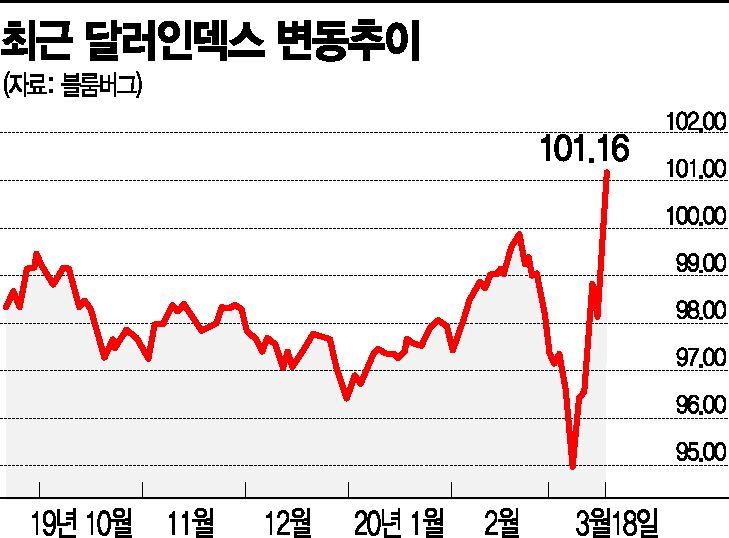
The dollar index, which represents the value of the dollar against major currencies, has been rising daily, surpassing 100. This is the result of investors flocking to cash dollars amid the full-scale spread of COVID-19 in Europe and the United States.
The problem is that emerging market central banks have no choice but to push for interest rate cuts amid the ongoing chain reaction of global stock market crashes caused by COVID-19. This is because the recent drop in oil prices is expected to sustain a low inflation environment, and the prolonged COVID-19 situation has increased the need for preemptive measures against economic slowdown.
For now, emerging market central banks are following the Fed in cutting interest rates. The Brazilian central bank lowered its benchmark interest rate by 0.5 percentage points from 4.25% to 3.75% at the monetary policy committee's regular meeting held that day, marking the lowest level since the introduction of the benchmark rate in 1996. The Turkish central bank had already made an emergency rate cut the day before, and South Korea, Chile, Vietnam, Sri Lanka, and Pakistan have also lowered rates. South Africa and Indonesia are expected to cut their benchmark rates soon.
However, whether interest rates can continue to be lowered remains uncertain. Mitul Kotecha, Senior Emerging Markets Strategist at TD Securities Singapore, pointed out, "A strong dollar is another shock to emerging markets," adding, "Emerging market assets will continue to be perceived by investors as relatively risky assets, causing difficulties."
Recent research has also shown that the unexpected strength of the dollar negatively impacts emerging markets and global trade growth. The Bank for International Settlements (BIS) noted in a report released the day before that the stronger the dollar remains, the more dollar-denominated loans in emerging markets will decrease. This is because the amount of loans to be repaid increases when converted into local currency as the dollar strengthens. Additionally, since the dollar is used as the settlement currency in international trade transactions, a continued strong dollar trend is analyzed to reduce trade transactions.
Some emerging market central banks have taken measures such as supplying dollar liquidity to defend their exchange rates. The Mexican central bank announced a market intervention worth $2 billion (approximately 2.5 trillion won) to defend the exchange rate on the same day. However, the effect was limited. Kun Go, Head of Asia Research at Australia and New Zealand Banking Group (ANZ), said that Asian emerging countries "will continue to use foreign exchange reserves to mitigate exchange rate volatility but will not intervene to stop the trend itself or defend a certain level," adding, "Given the current situation where external demand for (their currencies) is extremely low, allowing some currency depreciation along with interest rate cuts is the best way to ease overall financial conditions."
© The Asia Business Daily(www.asiae.co.kr). All rights reserved.
![User Who Sold Erroneously Deposited Bitcoins to Repay Debt and Fund Entertainment... What Did the Supreme Court Decide in 2021? [Legal Issue Check]](https://cwcontent.asiae.co.kr/asiaresize/183/2026020910431234020_1770601391.png)

















