[Hidden Business Story] Elon Musk Dreaming of Internet, Clean Energy, and Space Development
Founded SpaceX and Tesla Based on Success of Zip2 and PayPal
Advancing Mars Colonization, Electric Vehicle Popularization, and Hyperloop Development
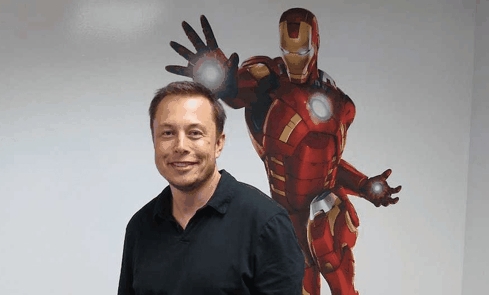 Tesla and SpaceX CEO Elon Musk. He is famous as the real-life model of Tony Stark, the protagonist of the movie Iron Man.
[Asia Economy Reporter Shinwon Yoon] Tony Stark, the protagonist in the movie 'Iron Man,' based on Marvel Comics, is a billionaire and a genius scientist. Jon Favreau, who produced the live-action adaptation of the comic, referred to a real person when creating Tony Stark's character. That person is Elon Musk, the founder of Tesla Motors and SpaceX. Musk resembles Tony Stark in many ways: a successful young entrepreneur, a genius with a brilliant mind majoring in physics, and a global leader in innovation.
So, who is Elon Musk in reality? Musk is originally from South Africa and studied physics and economics at the University of Pennsylvania in the United States. In 1995, he enrolled at Stanford University, one of the most prestigious institutions in the U.S., to pursue a Ph.D. in physics. However, like other genius entrepreneurs such as Steve Jobs (founder of Apple), Mark Zuckerberg (founder of Facebook), and Bill Gates (founder of Microsoft), Musk dropped out after just two days.
He had a 'dream' he was passionate about. From a young age, Musk wanted to be an innovator like Thomas Edison. He had grand dreams involving the 'Internet,' 'clean energy,' and 'space,' and to realize these dreams, he jumped into entrepreneurship at the young age of 24.
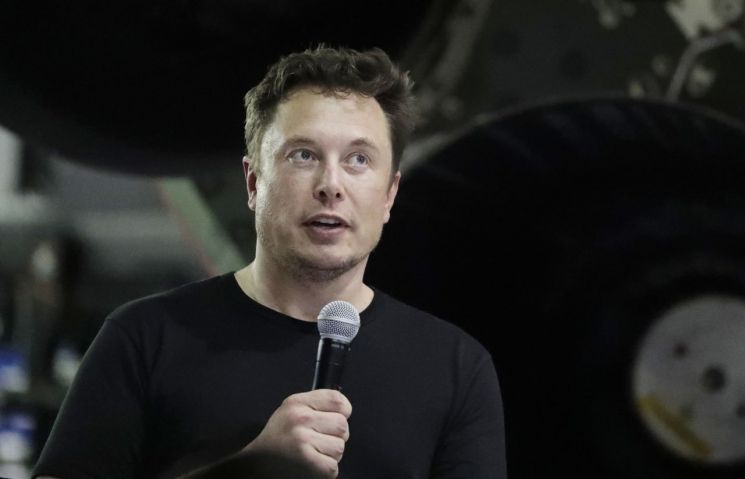
Elon Musk Becomes a Billionaire in His 20s
The first company he founded was 'Zip2.' It was an internet-based business providing local information to newspaper publishers like The New York Times. Four years after founding the company, he sold Zip2 to computer manufacturer Compaq for $22 million (approximately 27.6 billion KRW), joining the ranks of billionaires at age 28.
Using the $22 million, he established X.COM, the predecessor of the largest U.S. payment service 'PayPal.' After merging with competitor Confinity, the company was renamed 'PayPal' and grew rapidly. Seeing PayPal's potential, online marketplace eBay acquired PayPal in 2002 for a staggering $1.5 billion (approximately 1.87 trillion KRW).
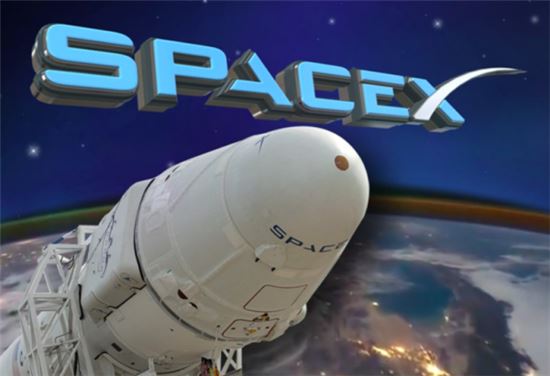 SpaceX
SpaceX Worth 45 Trillion KRW
After two successes and accumulating vast wealth, Musk did not stop challenging himself. Soon after selling PayPal, he founded the rocket development company 'SpaceX.' At the time, space development was a government-led endeavor due to the astronomical costs and difficulty in generating immediate profits. However, Musk's establishment of SpaceX marked the beginning of the private space development era.
But Musk, who had been on a smooth path to success, faced difficulties with SpaceX. In 2006, SpaceX launched its first rocket, the 'Falcon 1,' but fuel leakage caused a fire immediately after launch. The second launch failed due to a malfunction in the gimbal control system, ending the mission at an altitude of 321 km. The third launch also encountered problems. Nevertheless, Musk did not give up, and finally, in September 2008, after four attempts, Falcon 1 successfully flew into the sky. It was the first success by a private company.
In 2012, NASA selected SpaceX as the contractor to transport cargo to the International Space Station (ISS). SpaceX's cargo spacecraft 'Dragon' is the first and still the only 'space cargo ship' operated by a private company. Since then, SpaceX has led historic achievements such as the first successful manned spacecraft test flight by a private company and the world's first rocket recovery and re-launch. The market values SpaceX at approximately $36 billion (about 45.32 trillion KRW).
Even after making achievements that will be remembered in space history, Musk dreams even bigger: to establish a Martian colony capable of housing around 80,000 people. And he aims to do this by 2030.
Tesla Worth 115 Trillion KRW
While pursuing his dream of 'space development' by founding SpaceX, Musk also established a company to realize his dream of 'clean energy.' That company is Tesla Motors. Focusing on clean energy, Tesla concentrated on developing electric vehicles powered by electricity. Although electric vehicle development was underway in 2003, it mostly involved compact cars, whereas Tesla focused on 'luxury.'
Tesla struggled with losses for seven years after its founding, to the extent that Musk had to cover funds out of his own pocket. However, there were achievements during this period. Tesla's first mass-produced product, the 'Roadster,' released in 2008, sold about 1,000 units despite its hefty price tag of $109,000 (approximately 137 million KRW). Tesla continued to increase its success by releasing a more affordable sedan version of the Roadster at half the price. In 2006, Tesla acquired 'SolarCity,' a solar power company run by Musk's cousin, providing electricity services for Tesla's electric vehicles.
After years of unprofitability and financial difficulties, Tesla made a bold announcement in 2014. It opened its patents for free, stating that it did not mind if others made 'copycat Teslas.' At the time, Musk said, "Our competitor is not the electric car manufacturer but the internal combustion engine car manufacturer," showing his determination to grow the electric vehicle market. This reflects Musk's philosophy of pursuing his ultimate dream of 'clean energy' beyond mere business success.
This magnanimous stance is also analyzed as stemming from the fact that the electric vehicle market still accounts for only about 1% of the overall automobile market, and Tesla already holds a technological edge in electric vehicles and is confident it can maintain it. In fact, Tesla is currently the world's number one company in terms of valuation at $92 billion (approximately 115.8 trillion KRW) and is the most notable company in the automobile market.
In addition, Musk is developing the 'Hyperloop,' an eco-friendly transportation system powered 100% by solar energy with a top speed of 1,300 km/h, and is building a traffic system that disperses vehicles through underground tunnels to solve traffic congestion in Los Angeles (LA).
Musk says, "When something is important enough, you do it even if the odds are not in your favor." This phrase best represents him, who has pursued dreams such as private space development and electric vehicles, which were once considered unprofitable ventures.
© The Asia Business Daily(www.asiae.co.kr). All rights reserved.


















