① Olympic Qualifier Schedule Repeatedly Disrupted
② IOC Changes Stance, Will Follow WHO Suspension Recommendations
③ Large-Scale Contact Among Athletes and Supporters Raises Cluster Infection Concerns
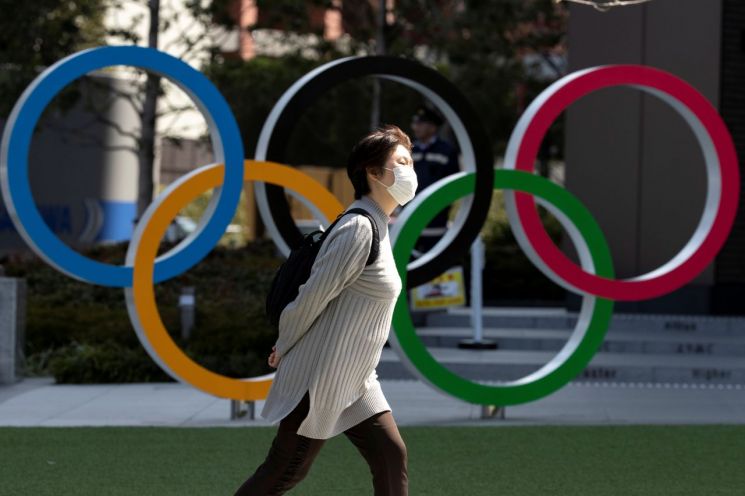
[Asia Economy Reporters Heungsoon Kim and Hyungmin Kim] As the novel coronavirus infection (COVID-19) spreads worldwide, the Summer Olympics, which had remained unshaken by any variables except for World Wars I and II, now stands at a crossroads between 'proceeding' and 'halting.' With 129 days left until the scheduled opening of the 2020 Tokyo Olympics on July 24, Japanese Prime Minister Shinzo Abe remains steadfast in his determination to hold the Games as planned. Nevertheless, there are three variables that make postponement or cancellation inevitable: the repeatedly delayed qualifying tournaments, the International Olympic Committee's (IOC) changing stance on whether to hold the Games, and concerns over mass infections due to large crowds gathering.
D-129, Abe says he can do it, but...
Repeated disruptions in Olympic qualifiers
IOC holds emergency video conference with international federation heads
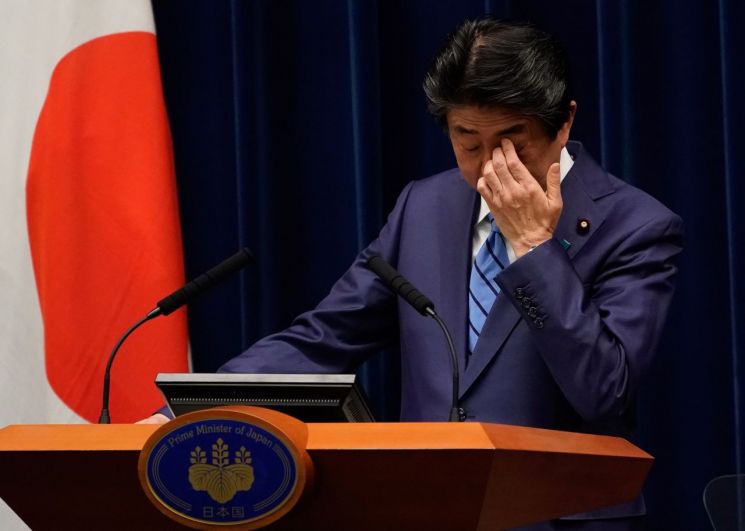
On the 17th (Korean time), Prime Minister Abe attended a video conference with leaders of the Group of Seven (G7) countries including the United States, Japan, the United Kingdom, France, Germany, Canada, and Italy, and afterward stated, "I received support from the leaders of each country to hold the Tokyo Olympics in its complete form." Although he expressed hopeful remarks, the atmosphere in the international sports community shows a temperature difference. IOC President Thomas Bach is scheduled to hold an emergency video conference that evening with the heads of international sports federations (IFs) for each discipline.
A representative from the Korean Sport & Olympic Committee said, "Due to the impact of COVID-19, the Olympic qualifiers for each sport have been delayed, causing continuous disruptions. We expect to hear the positions of the sports organizations on this and consider alternatives." The following day, the IOC will also hold video conferences with athlete representatives and National Olympic Committees (NOCs). IOC Athlete Representative Yusungmin said, "We need to monitor the situation to see if the Games can be held normally," but added, "For now, the safety of the athletes is our top priority."
IOC also says "Will follow WHO recommendations"
Shift in stance increases likelihood of postponement
After the World Health Organization (WHO) declared COVID-19 a pandemic on the 12th, IOC President Bach softened his stance, saying, "If WHO requests the suspension of the Olympics, we will follow their advice." This has led to analyses that the IOC is beginning to consider postponement or cancellation of the Tokyo Olympics with a focus on health concerns.
A domestic sports organization official said, "Originally, the plan was to finalize Olympic qualification by April, but all competitions have been suspended due to COVID-19," adding, "I understand that the international federations have communicated to the IOC about extending the deadline until June." He further predicted, "In that case, the time to prepare for the next steps will be too tight, making it practically impossible to proceed with the Olympics as scheduled in July."
Denis Masseglia, Chairman of the French Olympic Committee, also emphasized in a foreign media interview that "The Olympics can only be held if COVID-19 peaks by the end of May and then subsides," and stressed, "At some point, athletes must be informed whether the Olympics will be held." Masseglia is also scheduled to preside over an NOC chairpersons meeting on the 18th.
If held as planned, 'no spectators' is an alternative
To prevent mass infections among athletes and cheering squads
Japan must forgo ticket sales revenue...
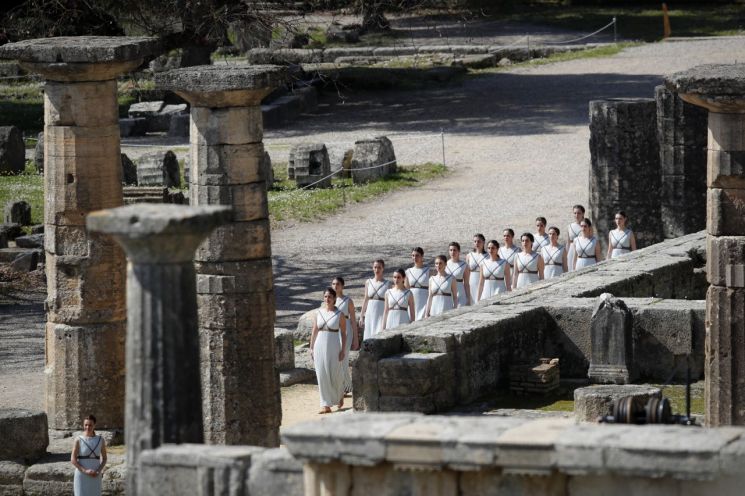
In the absence of vaccines or treatments, the spread of COVID-19 and concerns over mass infections are inevitable. The Olympics, which will attract athletes and large cheering squads from around the world, is far more risky. Therefore, the alternative being considered is a 'no-spectator Olympics.' Professor Munehiko Harada of Waseda University's Department of Sports Science predicted, "Since 3 trillion yen (approximately 34 trillion won) has been invested in the Tokyo Olympics, the Tokyo Olympic Organizing Committee is more likely to consider holding the Games without spectators rather than canceling."
Baseball commentator Jang Hoon, a Korean resident in Japan, pointed out, "If exposed to COVID-19 during the Olympics, Japan would face many issues such as having to pay compensation." For Japan, holding the Games without spectators provides justification to proceed, but it means giving up revenue from ticket sales. The excitement of the Olympics, watched by billions worldwide, would inevitably be diminished. This is why the weight of opinion inside and outside Japan continues to lean toward postponement rather than forcing ahead.
Japanese media noted that Prime Minister Abe emphasized holding the Games in a 'complete form' but did not specify the timing of the Tokyo Olympics. There is speculation that the G7 leaders may have agreed on a plan to manage the COVID-19 situation and postpone the Games by one to two years rather than resorting to temporary measures such as no spectators or reducing the number of events. The British daily The Guardian also cited an anonymous source saying, "The IOC has excluded the possibility of holding the Olympics without spectators," adding, "Holding the Olympics without spectators contradicts the fundamental philosophy of the Olympics, which is to unite people worldwide through sports."
© The Asia Business Daily(www.asiae.co.kr). All rights reserved.



















