Major Economic Organizations Emergency Response
Immediate Abolition of Tariffs on China Demanded
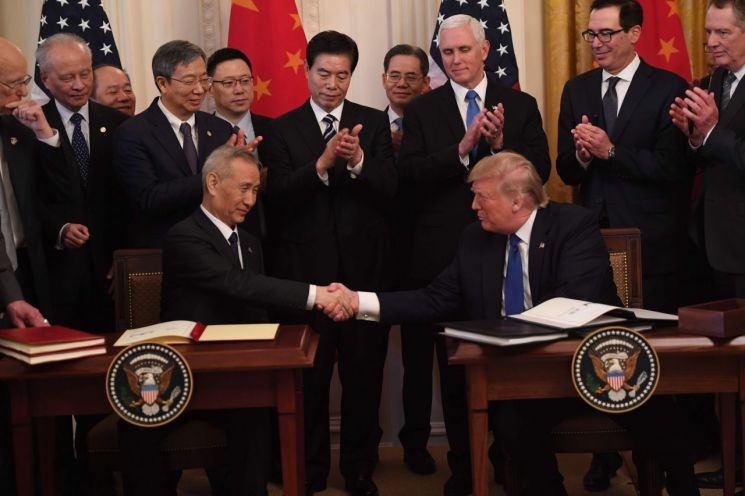
[Asia Economy Reporter Kwon Jaehee] Voices are emerging calling for additional tariff reductions on China to mitigate the economic impact caused by the novel coronavirus infection (COVID-19). Despite the Federal Reserve's unprecedented monetary easing measures announced the previous day, the New York stock market plunged, strengthening the argument that the only remaining policy tool is further tariff reductions. With major U.S. economic organizations strongly demanding the immediate abolition of tariffs on China as part of an emergency response, attention is focused on the government's actions.
According to local media such as The New York Times (NYT) on the 16th (local time), major economic organizations including the U.S. Chamber of Commerce, the National Association of Manufacturers, and the U.S.-China Economic Council recently sent a letter to the White House requesting the immediate abolition of tariffs on China and retroactive refunds of tariffs paid. In the letter, these organizations stated, "We believe there is no faster or more beneficial way to impact the U.S. economy than the immediate and retroactive abolition of tariffs," adding, "Such a move would immediately reinject billions of dollars back into the U.S. economy."
The reason major U.S. economic organizations have stepped forward to demand tariff reductions on China is that earlier, on March 10 and 12, the U.S. government took exemption measures on tariffs for a total of 109 medical products including face masks, medical gloves, and goggles. Going further, they argue that tariff reductions on imported goods are necessary to revive the U.S. economy, which has been hit hard by COVID-19, beyond just medical supplies.
The Wall Street Journal (WSJ) stated, "The U.S. economy relies heavily on consumer spending above all else, but many companies are collapsing due to COVID-19, creating a vicious cycle of rising unemployment and declining consumer spending," and argued, "To break this vicious cycle, additional measures such as tariff reductions that can support businesses must be taken."
For now, the U.S. administration is cautious. U.S. Treasury Secretary Steven Mnuchin said, "The Trump administration is not considering broad import tariff reductions on Chinese products to alleviate the economic pain caused by COVID-19," but added, "The U.S. Trade Representative is reviewing additional measures for companies particularly affected by COVID-19, and the government is looking at all possible options," leaving room for flexibility.
There is analysis that President Trump, facing re-election in November, is deeply troubled. President Trump, who had touted the U.S.-China trade agreement as his achievement, has taken a hardline stance that there will be no further negotiations or compromises before the November election. However, he cannot ignore the rapidly deteriorating financial markets and the economic paralysis caused by COVID-19.
The fact that the only remaining card for economic stimulus is tariff rate reduction also strengthens the argument for additional tariff cuts. In particular, tariff rate reductions are a matter that President Trump can decide without congressional approval and are the most immediate means to see effects. Kenneth Rogoff, a professor of economics at Harvard University, said, "Lowering tariffs would be the most immediate and effective measure."
According to the U.S. Customs and Border Protection (CBP), importers in the U.S. have paid tariffs amounting to $49 billion (approximately 61 trillion KRW) over the past 20 months due to the Trump administration's trade restriction measures on China under 'Section 301.'
© The Asia Business Daily(www.asiae.co.kr). All rights reserved.

















