[Hidden Industry Story] Pan Am, the World's First to Successfully Complete a 'Circumnavigation of the Earth'
Introduced Boeing 747 Aircraft and Operated Business Services to Become the Unrivaled No.1 Airline
Pan Am's Image Declined Due to Oil Price Surge, Fatal Accidents, and Terrorism... Ultimately Declared Bankruptcy in 1991

[Asia Economy Reporter Shinwon Yoon] Pan American World Airways, better known by the name 'Pan Am,' was once a leading airline in the world. It was the first airline to successfully complete a round-the-world flight and the first in the industry to introduce the Boeing 747 model as a passenger aircraft, making it an iconic company in aviation history. It is no exaggeration to say that Pan Am laid the foundation for today's airline operating systems and routes. However, after 64 years of history, Pan Am disappeared in 1991. What happened?
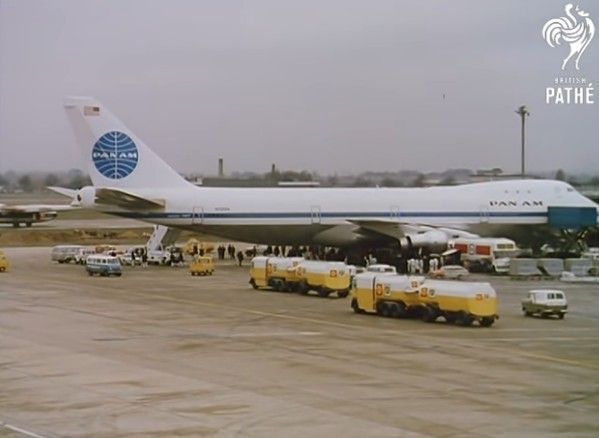
Pan Am Dominates the Global Aviation Industry
Pan Am's history dates back to 1927. The founder, Juan Trippe, started Pan Am in Key West, Florida, with an international airmail business. In January 1929, it expanded into passenger air service by carrying passengers on flights for the first time.
Pan Am focused more on international routes than domestic ones. In the 1930s, it successfully operated routes connecting the United States and South America, followed by trans-Pacific and trans-Atlantic flights, achieving the world's first 'round-the-world' flight. With the outbreak of World War II in 1939, Pan Am experienced explosive growth. It helped transport military personnel, military supplies, and diplomats using its aircraft. The plane used by President Franklin Roosevelt on the world's first overseas tour was also a Pan Am aircraft. After the war, backed by the U.S. government, Pan Am emerged as the world's top airline. In 1947, it secured exclusive rights to 'round-the-world' routes connecting the U.S. with the UK, Turkey, India, Thailand, China, Japan, and more.
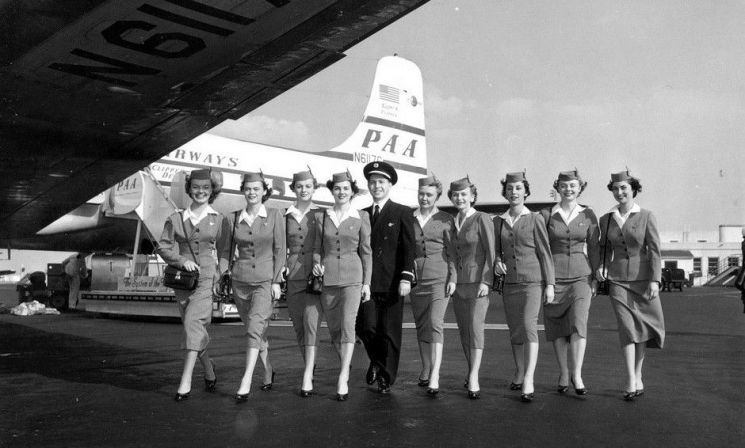
From the 1950s, Pan Am effectively dominated the global aviation industry. It introduced the first business class called 'Clipper' and classified seats by grade. In 1954, it was the first to introduce the Boeing 707, ushering in the jet engine aircraft era. Notably, in 1970, it was the first in the industry to use the 'jumbo jet,' the Boeing 747, as a passenger aircraft. Unlike the Boeing 707 and 727, which typically seated around 200 passengers, the Boeing 747 had a capacity of 524 passengers, making it a large aircraft. Pan Am continued to operate large aircraft by introducing Airbus models such as the A300 and A310.
Rising Maintenance Costs and Soaring Oil Prices... Pan Am Faces Financial Crisis
However, the problem was the increased maintenance costs due to operating large aircraft. As profits gradually shrank, the Fourth Middle East War broke out in 1973. Dubai crude oil, which was $2.9 per barrel, surged about fourfold to $11.6, and after the Iranian Revolution in 1978, international oil prices rose to $40. The soaring oil prices combined with huge maintenance costs shook the aviation industry, including Pan Am.
In this situation, Pan Am actually invested further. Although it held a dominant position in international routes, it sought to strengthen its relatively weak domestic routes. It acquired 'National Airlines,' a mid-sized airline at the time, at an excessive price. The acquisition cost was problematic, but Pan Am and National Airlines differed greatly not only in aircraft types but also in operating methods. The maintenance and labor costs exceeded the revenue generated by National Airlines, leading to a financial crisis. In 1981, Pan Am even sold its headquarters building (now MetLife), which was the largest building in New York at the time.
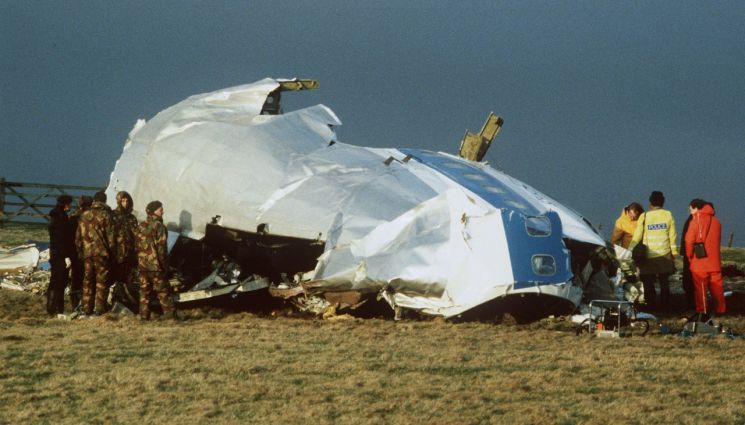
Various Accidents and Terrorism... Ultimately Bankruptcy
As the saying goes, crises come all at once. In 1977, a major aviation accident occurred at Tenerife Airport in the Spanish Canary Islands over the Atlantic. A Pan Am aircraft landing collided with a departing Dutch KLM aircraft. With 583 fatalities, it remains the deadliest accident in aviation history. Although the accident was found to be caused by KLM's error, Pan Am's reputation continued to decline as accidents followed, including National Airlines' natural disaster-related crash killing 153 people.
Pan Am began to collapse after these two accidents. Starting with the sale of its headquarters building, from 1985 it sold its Pacific routes to United Airlines, handing over its routes to other airlines. The following year, it sold its Atlantic routes to Delta Air Lines, leaving Pan Am with only domestic and South American routes by 1986.
However, Pan Am could no longer operate even these routes. Although its scale had gradually shrunk, Pan Am was still called a 'symbol of America,' making it a target for anti-American terrorists. After a terrorist attack in Pakistan in 1986, Pan Am suffered the 'Lockerbie bombing' in 1988, which killed 259 passengers and 11 villagers. Pan Am Flight 103, which departed from Frankfurt am Main Airport in West Germany, was en route to Detroit Metropolitan Airport via London Heathrow and New York JFK airports when it exploded over the village of Lockerbie in southern Scotland. It was revealed that a Libyan intelligence agent had placed a bomb inside a cassette recorder. This incident was the final blow, leading Pan Am to declare bankruptcy in December 1991.
© The Asia Business Daily(www.asiae.co.kr). All rights reserved.



















