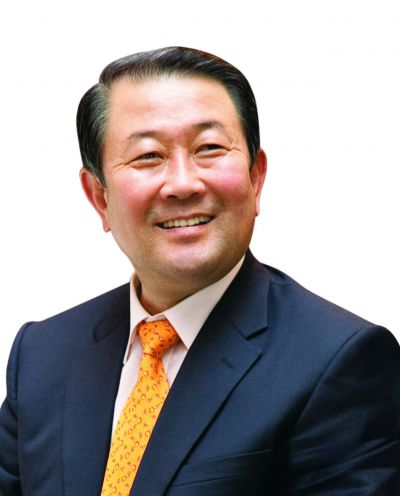
[Asia Economy Honam Reporting Headquarters Reporter Park Seon-gang] Representative Park Ju-seon (Minsaeng Party, Gwangju Metropolitan City Dongnam-gu Eul) announced on the 16th that he will actively promote the selection of the Dongnam-gu Eul area in Gwangju as a smart national pilot city area.
Representative Park Ju-seon stated, “Just as the Dongnam-gu Eul area made a turning point in urban development through the proposal and passage of the Urban Regeneration Activation Act, if I advance to the 21st National Assembly, I will promote ‘Urban Regeneration Season 2: Smart City Act Amendment’ at the National Assembly level so that the Dongnam-gu Eul area can be designated as a smart national pilot city and reborn as a future-oriented city.”
The smart urban regeneration revealed by Representative Park is a ‘smart city’ model that applies various innovative technologies to urban infrastructure based on existing urban regeneration activation policies to solve various urban problems such as transportation, environment, and housing, and improve quality of life.
Currently, the Ministry of Land, Infrastructure and Transport is promoting a smart urban regeneration New Deal project by adding smart city elements to the Urban Regeneration New Deal.
If selected as a smart national pilot city, by introducing advanced information and communication technology, the city’s assets will be used more efficiently to solve inefficiencies in transportation, environment, housing, and facilities, enabling citizens to enjoy a more convenient, safe, and affluent life.
Representative Park emphasized, “The Dongnam-gu Eul area has seen an increase in population inflow and property value through revitalization of redevelopment,” adding, “Without resting on this success, with the spirit of Juma Gapyeon (走馬加鞭, literally ‘spurring a running horse’ meaning to make extra efforts), we will promote smart urban regeneration to advance the Dongnam-gu Eul area to the next level, building a future-oriented city that everyone envies and significantly improving residents’ quality of life and property value.”
Meanwhile, Sejong City and Busan City, selected as smart city national pilot cities, plan to transform into future-oriented cities by 2023 by investing 1.4876 trillion won and 2.2083 trillion won respectively in projects covering seven major services including healthcare, education, energy environment, culture and shopping, jobs, as well as robotics and water management.
© The Asia Business Daily(www.asiae.co.kr). All rights reserved.

















