Only Two Real Opportunities for Interest Rate Cuts
Financial Market Stabilization Measures Including Loan Policies and Open Market Operations Introduced
[Asia Economy Reporter Kim Eunbyeol] As the international financial markets plummeted due to the spread of the novel coronavirus infection (COVID-19), the Bank of Korea (BOK) is pulling out other cards besides interest rate cuts. This is because the BOK has only about two chances left to lower interest rates, and it is difficult to guarantee the effectiveness of such measures. The recent market crash is interpreted as a result of anxiety caused by COVID-19 rather than a shake in the economic fundamentals themselves, indicating that the focus will be on stabilizing the market as much as possible.
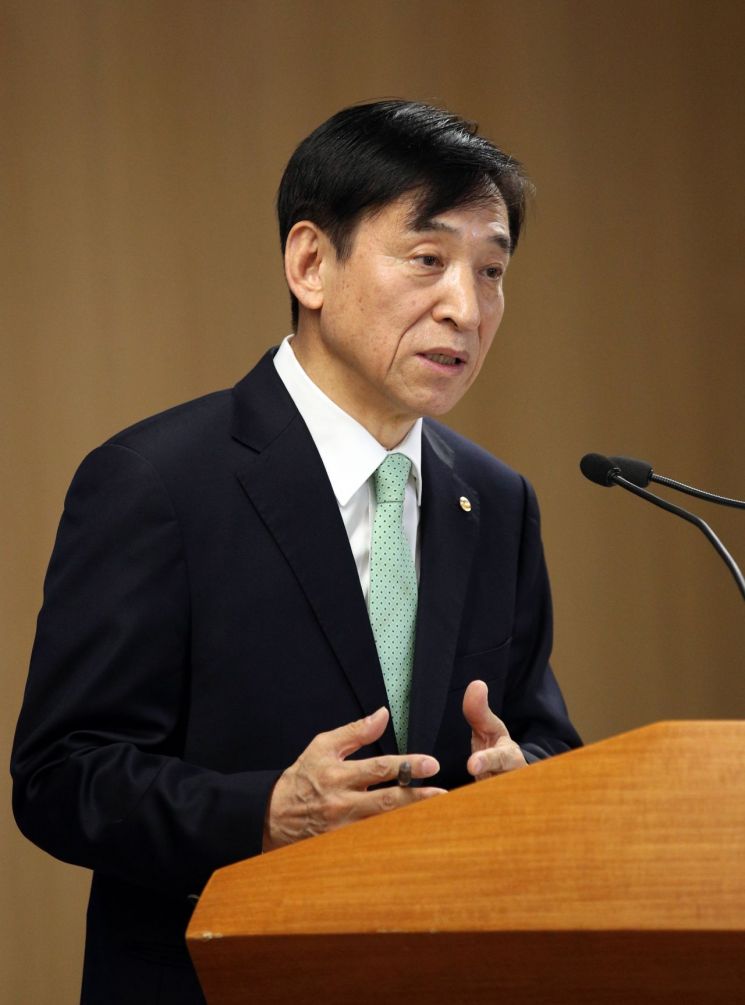
Lee Ju-yeol, Governor of the BOK, convened an executive meeting on the morning of the 10th to review the domestic and international financial and foreign exchange market situations and expressed his intention to actively utilize available policy tools to stabilize the financial markets. He said, "As volatility in domestic financial and foreign exchange markets has increased due to the impact of the COVID-19 situation, financial stability risks are rising, so we will actively use available policy tools to promote financial stability."
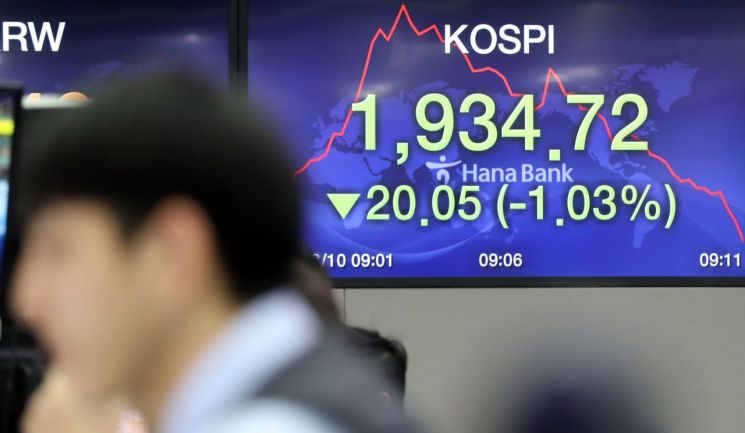
He added, "In particular, if there are concerns that the financing conditions for small and medium-sized enterprises (SMEs) worsen and the soundness of financial institutions is impaired, we will actively respond through lending policies and open market operations." He continued, "We will continue to closely monitor exchange rates and foreign currency funding conditions and take market stabilization measures as necessary." As COVID-19 spreads globally, showing signs of a pandemic, and international oil prices have also plummeted, the international financial markets experienced their worst crash since the 2008 financial crisis the day before.
The government's biggest concern at present is the wave of corporate bankruptcies that may occur as the shock from COVID-19 prolongs. Not only airlines and distribution sectors but also heavy industries, oil refining, and automobile sectors are faltering. However, financial institutions holding the purse strings may hesitate to lend due to concerns about their own soundness being impaired. This is one reason why money does not circulate even if the BOK injects liquidity and lowers interest rates. Therefore, the BOK plans to use lending systems to encourage financial institutions to support companies with funds.
In addition, the BOK will respond to the fluctuating financial markets through open market operations. If necessary, it will supply liquidity to the market by purchasing repurchase agreements (RPs) to prevent a financial market crash.
The BOK is considering when to use the interest rate cut card. The BOK's executive board agrees on the need to lower interest rates but is still weighing the timing. If the U.S. Federal Open Market Committee (FOMC) cuts rates once more at its meeting on the 17th-18th (local time), the BOK can hold an emergency Monetary Policy Board meeting and immediately lower rates. The next scheduled BOK Monetary Policy Board meeting is on the 9th of next month.
Park Jong-hoon, Chief Economist (Executive Director) at SC First Bank, pointed out, "The dilemma for the BOK is whether a 25 basis point (1bp=0.01 percentage point) rate cut is sufficient and whether lowering rates will actually improve the Korean economy." Jang Min, Senior Research Fellow at the Korea Institute of Finance, said, "Currently, there is no way to guide the liquidity generated by rate cuts to flow to the right places. The best policy is to restrict funds from flowing into real estate."
Meanwhile, the lending systems the BOK plans to use are mainly three types: ▲Liquidity Adjustment Loans (1 business day maturity, base rate + 100bp) to support shortages arising in financial institutions' funding processes, ▲Financial Intermediation Support Loans (1 month maturity, annual interest 0.50~0.75%) to induce SME lending, and ▲Intraday Overdraft Loans (maturity at the end of the day’s funds transfer, interest-free) to support temporary shortages of funds in financial institutions. This means the BOK will back financial institutions if they temporarily face a shortage of funds.
Earlier, the International Monetary Fund (IMF) pointed out, "Strong monetary easing and fiscal policies are needed in each country," and "At least, there must be assurance that companies and households will not die from lack of money." This means that central banks and governments must continuously create cash flow until COVID-19 ends, which aligns with the BOK’s measures.
© The Asia Business Daily(www.asiae.co.kr). All rights reserved.


















