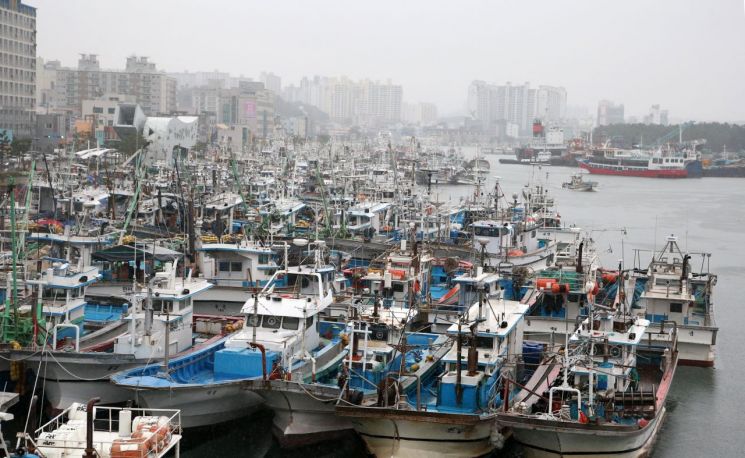
[Sejong=Asia Economy Reporter Joo Sang-don] The Ministry of Oceans and Fisheries announced on the 9th that it will unilaterally reduce 45 coastal fishing vessels to lower South Korea's dependence on fishing in Japanese waters and to promote the recovery of marine resources such as squid.
Korea's coastal fisheries have been facing many difficulties due to changes in the marine environment and depletion of marine resources. The coastal fish catch, which was around 910,000 tons in 2016, showed some recovery to 1.01 million tons in 2018 but fell back to 910,000 tons in 2019. In particular, the catch of commercially important species such as mackerel, squid, and anchovies remains low. Moreover, due to delays in the Korea-Japan fisheries negotiations, entry into Japanese waters has been suspended for four years, causing significant difficulties for industries highly dependent on fishing in Japanese waters.
Accordingly, the Ministry of Oceans and Fisheries plans to reduce a total of 85 coastal fishing vessels this year. Following a demand survey targeting large purse seiners and stern trawlers, 40 vessels applied for voluntary reduction, and in addition, 45 coastal vessels will be unilaterally reduced.
The vessels subject to unilateral reduction include 10 coastal longline vessels and 4 coastal jigging vessels with high dependence on fishing in Japanese waters. To aid squid resource recovery, 5 large trawlers will also be reduced. Furthermore, to restore domestic marine resources and ease fishing competition, 5 coastal set net vessels and 7 small purse seine fleets (21 vessels) will be reduced.
The unilateral reduction targets are selected based on vessel age, size (tonnage, horsepower), and violations of fisheries-related laws. However, if the industry proposes its own restructuring plans or reduction candidates, these will be reflected as much as possible.
The Ministry will provide vessel and fishing gear purchase and business closure support funds to owners selected for unilateral reduction, and livelihood stabilization funds to the crew of the affected vessels. If there is refusal to comply with the unilateral reduction without justifiable reasons, sanctions such as reduction of duty-free fuel supply will be imposed.
© The Asia Business Daily(www.asiae.co.kr). All rights reserved.

















