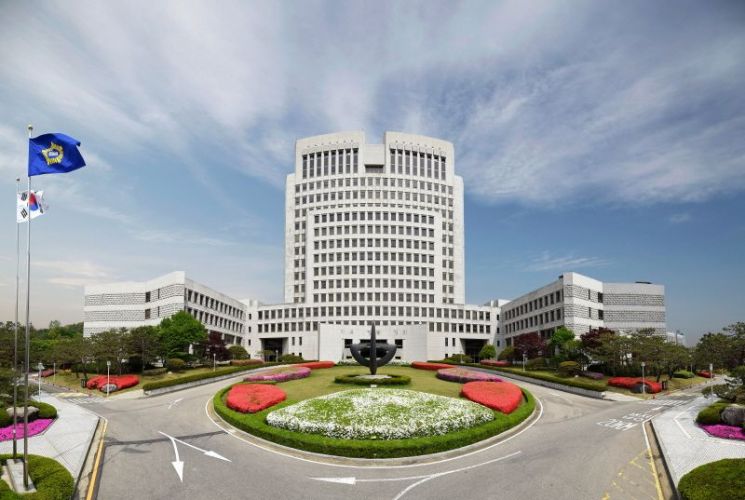
[Asia Economy Reporter Seongpil Cho] The Supreme Court has ruled that even if a soldier who made an extreme choice during leave cannot be recognized as a national merit recipient, they may still be eligible for veterans' compensation if there is a causal relationship with their military service.
The Supreme Court's Second Division (Presiding Justice Sanghwan Kim) announced on the 9th that it overturned the lower court's ruling, which had dismissed the appeal by the family of soldier A against the decision by the Gyeongbuk Northern Veterans Affairs Office not to recognize him as a national merit recipient or a veterans' compensation beneficiary, and remanded the case to the Daegu High Court. The court indicated that since there appears to be a significant causal relationship between A's death and his military service, the lower court should reconsider whether he can be included as a veterans' compensation beneficiary.
The Supreme Court explained, "It appears that the deceased, just before his suicide, suffered from severe job-related stress and mental anguish, which worsened his depressive symptoms, leading to a state where his normal cognitive abilities, decision-making capacity, and mental restraint were significantly impaired, resulting in his suicide." The court based its judgment on A's suicide note, the Army Training Center's fitness-for-service evaluation, and his psychiatric treatment history prior to enlistment as evidence to assess the causal relationship between A's condition and his military duties.
In May 2015, while serving in the Army, A committed suicide by jumping onto the railway tracks during leave. A's mother sought a court ruling after the Veterans Affairs Office rejected her application to register as a bereaved family member of a national merit recipient, citing that "A's death was not directly related to his military duties." The lower courts in the first and second trials ruled that the extreme choice appeared to have been made of free will and upheld the Veterans Affairs Office's decision as lawful. They also found that there was no physical abuse or verbal assault against A within the unit, and that the reprimands from superiors were not severe enough to have led to such an extreme choice.
© The Asia Business Daily(www.asiae.co.kr). All rights reserved.

















