Central Disaster and Safety Countermeasures Headquarters for COVID-19 Conducts Self-Evaluation of Domestic Quarantine Management System
Park Neung-hoo: "Accumulated Experience through H1N1 and MERS... Effective Situation Control"
Advanced IT Technology Integration, Enhancing Quarantine System with Creative Methods
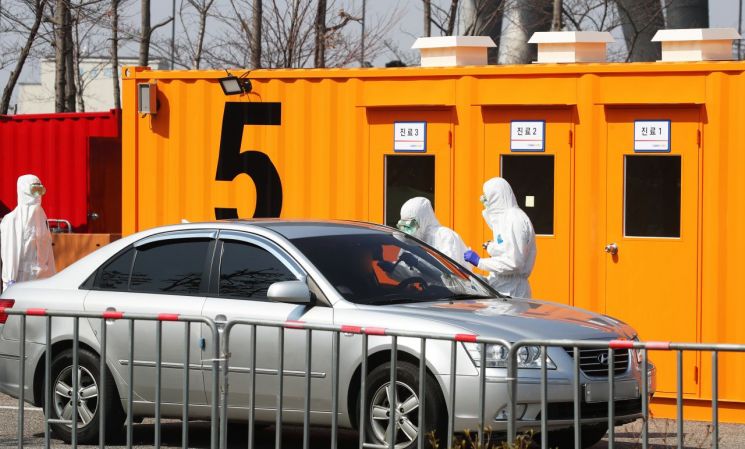 On the afternoon of the 8th, medical staff are collecting specimens using the drive-through method at the Gyeonggi-do large-scale screening center for the novel coronavirus infection (COVID-19) set up in the parking lot of Suwon World Cup Stadium in Gyeonggi-do.
 [Asia Economy Reporter Choi Dae-yeol] The government has judged that the domestic quarantine management system is effectively controlling the situation. In mid-last month, the number of confirmed COVID-19 cases suddenly surged mainly in Daegu and Gyeongbuk, leading to an overall change in the quarantine system. The government cited reasons such as transparent disclosure of related information and achieving similar effects without physical lockdown. The application of new technologies that had not been used before, enabling efficient response, was also cited as a main reason.
Park Neung-hoo, First Deputy Head of the Central Disaster and Safety Countermeasures Headquarters (Minister of Health and Welfare), said at a briefing on the 8th, "The situation before and after the 31st patient was completely different in terms of quarantine, causing problems, but the quarantine management system has continued to effectively control the situation since then." He added, "Korea's quarantine management system has continuously developed through experiences with SARS, H1N1, and MERS, and through that experience, it has acquired valuable advantages different from other countries."
He also pointed to the transparent and prompt disclosure of information and the voluntary participation of the majority of the public in responding to COVID-19. Deputy Head Park evaluated, "Through public participation such as personal hygiene compliance and social distancing, we were able to achieve quarantine effects equivalent to physical lockdown, avoiding forced lockdowns that cause significant harm to people's lives and maintaining an open society."
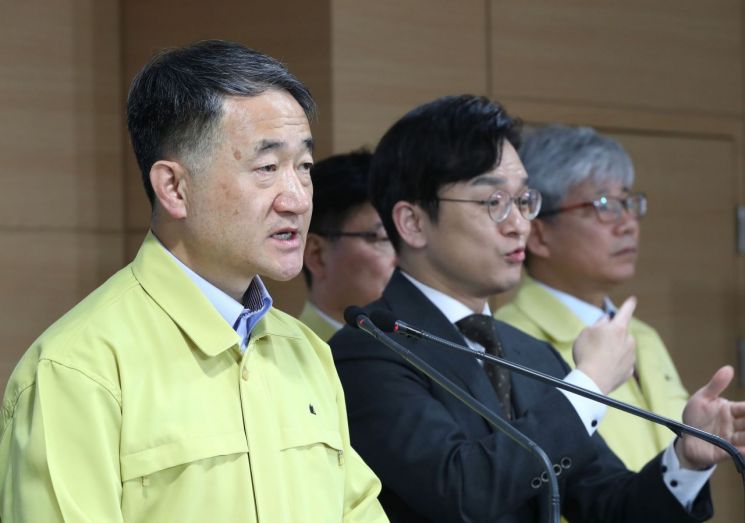 Park Neung-hoo, the 1st Deputy Head of the Central Disaster and Safety Countermeasures Headquarters (Minister of Health and Welfare), is explaining the current response status and plans at the regular COVID-19 briefing held at the Government Seoul Office Building on the afternoon of the 8th.
 Deputy Head Park predicted that quarantine tasks utilizing advanced information and communication technologies, such as the 'drive-through' specimen collection method and epidemiological investigations incorporating satellite navigation systems (GPS), which have attracted foreign media attention, will become global model cases. To determine COVID-19 infection, specimens must be collected from suspected patients, but medical staff wearing protective suits take considerable time to put on and take off the gear.
The drive-through method, where specimens are collected while the suspected patient remains in the car, is praised for reducing these procedures and increasing testing convenience. About 50 locations nationwide (as of the 5th) are in operation. For epidemiological investigations, based on patient statements, comprehensive analyses of mobile phone GPS, CCTV, and credit card usage history are conducted to thoroughly analyze the patient's movements and contacts from before symptoms appeared.
The number of diagnostic tests conducted to identify patients has reached up to 17,000 per day, totaling 188,518 tests as of 0:00 on the 8th. Rapid response, including emergency approval during the diagnostic reagent development process, has had a significant impact. Deputy Head Park said, "This diagnostic testing capability is an important means to find patients early, minimize damage, and defeat infectious diseases." He added, "Paradoxically, the high number of patients in Korea proves the excellence of quarantine capabilities such as outstanding diagnostic testing capacity and thorough epidemiological investigations."
Deputy Head Park also emphasized, "COVID-19 has symptoms similar to the common cold and has high infectivity from the early stages, leading to rapid spread. Traditional methods such as lockdowns and quarantines only delay the initial entry period and make it difficult to prevent spread afterward. Only responses that harmonize voluntary public participation and creative technology in a transparent and open society will be effective and the sole alternative." He continued, "Although we are enduring difficult times now, if we overcome this well, Korea's response can become a model case for other countries and a global standard."
© The Asia Business Daily(www.asiae.co.kr). All rights reserved.


















