Publication of KDI Economic Trends March Issue
[Asia Economy Reporter Kim Hyunjung] The Korea Development Institute (KDI) has assessed that the overall domestic economy has recently been 'contracting' due to the impact of the novel coronavirus infection (COVID-19). Until the previous month, the influence of COVID-19 was only mentioned as a 'constraint' on economic recovery, but as the situation has prolonged, it appears that KDI has judged the situation more seriously.
On the 8th, in the 'Economic Trends March Issue,' KDI stated, "In January, the economic downturn was easing, but last month exports, centered on China, were sluggish, and domestic demand is also contracting due to deteriorating economic sentiment."
Since November 2018, KDI had diagnosed the domestic economy as 'slowing' or 'sluggish,' but in January this year, it expressed a 'possibility of easing.' Last month, citing increases in service and manufacturing production, it viewed the 'sluggishness as easing.' Regarding the rapidly spreading novel coronavirus since the end of January, it only mentioned that it was difficult to estimate the impact but that it would have a 'negative effect.'
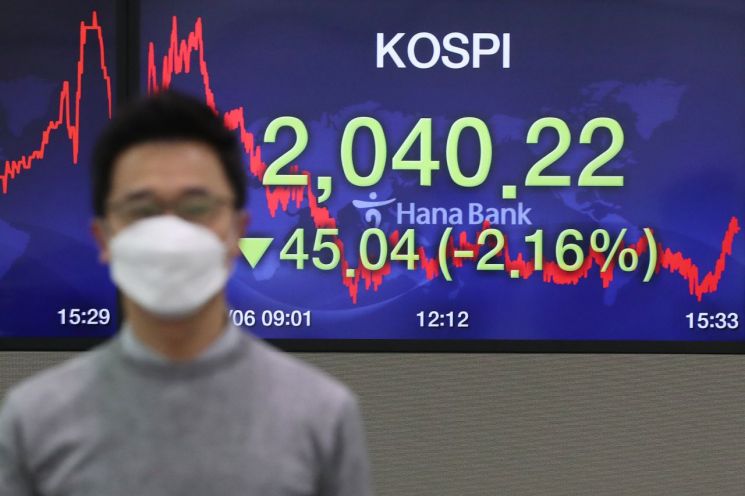
However, the March issue of Economic Trends reflected a more concerned view about the adverse effects of COVID-19. KDI explained, "With Chinese demand slowing and disruptions in the supply of Chinese parts leading to reduced automobile production, daily average exports in February sharply declined, and external conditions worsened with downward revisions of global economic growth forecasts. Consumer sentiment and business survey indices plunged, spreading the negative impact of COVID-19 to domestic demand." It added, "In financial markets, concerns about future economic downturns were reflected, causing stock prices and the value of the Korean won to fall and volatility to increase."
In fact, since mid-February, as COVID-19 spread domestically, the seasonally adjusted manufacturing BSI dropped sharply from 78 to 67, and the all-industry BSI performance index fell from 75 to 65. Since the Bank of Korea began surveying the all-industry BSI performance index in 2003, the index has only fallen below 65 during the global financial crisis period (October 2008 to March 2009) and in February 2016. Based on the month-over-month decline (-10 points), this is the largest drop since the survey began. KDI forecasted, "From February, manufacturing production will decrease due to supply disruptions of Chinese parts, and service production will also be sluggish as external activities contract due to infection concerns."
Looking at consumption, the consumer sentiment index sharply declined from 104.2 to 96.9 in February. However, considering that COVID-19 entered a nationwide and rapid spread phase after mid-February, the consumer sentiment index surveyed between February 10 and 17 likely only partially reflected the impact of consumption contraction.
Exports also showed a sluggish trend, centered on exports to China. Although exports in February increased by 4.5% due to an increase in working days, the daily average export amount turned negative at -12.2%, breaking the previous month's (5.9%) growth trend.
Regarding the global economy, KDI judged that downward pressure on the economy has significantly increased. It explained, "The growth rates of global industrial production and trade volume remain at low levels, and major indicators have rapidly deteriorated since February due to the negative impact of COVID-19. Most institutions forecast that the global economy's growth will slow due to economic downturns in China and neighboring countries caused by the spread of COVID-19."
© The Asia Business Daily(www.asiae.co.kr). All rights reserved.

![Clutching a Stolen Dior Bag, Saying "I Hate Being Poor but Real"... The Grotesque Con of a "Human Knockoff" [Slate]](https://cwcontent.asiae.co.kr/asiaresize/183/2026021902243444107_1771435474.jpg)















