Japan's Abe PM Pressures Korea to Escape Domestic Political Crisis, Cooling Korea-Japan Relations... Prime Minister Jeong Sye-gyun "Our Government Will Take Appropriate Measures"
[Asia Economy Reporters Ryu Jeong-min and Lim Cheol-young] The Blue House held a Standing Committee meeting of the National Security Council (NSC) on the morning of the 6th to discuss a countermeasure strategy against Japan's entry restrictions. The Ministry of Foreign Affairs decided to take reciprocal measures against Japan. The thawing prospects in Korea-Japan relations seem to be cooling again due to the issue of the novel coronavirus infection (COVID-19).
The Blue House convened the NSC Standing Committee amid a pile-up of diplomatic and security issues related to COVID-19 entry restrictions and the exchange of letters between the South and North Korean leaders.
A Blue House official said, "The NSC Standing Committee was originally scheduled for Thursday the 5th, but it was postponed to the 6th due to the National Assembly plenary session." Although this was explained as a schedule change due to political events, the fact that the NSC was convened amid unusual movements by Japan is noteworthy.
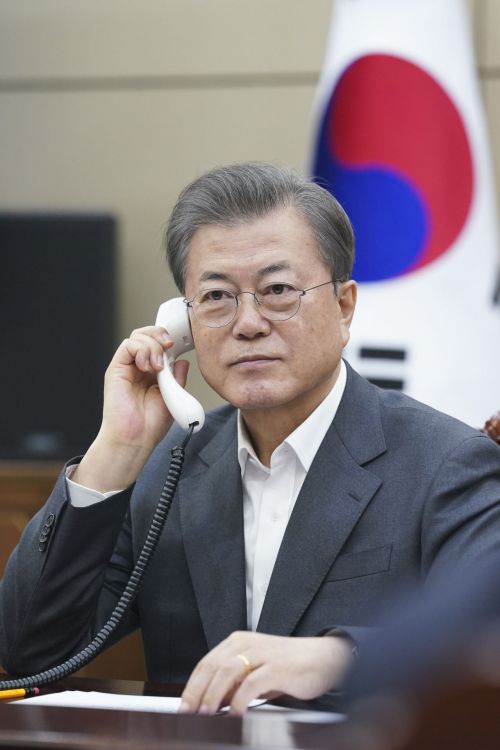
Japanese Prime Minister Shinzo Abe announced on the 5th a de facto entry ban policy for entrants from South Korea and China, stating, "We will request that they wait for two weeks at locations designated by quarantine officers and refrain from using domestic public transportation."
The Japanese government announced additional measures starting from the 9th, including "suspension of single and multiple visa validity for entrants from South Korea," "14-day quarantine at designated locations for foreigners entering after visiting South Korea or China," and "limiting arrival airports for passenger flights to Narita and Kansai airports." The Ministry of Foreign Affairs defined this as an 'entry refusal measure,' effectively restricting entry of foreigners coming from South Korea.
The Ministry of Foreign Affairs stated, "Despite our government's repeated calls for Japan to carefully review additional measures, we express deep regret that Japan took unreasonable and excessive actions without sufficient prior consultation with us." They also conveyed concerns that Japan's intentions could be questioned.
The Ministry emphasized, "Given that the world recognizes our excellent testing and diagnostic capabilities and transparent and proactive quarantine efforts, and that the results of our efforts to prevent the spread are visible, we cannot help but suspect that there may be motives other than quarantine behind these measures."
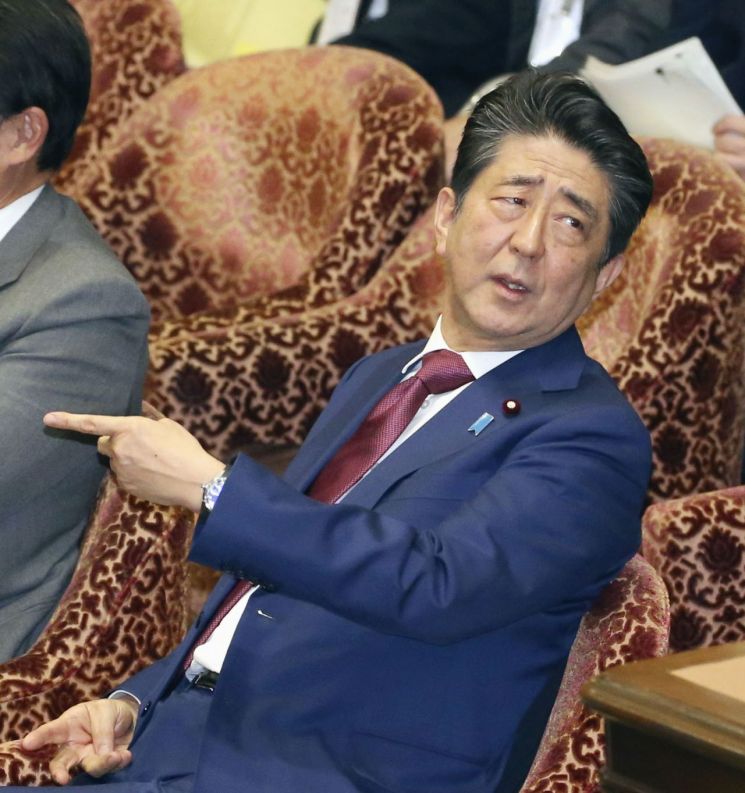
The Ministry of Foreign Affairs is considering reciprocal measures such as designating Japan as an infectious disease contaminated area, raising travel alerts, and strengthening quarantine for entrants. Previously, the Korean government issued a 'travel minimization recommendation' for six countries including Japan on the 11th of last month and only issued a Level 1 travel alert for all of Japan except the area around the Fukushima nuclear power plant.
Prime Minister Chung Sye-kyun also presided over a Central Disaster and Safety Countermeasure Headquarters (CDSCH) meeting at the Government Seoul Office on the same day, stating, "Yesterday, the Japanese government effectively imposed a comprehensive entry ban on our citizens," and added, "We deeply regret this." He urged, "We call for the immediate withdrawal of these excessive and unreasonable measures," and emphasized, "Our government will also devise appropriate countermeasures."
Meanwhile, the Ministry of Foreign Affairs and related departments plan for First Vice Foreign Minister Cho Se-young to summon Koji Domita, the Japanese Ambassador to Korea, to repeatedly express protest and regret. Earlier, on the 5th, the Ministry of Foreign Affairs summoned Hirohisa Soma, the Charg? d'Affaires of the Japanese Embassy in Korea, to point out the unreasonable decision and express regret and protest.
© The Asia Business Daily(www.asiae.co.kr). All rights reserved.
![Clutching a Stolen Dior Bag, Saying "I Hate Being Poor but Real"... The Grotesque Con of a "Human Knockoff" [Slate]](https://cwcontent.asiae.co.kr/asiaresize/183/2026021902243444107_1771435474.jpg)











