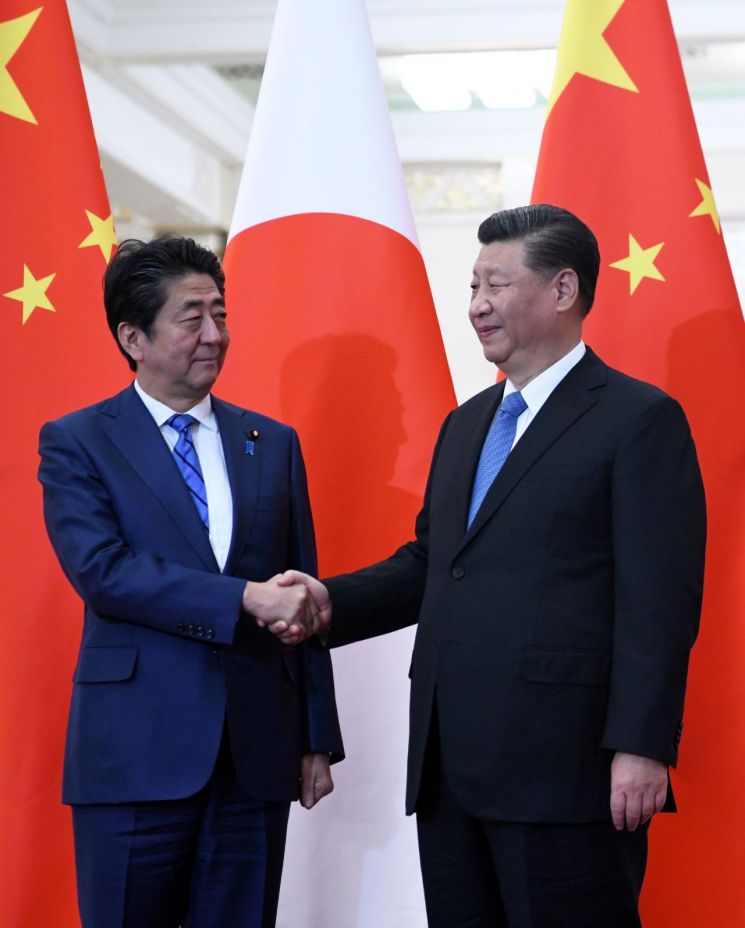
[Asia Economy Beijing=Special Correspondent Park Sun-mi] The state visit of Chinese President Xi Jinping to Japan, originally scheduled for April, has been postponed due to COVID-19 response issues, casting a 'red light' on Xi's other diplomatic plans. This could mark a turning point where China's voice, which has positioned itself as a 'global leader,' becomes quieter due to reduced diplomatic activities.
On the 5th (local time), the Chinese Ministry of Foreign Affairs announced the postponement of President Xi Jinping's state visit to Japan. At a regular briefing, the ministry stated, "Currently, both China and Japan are fully committed to COVID-19 prevention," adding, "China and Japan share a consensus that President Xi's visit to Japan should be realized under the optimal timing and conditions. Both sides will continue to maintain close communication regarding the timing of the visit."
With the postponement of President Xi's visit to Japan, attention is focused on the possibility that his other diplomatic schedules may also be delayed one after another. On the 6th, Hong Kong's South China Morning Post (SCMP) reported, "At the end of this month, the annual China-European Union (EU) summit hosted by China and the mid-April China-Central and Eastern European 17-country (17+1) summit are scheduled. However, a shadow is being cast over China's diplomatic activities," and added, "Other state visits by President Xi may also be rescheduled."
Among the possible candidates for postponed state visits by President Xi is his visit to South Korea. Although it is known that President Xi plans to visit South Korea within the first half of the year, reports have emerged even in South Korean media suggesting that calls for postponement are gaining traction.
Chinese international affairs commentator Fang Zhongying pointed out, "Considering the growing competitive sentiment between China and the United States, this COVID-19 situation could become a 'turning point' for China's political and diplomatic activities," adding, "Unlike 17 years ago during the SARS outbreak, China is now the world's second-largest economy and is seeking a global leadership role. The cost of disruptions to China's political, economic, and diplomatic exchanges will be enormous."
© The Asia Business Daily(www.asiae.co.kr). All rights reserved.

















