Reflecting the Inconveniences of 'Housekeeping Helper Services' Experienced as a Working Mom Consumer
Securing Numerous Thoroughly Trained Managers... The Industry's Only Company with Compensation Insurance Enrollment
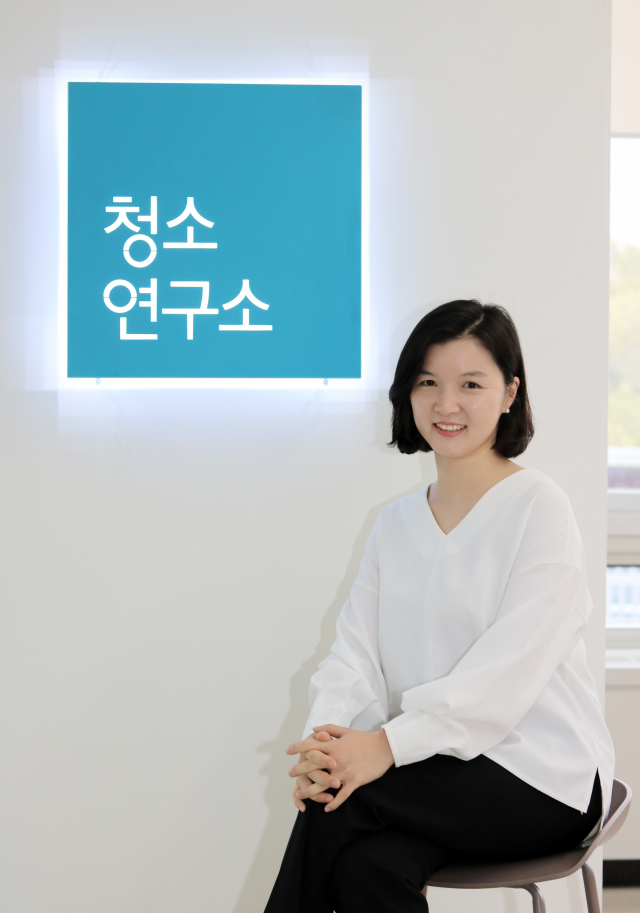
"We plan to increase the number of cleaning managers to over 70,000 within this year." Yeon Hyun-joo, CEO of Lifestyle Research Institute, is focusing most on securing 'cleaning managers' this year. This is to expand the 'Cleaning Research Institute' service, currently operating in Seoul and major metropolitan areas, nationwide. However, CEO Yeon added a caveat. Rather than simply increasing the numbers, it is essential to recruit 'good' managers. When choosing between quantitative growth and qualitative growth, she prioritizes 'quality.' This is also the distinguishing feature of the Cleaning Research Institute service she aims for.
On the 9th, CEO Yeon emphasized in an interview with Asia Economy, "We have created service guidelines and provide standardized training for cleaning managers," adding, "For qualitative improvement of the service, managers must meet qualification requirements." The Cleaning Research Institute is a service that has moved the existing domestic helper brokerage service to an IT platform, allowing customers and cleaning managers to conveniently search, book, and manage through a mobile application (hereafter app). Previously, the market was centered on small-scale manpower agencies, so personnel were assigned from a fixed pool, but the Cleaning Research Institute secures a large number of customers and managers, enabling matching according to mutual conditions, according to CEO Yeon.
The number of cleaning managers working here has increased by an average of 15% monthly, recently surpassing 20,000 and approaching 30,000. Although the numbers are growing rapidly, prioritizing quality means not just anyone can become a manager. To become a cleaning manager, one must pass processes including submitting identification and documents, a 100% face-to-face interview, and attending in-house home cleaning training. Especially for ethnic Koreans from China, applicants are selected only after verifying their length of stay in Korea, experience, and legal visa status to ensure identity reliability. Both offline and online training are conducted. CEO Yeon explained, "We send detailed content in video format through the app in addition to basic training." The effects of these efforts to improve service quality are already evident. The number of users is rapidly increasing by 20% monthly on average, and the reuse rate exceeds 85%.
The Cleaning Research Institute embodies CEO Yeon's experience. While working at Kakao, she participated in planning a home cleaning service as a new business item. When Kakao decided not to pursue this business directly, she started her own company in 2017. As a working mom raising three children, she was convinced this service was necessary. CEO Yeon explained the background of her startup: "While raising children and working, I used domestic helper services a lot. I felt it was an opaque and uninnovative market where I had to explain my needs repeatedly to manpower agencies and card payments were not even accepted." She incorporated her extensive experience using domestic helper services to allow inputting the specific cleaning needs and conditions unique to each home in advance. CEO Yeon introduced, "If you know the trash disposal dates and locations, or where cleaning tools are kept beforehand, you can avoid confusion. By recording each home's conditions in the app, there is no problem even if the manager changes, and managers can be informed of the parts they need to be familiar with."
An incentive system to improve the quality of cleaning managers has also been established. Active cleaning managers receive a performance bonus of 100,000 KRW when working over 130 hours per month, and additional hourly wages for visiting regular service customers more than eight times. They also lead efforts to improve working conditions by supporting flu vaccinations and giving holiday gifts. One of the Cleaning Research Institute's strengths is the measures prepared to resolve issues such as damages that may occur during service. CEO Yeon said, "To prepare for unintended damages, we are the only platform that subscribes to liability insurance, allowing managers to work with peace of mind."
CEO Yeon plans to expand the Cleaning Research Institute service in the second half of this year, focusing on regions with high home cleaning demand such as Busan, Daegu, Daejeon, and Sejong. She is also planning Lifestyle Research Institute's business model after cleaning. She said, "We will focus on solidifying the Cleaning Research Institute service first, and then expand to services with high demand such as childcare, elderly care, and the pet market."
© The Asia Business Daily(www.asiae.co.kr). All rights reserved.
![Clutching a Stolen Dior Bag, Saying "I Hate Being Poor but Real"... The Grotesque Con of a "Human Knockoff" [Slate]](https://cwcontent.asiae.co.kr/asiaresize/183/2026021902243444107_1771435474.jpg)
















