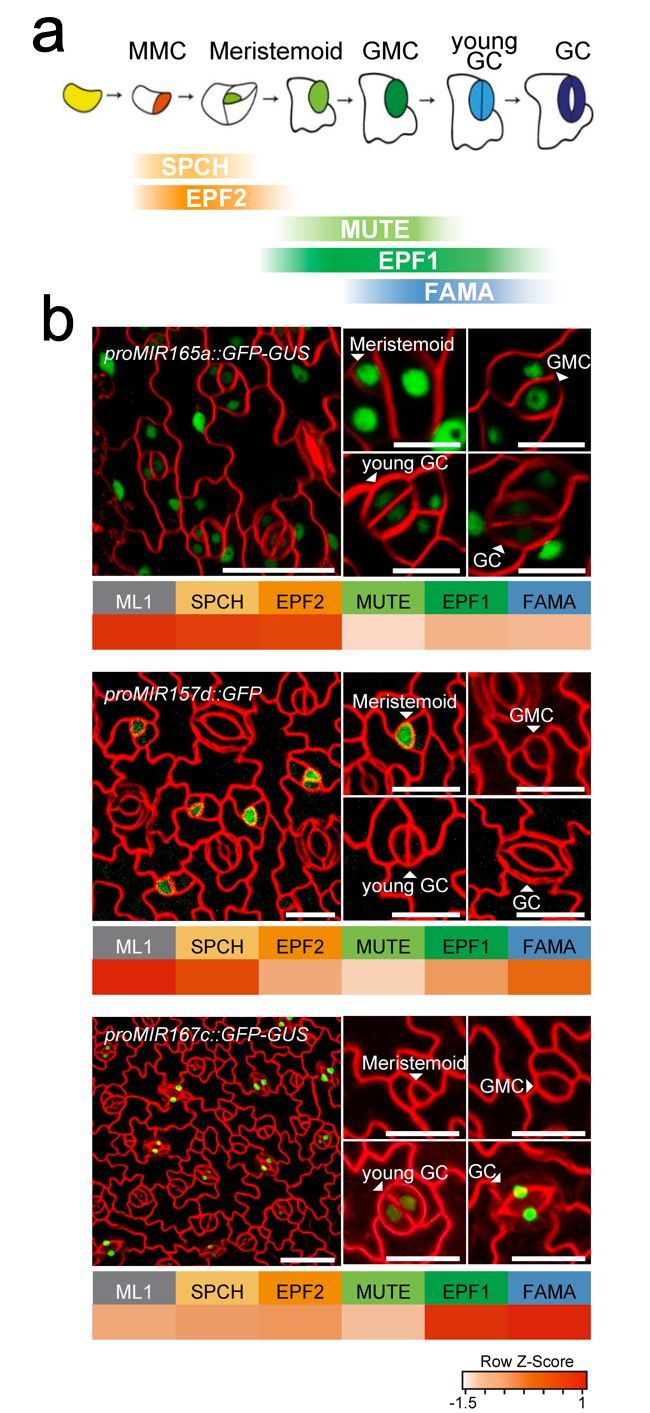
 Schematic diagram of stomatal development (a) and fluorescence microscopy images of regulatory RNAs (miRNAs) specifically expressed during stomatal development (b)
[Asia Economy Reporter Junho Hwang] How are stomata, which play an important role in plant photosynthesis, formed?
A domestic research team has announced research results showing that ordinary plant cells develop into guard cells that form stomata due to the expression of regulatory RNA. The researchers expect that if the regulatory mechanism of this RNA is further clarified, it could contribute to improving crop productivity and alleviating food shortages in the future. On the 3rd, Daegu Gyeongbuk Institute of Science and Technology (DGIST) explained the research results of Professor Junmyeong Kwak from the Department of New Biology and Dr. Yoonjoo Kim's research team from the IBS Plant Aging and Lifespan Research Center.
Regulatory RNA that creates guard cells
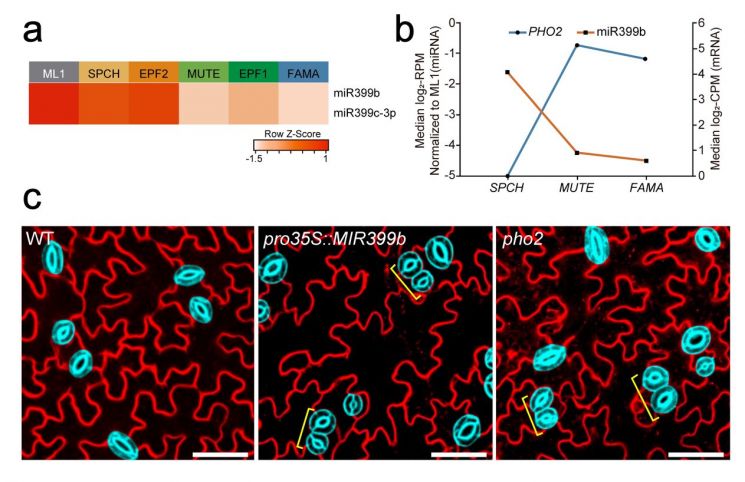
The research team elucidated the role and principle of regulatory RNA (miRNA) in the developmental regulation of guard cells.
To this end, the research team devised a molecular genetic system capable of isolating regulatory RNA at each developmental stage of guard cells. They then confirmed that the regulatory RNAs of the guard cell lineage are dynamically expressed according to developmental stages. Additionally, they predicted the target genes of guard cell regulatory RNAs and established a gene network for guard cell development and function.
In particular, the research team revealed that inhibiting or overexpressing guard cell regulatory RNA causes defects in the development and distribution of stomata.
Guard cells exist in the epidermis of plant leaves and stems, forming stomata as a pair facing each other. Stomata are pores responsible for absorbing carbon dioxide necessary for photosynthesis and releasing oxygen and moisture. Plants finely regulate the number and distribution of stomata according to environmental changes to achieve optimal growth.
Future elucidation of regulatory RNAs’ roles to contribute to solving food shortages
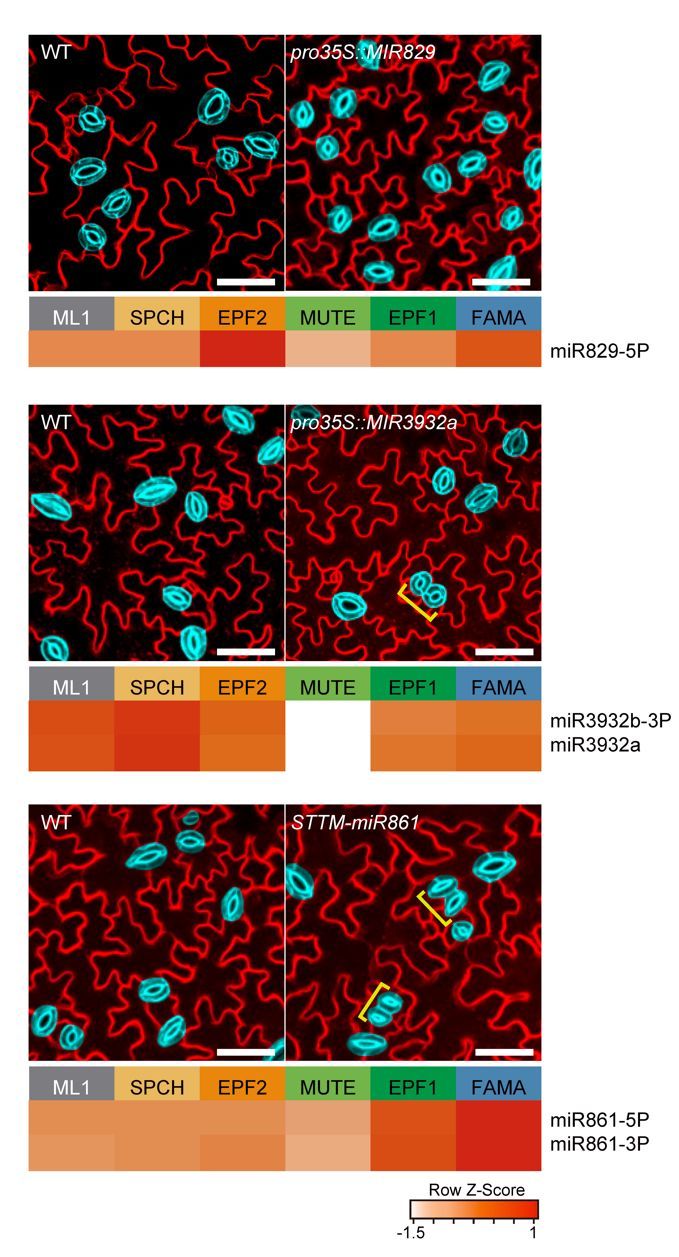 Fluorescence microscopy image of stomatal development phenotype in control RNA overexpressing transgenic plants
The research team expects that by identifying the functions of regulatory RNAs and their target genes in the future, new methods to control stomatal development can be found.
Guard cells are produced through proliferation and differentiation from specialized self-renewing stem cells, but research on regulatory RNAs, which play an important role in cell differentiation and development, has been insufficient.
Professor Junmyeong Kwak explained, "This study is the first to simultaneously discover a large number of guard cell regulatory RNAs and to reveal that regulatory RNAs contribute to guard cell differentiation and development through previously unknown mechanisms."
He added, "We expect that these research results will provide a new approach to increasing crop production."
This research was published on the 2nd in the Proceedings of the National Academy of Sciences of the United States of America.
© The Asia Business Daily(www.asiae.co.kr). All rights reserved.



















