The 13th, 14th, and 16th Deaths in Daegu Occurred Before Hospitalization
Due to Bed Shortages, Patients Were Isolating at Home or Tested Positive Postmortem
Authorities: "Experts Are Discussing... New Guidelines Will Be Established Soon"
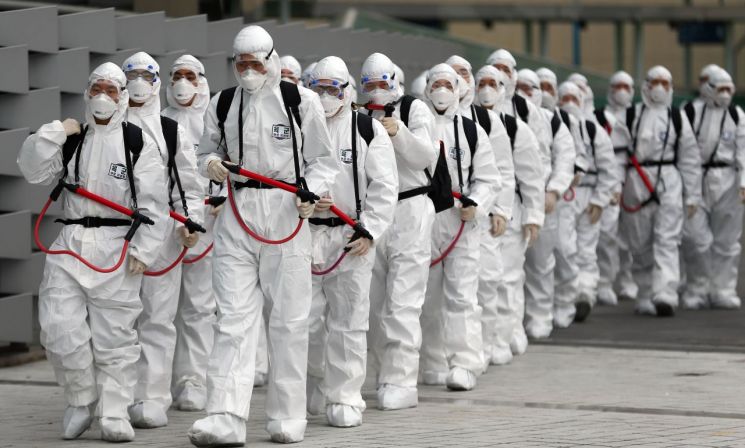 On the holiday of the 29th, the Army field support team, composed of soldiers from the 2nd Operations Command and the 50th Division, is conducting a disinfection operation at Dongdaegu Station in Dong-gu, Daegu City to prevent the spread of the novel coronavirus infection (COVID-19).
 [Asia Economy Reporter Choi Dae-yeol] There have been consecutive deaths of individuals infected with the novel coronavirus disease (COVID-19) who were unable to be hospitalized and treated in time. This has occurred in Daegu, where the number of patients surged rapidly within a short period, leading to a shortage of hospital beds. As the number of confirmed patients increased faster than the rate at which beds for COVID-19 patients were expanded, many could not be admitted immediately after diagnosis or deteriorated while waiting for test results, resulting in increased fatalities.
According to the Central Disaster and Safety Countermeasures Headquarters on the 29th, the 14th death, who passed away the previous day, was a 70-year-old woman (patient number 2467) who waited at home for her test results after being tested but died as her condition worsened. She reportedly had underlying health conditions. The 16th death (patient number 2570) was a 63-year-old woman who tested positive for COVID-19 postmortem. Authorities confirmed that she had been undergoing chemotherapy for over three years. She was transferred to Yeungnam University Hospital on the 27th and died thereafter.
Earlier, a 74-year-old man residing in Daegu (the 13th death) who died on the 27th also stayed at home after testing positive but passed away as his condition deteriorated. He was confirmed positive on the 25th, two days before his death, but due to the lack of available beds, he was isolating at home when his symptoms worsened. It was found that he had a history of kidney transplantation. The 11th death, a 35-year-old Mongolian, was confirmed positive postmortem but was known to have been in a serious condition due to chronic liver disease and renal failure.
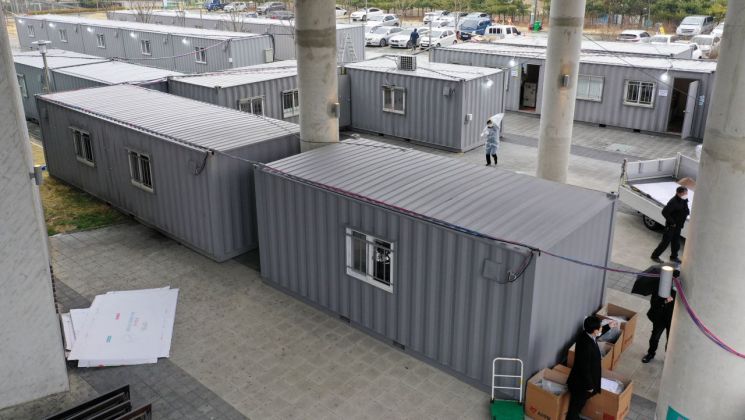 On the 28th, a temporary hospital made of containers is being installed in the yard of the Korea Workers' Compensation & Welfare Service Daegu Hospital in Hakjeong-dong, Buk-gu, Daegu. From this day, the Korea Workers' Compensation & Welfare Service Daegu Hospital emptied all rooms and beds to accommodate confirmed cases of the novel coronavirus infection (COVID-19). However, since the hospital specializes in rehabilitation and lacks infectious disease response and control facilities, the entire main building is under access control, and all departments and facilities of the hospital are being relocated to container buildings.
Although COVID-19 patients are supposed to be immediately isolated and treated upon confirmation, the rapid surge in patients in Daegu has prevented this system from functioning properly. The number of confirmed cases has exceeded 2,000 as of this day. Mild cases are admitted to dedicated hospitals, and severe cases are placed in negative pressure isolation beds, but the number of patients has surpassed the available beds, causing delays in treatment even after confirmation.
The Central Clinical Committee on Emerging Infectious Diseases, which has been responsible for treating COVID-19 patients, argues that the current treatment system needs to be reorganized to reduce fatalities. They suggest that mild cases should be isolated at home and treated accordingly, prioritizing the identification and intensive treatment of patients with severe or critical symptoms to prevent death. Since mild patients occupy beds en masse but generally have a low risk of death, they propose placing them lower in priority.
Despite the increasing number of deaths due to lack of treatment, the government remains cautious. At a briefing, Kwon Jun-wook, Deputy Director of the Central Disaster and Safety Countermeasures Headquarters, stated, "There are public health aspects and medical expertise required, so we are continuously discussing with experts from various fields." He added, "There are differing opinions among experts in each field, but we are working to consolidate them and establish effective guidelines as soon as possible to implement them promptly."
© The Asia Business Daily(www.asiae.co.kr). All rights reserved.


















