Struggling Nuclear Power Plant Central Control Room Staff
"Two-Week Absences Would Severely Impact Staffing"
Ministry of Industry: "Nuclear Plant Operation Possible with Personal Protective Equipment"
Power Companies: "Smooth Response as Long as There Is No 'Group Infection'"
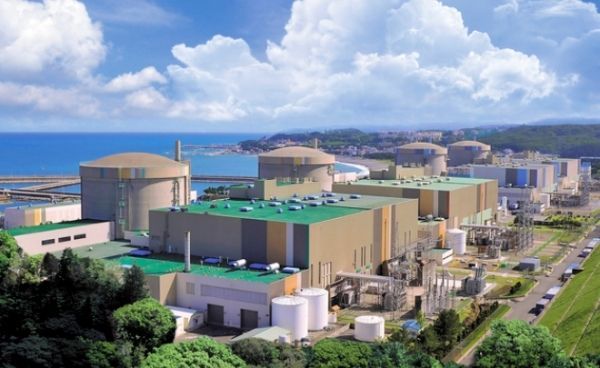
[Asia Economy Reporter Moon Chae-seok] "The recent confirmed cases have no impact whatsoever on the safe operation of nuclear power plants." (Korea Hydro & Nuclear Power)
"I hope that all heads and employees of power-related organizations do not let their guard down and do their best to manage stable power supply so that the public can use electricity with peace of mind in any emergency situation." (Jung Seung-il, Vice Minister of the Ministry of Trade, Industry and Energy)
On the morning of the 26th, KHNP announced that one employee at its headquarters and one security staff member at the Wolseong Nuclear Power Plant were confirmed positive for COVID-19. The next day, the Ministry of Trade, Industry and Energy clearly expressed its determination to prevent any shutdown of nuclear power plants under any circumstances.
This time, the Wolseong Nuclear Power Plant employee was a security staff member at the entrance checkpoint, so there was no impact on nuclear safety, but if a confirmed case emerges in the central control room, attention turns to crisis response measures.
According to experts, multiple teams are deployed in the nuclear power plant’s central control room, and since they work in the same room, if a confirmed case occurs, it becomes difficult to replace personnel. The central control room staff of nuclear power plants are an elite unit that is harder to substitute than resources at other power plants.
On the 26th, Lee Deok-hwan, Honorary Professor of Chemistry and Science Communication at Sogang University, said, "The central control room personnel of nuclear power plants work under strict regulations, such as not drinking alcohol a few hours before their shift and getting a certain amount of sleep. If multiple teams are absent for two weeks, it would seriously damage energy supply."
On the same day, a power company official in the Yeongnam region said, "If the number of confirmed cases is just one or two, it might be manageable, but if several people at each power company get infected, problems related to power supply could arise. Especially if nuclear and coal power plants stop, it could disrupt power supply, so government-level measures are necessary," he revealed.
Another official from a power plant in the Yeongnam region said, "Electricity generated at any power plant can be sent nationwide through the transmission network, but if a 'cluster infection' occurs at a power plant in a specific region, the load could increase. For large-capacity power plants, power supply measures for the local area must be included in the crisis response manual," he said.
Accordingly, the government quickly established exception regulations to prevent the possibility of a 'nuclear power plant breakdown' in advance. On the 27th, a day after KHNP’s announcement, in consultation with the Korea Disease Control and Prevention Agency, measures were taken to allow operation duties to continue even if a confirmed case occurs in the central control room, provided personal protective equipment is worn.
Wearing safety helmets, masks, goggles, full-body protective suits, gloves, shoe covers, and boots will be permitted along with disinfection to allow simultaneous operation.
A backup power response system is also in place. The Korea Power Exchange’s Central Power Control Center has established detailed personnel operation plans and backup equipment to ensure 24-hour normal operation. The Exchange oversees national power facilities and system operations.
The Ministry of Trade, Industry and Energy stated that if a confirmed case occurs at the Central Power Control Center in Naju, Jeollanam-do, designated substitute workers will be sequentially deployed to prevent any work gaps. If normal operation of the Naju center becomes difficult, the backup control center in Gyeonggi-do will be immediately utilized.
A Korea Power Exchange official explained, "Even if the COVID-19 crisis is not at the 'serious' level, we basically maintain reserve power that can cover several liquefied natural gas (LNG) power plants."
The five power generation companies?Korea Midland Power (Boryeong, Chungnam), Korea South-East Power (Jinju, Gyeongnam), Korea Southern Power (Busan), Korea East-West Power (Ulsan), and Korea Western Power (Taean, Chungnam)?also announced their COVID-19 emergency response plans on the 27th.
They are implementing preventive measures such as installing thermal imaging cameras for all employees and visitors, requiring visitors to fill out health questionnaires, and conducting temperature checks.
Infection prevention activities for central control room personnel, the core facility of power plants, are being strengthened, and emergency personnel operation measures are also underway.
© The Asia Business Daily(www.asiae.co.kr). All rights reserved.

















