Anti-Korean Sentiment Among Overseas Nationals in China "Continuous Issues Raised to Chinese Government"
Government Recognizes US Trend That "Korea and China Are Different"
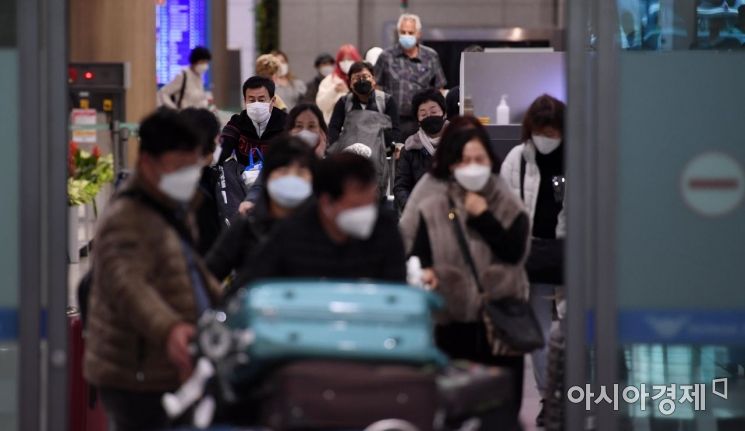 On the 4th, travelers at Incheon International Airport Terminal 1, where a dedicated immigration area for passengers arriving from China has been established, are entering while wearing masks. / Yeongjongdo - Photo by Kim Hyunmin kimhyun81@
[Asia Economy Reporter Lim Cheol-young] The Ministry of Foreign Affairs announced that since the 23rd, it has been expanding the operation of a task force centered on the Overseas Koreans Consular Office. This expansion and reinforcement of the organization came after the government raised the infectious disease alert to the severe level. The existing task force had been operating to manage the repatriation of overseas nationals from Wuhan, China, the origin of the novel coronavirus infection (COVID-19).
A senior official from the Ministry of Foreign Affairs said in an informal briefing with reporters on the 28th, “The First Vice Minister of Foreign Affairs is leading the task force, with one division handled by the Overseas Koreans Consular Office and the other by the Vice Minister in charge of regional affairs,” adding, “In addition to the existing task force, a separate organization has been established to monitor regulatory measures in each country.”
Regarding the possibility of the United States raising its travel alert further, the official said, “We are in close communication with the U.S. government,” and “The Ministry of Foreign Affairs has not changed its plans for business trips to the U.S.” It is known that through phone calls between Cho Se-young, the First Vice Minister of Foreign Affairs, and Stephen Biegun, U.S. Deputy Secretary of State, the government has understood that the U.S. views South Korea and China differently.
On the atmosphere of discrimination and hatred toward overseas nationals in China, the official explained that the Ministry has continuously conveyed to the Chinese government that unfair measures should not be taken. The official said, “Embassies and consulates general are communicating opinions to both the central and local governments,” and “In some cases, issues have been raised and cooperation has been promised.”
He also added that consuls are being sent directly to airports to closely monitor quarantine measures imposed by some local governments in China. The official explained, “Local governments in China are implementing various forms of regulatory measures,” and “There are several types, but since measures are changing frequently, they are being checked on-site at airports and other locations.”
The official expressed regret over the increasing number of entry restrictions on South Korea despite diplomatic efforts but noted that some places have partially lifted entry restrictions. He said, “We humbly accept the criticism that despite our diplomatic efforts, there have been shortcomings,” and “We will do our best to continue our efforts.”
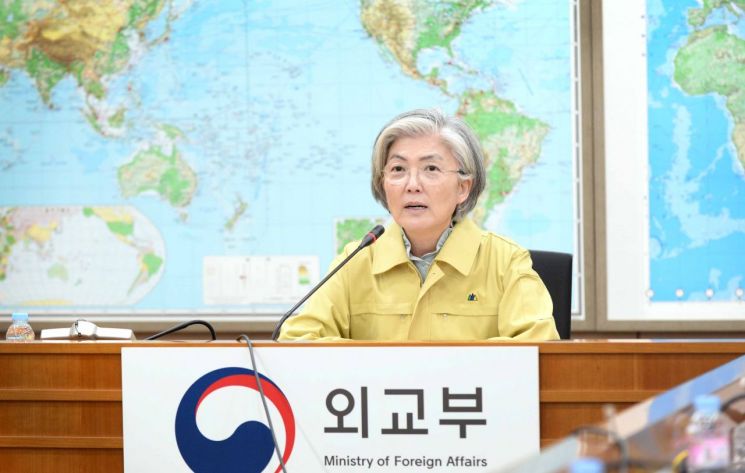
Meanwhile, on the afternoon of the same day, Foreign Minister Kang Kyung-wha held a video conference with the heads of Chinese and Vietnamese diplomatic missions, which are restricting entry for Koreans and foreigners who have visited Korea, to hear about the local situation. A Ministry of Foreign Affairs official explained, “Minister Kang will hold a video conference with the heads of the Chinese and Vietnamese missions, where many of our citizens travel, to reiterate headquarters’ guidelines and also listen to the local situation.”
© The Asia Business Daily(www.asiae.co.kr). All rights reserved.


















