Deviant Behaviors Continue Amid COVID-19 Chaos
Up to 2 Years Imprisonment for Lying About Movement Under Infectious Disease Control Act
Spreading Rumors or Fake News May Lead to Charges of Obstruction of Business or Official Duties
Mask Hoarding Punishable by Up to 2 Years Imprisonment or Fines Up to 50 Million Won
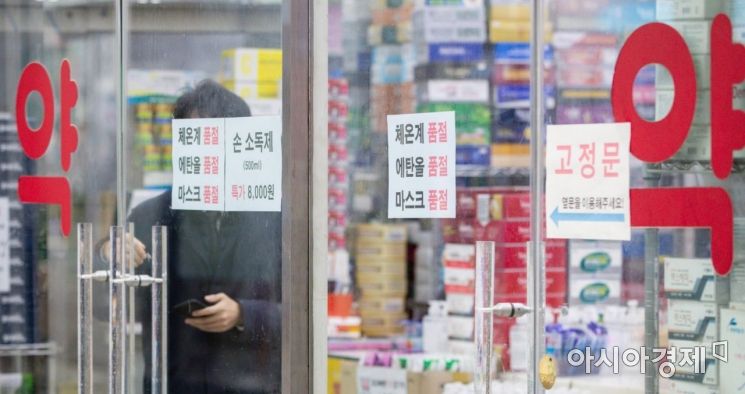 On the 28th, as the number of confirmed cases of the novel coronavirus infection increases, a notice indicating the sold-out status of masks and thermometers is posted at a pharmacy in Jongno 5-ga, Seoul. Photo by Jinhyung Kang aymsdream@
[Asia Economy Reporter Song Seung-yoon] As the novel coronavirus infection (COVID-19) crisis spreads, citizens' deviant behaviors taking advantage of social chaos are occurring one after another. There are various cases of deviance, such as lying during government epidemiological investigations and pretending to be members of Shincheonji Church of Jesus to get tested for COVID-19. All of these are clear crimes and subject to punishment.
On the 20th, patient number 111, who was diagnosed with COVID-19, stated during the epidemiological investigation that "I visited the Gajwa Health Center in Seoul and the Bukgajwa 1-dong Community Service Center to conduct credit card sales," but it was later revealed through CCTV analysis that he had also visited another community service center. On the 25th, a Shincheonji member confirmed infected in Yongin, Gyeonggi Province, denied visiting the Shincheonji Daegu Church, but GPS tracking revealed the visit.
There are also cases of not complying with quarantine measures by health authorities. The 15th confirmed patient diagnosed on the 2nd is a representative case. While under self-quarantine after testing, he violated the authorities' guidelines and had a meal with his sister-in-law, who was later diagnosed as the 20th confirmed patient four days later.
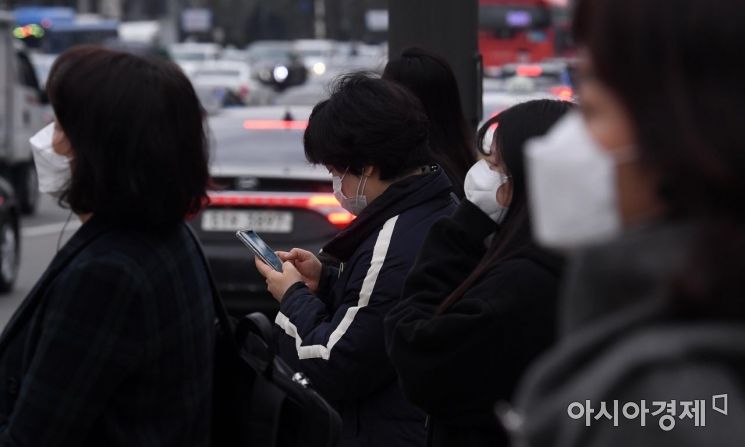 On the 28th, as the spread of the novel coronavirus infection (COVID-19) continued, commuters near Gwanghwamun in Seoul hurried along wearing masks on their way to work. Photo by Hyunmin Kim kimhyun81@
If a confirmed patient lies about their movement, they can be sentenced to up to two years in prison or fined up to 20 million KRW under the Infectious Disease Prevention and Control Act. Suspected patients who violate quarantine measures can be fined up to 3 million KRW. If a person knowingly infects others by contacting them despite being confirmed positive, criminal charges such as injury or negligence causing injury under the Criminal Act may apply depending on intent. In such cases, penalties are more severe than those under the Infectious Disease Prevention Act.
Those who lie or fabricate symptoms despite not having visited high-risk areas or contacted confirmed patients also violate the Infectious Disease Prevention Act. Especially if they obstruct the work of national agencies, they may be charged with obstruction of official duties. In fact, the day before, a man in his 20s in Yongin, Gyeonggi Province, who lied about visiting the Shincheonji Daegu Church and got tested for COVID-19, was arrested on charges including obstruction of official duties by deception and violation of the Infectious Disease Prevention Act. He was also under investigation for unrelated embezzlement charges. Under current law, obstruction of official duties by deception is punishable by up to five years in prison or a fine of up to 10 million KRW.
Various rumors and indiscriminate dissemination of fake news related to COVID-19 have also occurred, including cases where public officials leaked confirmed patient lists. Dissemination of fake news can be punished under defamation laws in the Criminal Act, the Information and Communications Network Act, and the Telecommunications Basic Act. If such acts cause damage to specific companies or obstruct national agencies' work, charges of obstruction of business and obstruction of official duties may also apply. Leaking personal information such as confirmed patient lists is a crime punishable under the Personal Information Protection Act.
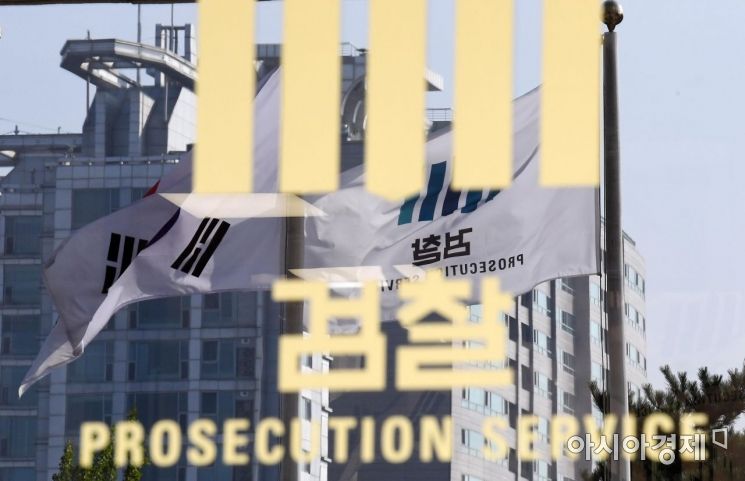
In addition, hoarding of health supplies such as masks and hand sanitizers is punishable by up to two years in prison or a fine of up to 50 million KRW under the Price Stabilization Act through recently enforced regulations. There is also a possibility of charges for unjust enrichment under the Criminal Act.
The prosecution has also taken a firm stance on such illegal acts. On the 27th, the Supreme Prosecutors' Office issued a directive titled "Strict Punishment of COVID-19 Related Cases and Dissemination of Case Handling Standards" to all prosecution offices nationwide, stating that if government quarantine policies are actively obstructed or epidemiological investigations are refused in an organized or planned manner, suspects will be investigated under detention. The types of cases requiring strict response include ▲ refusal or obstruction of epidemiological investigations by administrative agencies or intentional and organized non-cooperation with quarantine authorities ▲ crimes related to mask distribution disruption and fraud involving health supplies ▲ dissemination of false information ▲ leakage of patient information.
Meanwhile, the number of confirmed COVID-19 cases in South Korea increased by 256 overnight, reaching a total of 2,022 as of 9 a.m. on the 28th. This is 39 days since the first confirmed case was reported on the 20th of last month.
© The Asia Business Daily(www.asiae.co.kr). All rights reserved.



















