Cold waves and heatwaves decrease, reducing heating and cooling demand... Electricity sales drop by 900 billion
"Coal usage rate declines due to coal phase-out policy... Negative impact on performance"
"Unrelated to nuclear phase-out, establishing a sustainable tariff system"... Pressure to raise electricity rates increases
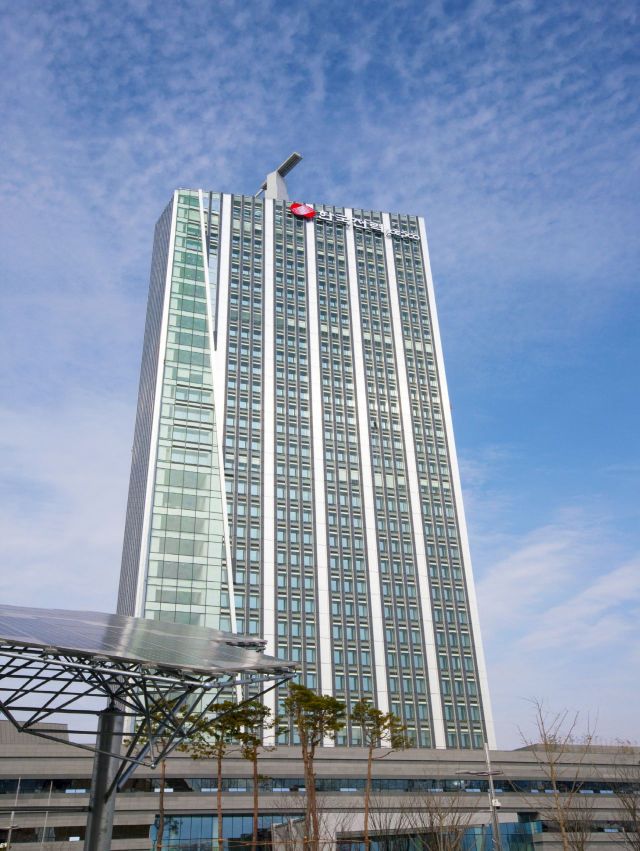
[Asia Economy Reporters Kim Bo-kyung and Moon Chae-seok] Korea Electric Power Corporation (KEPCO) recorded its worst operating loss of 1.3566 trillion KRW last year. This was due to a decline in coal utilization rates following fine dust reduction measures and a decrease in electricity sales revenue. As KEPCO’s deficit widens, pressure to raise electricity rates is expected to intensify further.
On the 28th, KEPCO announced its consolidated financial results for last year, reporting an operating loss of 1.3566 trillion KRW. This is the largest loss in 11 years since 2008, when international oil prices surged (2.7981 trillion KRW).
KEPCO recorded losses for two consecutive years for the first time since 2011?2012, with the deficit increasing by 1.1486 trillion KRW compared to the previous year. Last year’s sales revenue decreased by 1.5348 trillion KRW from the previous year to 59.0928 trillion KRW, and net loss increased by 1.05 trillion KRW to 2.2245 trillion KRW.
The biggest factor in the worsening performance was a 903 billion KRW decrease in electricity sales revenue compared to the previous year. KEPCO explained that the number of cold wave and heat wave days decreased, reducing heating and cooling demand, and that a base effect from the 2018 Pyeongchang Olympics also played a role. Last year, the number of heat wave days was 13.8, significantly down from 31.5 days in 2018. As a result, electricity sales volume decreased by 0.4% for residential use, 0.6% for general use such as self-employed businesses, and 1.3% for educational use. Industrial sales, which account for more than half of total sales volume, decreased by 1.3%, likely influenced by the slowdown in domestic manufacturing last year.
The government’s coal phase-out policy aimed at reducing fine dust and greenhouse gases was also cited as a cause of the deteriorating performance. KEPCO stated that the shutdown of aging power plants to respond to high concentrations of fine dust and the expansion of winter supply limits negatively impacted operating results. Coal utilization rates fell from 74.7% in 2018 to 70.7% last year. Due to reductions in free emission allowances and rising emission permit prices, power generation companies’ greenhouse gas emission permit costs increased by 700 billion KRW compared to the previous year. Kim Byung-in, KEPCO’s Chief Financial Officer, explained, “Emission trading costs were concentrated in the fourth quarter because costs are recorded once the annual allowance is exceeded.” He also noted that depreciation and maintenance costs increased by 600 billion KRW compared to the previous year due to investments in power facilities to ensure stable electricity supply.
Meanwhile, KEPCO’s performance has been on a downward trend since the government fully implemented its nuclear phase-out policy at the end of 2017. Regarding this, CFO Kim said, “The worsening performance is unrelated to the nuclear phase-out,” adding, “We will focus on rational institutional improvements to establish a sustainable rate system.” KEPCO is currently pursuing a restructuring of the electricity rate system to improve its financial structure, and there is a prevailing expectation that electricity rates will rise after the general elections. KEPCO President Kim Jong-gap previously stated, “Since there is consensus among both ruling and opposition parties in the National Assembly on adjusting industrial off-peak rates and agricultural discount rates, these will be the first to be reformed.”
© The Asia Business Daily(www.asiae.co.kr). All rights reserved.


















