7 Patients at Cheongdo Hospital Have Weak Immunity
Chronic Diseases Including Renal Failure and Diabetes...
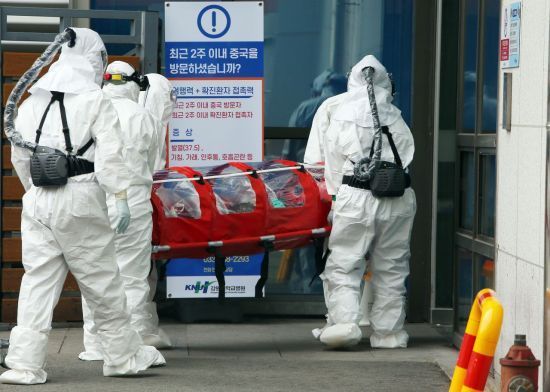
[Asia Economy Reporter Cho Hyun-ui] Most of the patients who died from the novel coronavirus infection (COVID-19) in South Korea were middle-aged people in their 50s and 60s with underlying health conditions. Cheongdo Daenam Hospital in Gyeongbuk, where more than half of the deaths occurred, had many patients with weakened health due to the majority being long-term inpatients.
On the 27th, Asia Economy analyzed 12 deaths that have occurred so far and found the average age to be 58. Except for the 3rd (41 years old), 11th (36 years old), and 12th (73 years old) deceased, all were in their 50s and 60s.
◆ Most of the deceased were 'in their 50s and 60s with underlying conditions' = Most of them had pre-existing conditions before being infected with COVID-19. Also, among the 12 deceased, 7 were inpatients at Cheongdo Daenam Hospital’s psychiatric ward, indicating that patients with underlying diseases or weakened immune systems were more vulnerable. Dr. Lee So-hee, head of the Department of Psychiatry at the National Medical Center, explained, "Long-term psychiatric inpatients typically have weakened immune systems," adding, "They also suffer from poor nutrition and limited walking space due to indoor living, resulting in reduced muscle mass."
Experts warned that more than half of the total deaths being from Cheongdo Daenam Hospital suggests that the fatality rate among psychiatric patients could exceed 20% regardless of age. Clinical expert Lim Sang-wi pointed out, "The mortality rate of psychiatric patients with weakened immune function due to long-term hospitalization is likely to be higher." The nature of psychiatric wards, where windows and entrances are closed, making ventilation difficult, also contributed. Dr. Lee added, "Research shows that respiratory diseases account for 37.4% of illnesses occurring within psychiatric wards, the highest proportion."
Other deceased patients also suffered from chronic diseases such as chronic renal failure, nephropathy, and lung diseases. The 5th deceased had chronic renal failure as an underlying condition. This patient was transferred to Kyungpook National University Hospital for treatment after testing positive but later died. The 11th deceased, a Mongolian male, had liver cirrhosis as an underlying condition. The 12th deceased, a member of the Shincheonji Church of Jesus, had diabetes and hypertension.
◆ Deceased in China and Italy were in their 70s and 80s = In China, where the highest number of deaths worldwide occurred, the fatality rate for those aged 70 and above reached 10%. According to the Chinese Center for Disease Control and Prevention (CDC), the mortality rate for people in their 70s was 8.0%, and for those 80 and older, it was 14.8%. In contrast, the rates for people in their 10s to 30s and 40s were 0.2% and 0.4%, respectively, both below 1%, while those in their 50s and 60s had rates of 1.3% and 3.6%, respectively.
In Italy, which rapidly emerged as the epicenter of COVID-19 spread in Europe, most of the 12 deceased were elderly people in their 70s and 80s with underlying health conditions. Iran, which has the second highest number of deaths after China, has seen a rapid increase in casualties centered around the central religious city of Qom since its first death on the 19th.
© The Asia Business Daily(www.asiae.co.kr). All rights reserved.

















