Industrial Technical Workforce Tied Up, Vietnam Facility Construction Comes to a Halt... Government Appeals for 'Essential Personnel Health Guarantee'
[Asia Economy Reporter Park So-yeon] The CEO of Company A, which is currently building production facilities for Samsung Electronics' 2nd generation foldable phone 'Galaxy Z Flip' in Vietnam, has recently been losing sleep. Although the Samsung Electronics 2nd generation foldable phone 'Galaxy Z Flip' has received explosive reactions after its release, the technical personnel and related materials needed to build the production facilities must be sent to Vietnam. However, due to the spread of the novel coronavirus infection (COVID-19), the Vietnamese government has restricted the entry of Koreans. A representative of Company A said, "There is high demand for the Z Flip, so we have sent a large amount of new equipment to Vietnam, but it is stuck at the port and is becoming a money-eating hippo day by day," adding, "The local Vietnamese workforce does not have the skills to install this equipment, so it is frustrating to the point of despair."
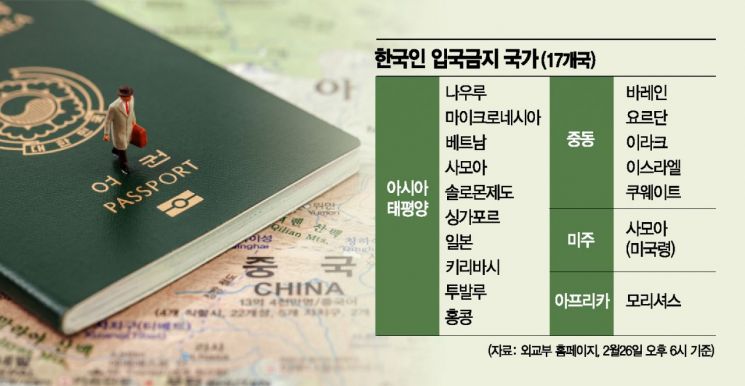
According to the business community on the 27th, as 17 countries including Vietnam, Singapore, and Japan have imposed entry restrictions on arrivals from Korea to prevent the spread of COVID-19, essential industrial personnel are unable to travel abroad, causing frequent disruptions to business operations.
Samsung Electronics is currently building additional production facilities in Vietnam to meet the surging demand for the 'Galaxy Z Flip' produced at its domestic Gumi factory, in cooperation with Company A and others. If Vietnam's entry restrictions continue, not only partner companies but also Samsung Electronics' mobile business could suffer damage.
LG Electronics, which is preparing to launch the new smartphone 'V60' in the first half of this year, is in a similar situation. LG Electronics established a new production line at the end of last year, so there are no issues with equipment, but it is facing difficulties in final testing. LG Electronics plans to launch the new mobile product in April-May and needs to frequently dispatch development and product planning teams locally, but travel restrictions have forced them to consider delaying the launch date.
Yoon Ok-hyun, head of the Vietnam office of the Korea Chamber of Commerce and Industry, explained, "Many companies operating in Vietnam are unable to enter from Korea and cannot set up equipment," adding, "Koreans are avoided even nearby, so service industries such as restaurants, cinemas, banks, and hospitals are also suffering."
Kim Yong-chun, a team leader at the Federation of Korean Industries, said, "Not only in Vietnam but also corporations with major customers in Japan, Russia, and other regions are facing difficulties in new business." In fact, B Patent Corporation, whose major clients are Japanese companies, has completely canceled a planned business trip to Japan. Patent attorney Kim from B Corporation said, "There were many meetings scheduled for consultations on new patent applications, but they were canceled," adding, "A decline in corporate performance is inevitable."
The business community expects serious business disruptions if entry restrictions expand comprehensively in the future. Especially as the COVID-19 situation in Korea shows signs of prolonged duration, voices are calling for extraordinary government measures to secure global supply chains.
A battery industry official said, "Existing business partners can proceed via email and phone, but for new businesses or manufacturers with overseas production bases, remote work is nearly impossible for business progress." This is because existing production facilities require maintenance and repair, and new products require new facility construction.
Accordingly, opinions have been raised that a 'emergency exit' allowing entry and exit for essential personnel should be prepared, even if it means providing a 'health guarantee.' A business community official said, "Currently, there is no sharp solution in the private sector regarding entry and exit," adding, "It seems urgent for the government to negotiate diplomatically with countries imposing entry restrictions to find a reasonable solution."
© The Asia Business Daily(www.asiae.co.kr). All rights reserved.

















