Small Stationery Suppliers and Retailers
Business Slump Combined with COVID-19
University Area Self-Employed
Restaurants and Cafes Sales Devastated
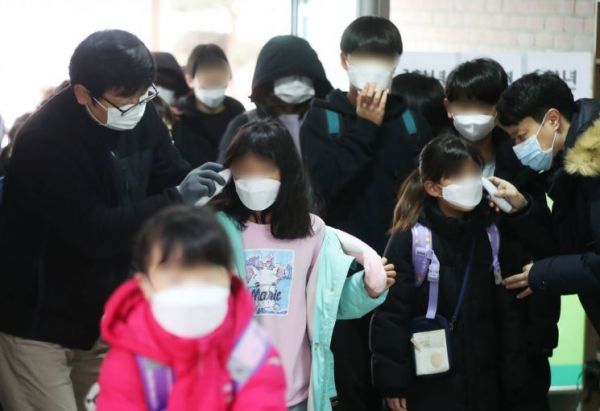
[Asia Economy Reporter Moon Hyewon] As the spread of the novel coronavirus infection (COVID-19) has led to a contraction in economic activities, the worries of small and medium-sized enterprises and small business owners are deepening. While the immediate concern is health threats and safety, the economic damage expected to arise as the situation prolongs also appears severe. In particular, the stationery industry, for which the new semester 'peak season' sales account for a significant portion of annual revenue, is facing an emergency.
Every year, the new semester season in February to March is the peak of the peak season for the stationery industry. During this period, 30-50% of annual sales occur, but this year, due to the impact of COVID-19, consumer sentiment has weakened, and with only non-face-to-face online purchases increasing, wholesalers and small stationery suppliers and retailers, who are mainly offline-based, are unable to expect the new semester sales boom.
The unprecedented situation caused by the postponement of the opening of all elementary, middle, and high schools nationwide as well as universities due to the spread of COVID-19 has led to a reduction in new product launch events and the temporary closure of some sales outlets, significantly shrinking business activities. An industry insider said, "If wholesalers, who have stocked up inventory from headquarters in anticipation of the new semester boom, cannot distribute it and it accumulates, the situation will become even more difficult," adding, "Small stationery suppliers, whose financial strength has already been depleted due to economic downturns, may suffer even greater damage."
There are voices saying the situation is even more difficult than during the late 1990s foreign exchange crisis. According to the industry, in the first quarter of 1998 during the foreign exchange crisis, sales of stationery, bags, shoes, and other items decreased by about 20-30% compared to the previous year, causing significant damage to related industries. Morning Glory, which used to generate about 60 billion won in annual sales, earned about half of its annual revenue during this period, but its sales in the first quarter of 1998 amounted to only 20 billion won. Monami, a company specializing in writing instruments and office supplies, also experienced about a 30% decrease in office supplies sales during this period.
The COVID-19 situation and the consequent postponement of university openings have also dealt a direct blow to small business owners and self-employed individuals around university districts. Lee Geunjae, head of the Seoul Jongno-gu branch of the Korea Foodservice Industry Association, said, "Restaurants, cafes, and other businesses gathered around university areas such as Sungkyunkwan University and Konkuk University have already been devastated." He added, "Even before the semester started, there was almost no movement of people, so sales have been sluggish since the beginning of the year, and not only now with the delayed semester but also afterward, students, who are the main customers, are expected to rarely dine out except for delivery. Even putting up a store for sale is difficult because no one comes to see it, making closure itself very challenging."
© The Asia Business Daily(www.asiae.co.kr). All rights reserved.
![Clutching a Stolen Dior Bag, Saying "I Hate Being Poor but Real"... The Grotesque Con of a "Human Knockoff" [Slate]](https://cwcontent.asiae.co.kr/asiaresize/183/2026021902243444107_1771435474.jpg)
















