Limit on Private Contracting to Support SMEs in COVID-19 Affected Areas, Prioritize Local Companies...Early Execution of 60% SME Product Purchases by June
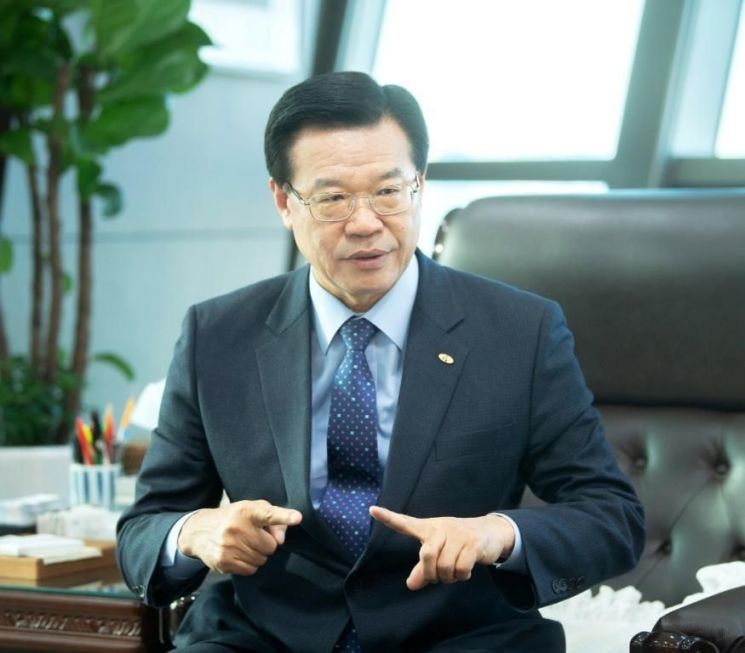
[Asia Economy Reporter Jong-il Park] Yongsan-gu (District Mayor Seong Chang-hyun) has taken steps to improve the private contract system to support small and medium-sized enterprises (SMEs) and small business owners in the area who have been affected by the spread of COVID-19.
The district first limits the number of private contracts per company to five times annually (based on the entire district). Additionally, using the 'Local Business Contract List' prepared by the Finance Department, the district investigates whether there are local companies in the industry to be ordered (by creating a checklist) before placing orders.
A private contract refers to a contract method where a public official arbitrarily selects an appropriate counterpart and concludes the contract.
This applies to contracts for manufacturing or purchasing goods or service/construction contracts with an estimated price of 20 million KRW or less, and contracts with an estimated price exceeding 20 million KRW but not exceeding 50 million KRW, which are concluded with small enterprises or small business owners for manufacturing, purchasing goods, or service contracts.
Last year, the district recorded 905 private contracts amounting to 23.9 billion KRW. Among these, construction contracts numbered 258 (5.967 billion KRW), service contracts 235 (14.482 billion KRW), and manufacturing/purchasing of goods 412 (3.451 billion KRW).
The problem was that only 18% (162 cases) of the district's total private contracts last year were with local companies.
A district official stated, "Considering fairness, we will limit the number of contracts per company and instead prioritize discovering local companies struggling due to COVID-19."
The district is also paying more attention to the priority purchase of SME products. By April, 40% of the public procurement budget (52.6 billion KRW) will be spent early, and by June, 60% will be executed. Last year, the district utilized 94.9% (49.9 billion KRW) of its public procurement amount for purchasing SME products.
Furthermore, the district is implementing loans for local SMEs and small business owners. The application deadline is March 6, with limits of up to 150 million KRW for SMEs and 50 million KRW for small business owners. The loans carry an annual interest rate of 1.5%, with a 2-year grace period and 3-year equal repayment terms, and can be used for business operations, technology development, facility funds, etc.
The district has also expanded public work projects for vulnerable groups from 50 projects (115 people) to 57 projects (134 people). The expanded projects include 'Price Survey of Quarantine Supplies' and 'Child Guardians,' and among applicants for existing public job projects who were not selected, priority will be given to hiring. These projects will continue from the end of this month through June.
Seong Chang-hyun, Mayor of Yongsan-gu, said, "We will use every method, including improving the private contract system and prioritizing the purchase of SME products, to prevent the local economic downturn," adding, "We hope residents will also gather strength to overcome this difficult situation."
Finance Department (☎2199-6743)
© The Asia Business Daily(www.asiae.co.kr). All rights reserved.

















