Theater Industry Devastated by the Spread of COVID-19
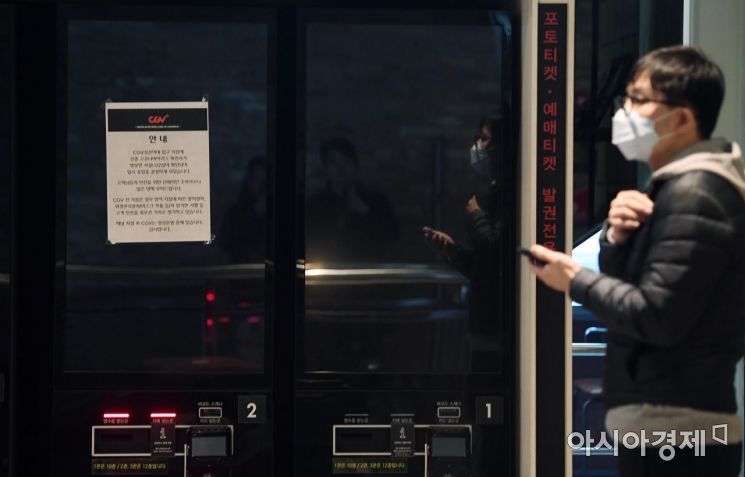 The CGV Sungshin Women's University Entrance branch in Seongbuk-gu, Seoul, confirmed as a location visited by the fifth confirmed case of the novel coronavirus infection, has suspended operations for the second consecutive day on the 2nd. Photo by Kim Hyun-min kimhyun81@
[Asia Economy Reporter Lee Jong-gil] The Korean film industry is on the brink of collapse due to the spread of the novel coronavirus infection (COVID-19). According to the Korea Film Council's integrated computer network for movie theater ticket sales, the number of moviegoers who visited theaters on the 24th was 77,071. This is the lowest since May 31, 2004, when the number was 67,973.
It can be said to be the worst performance since the 2000s. Sixteen years ago, the number of screenings was 1,813 (18 films). On the 24th, it was about one-eighth of that, at 13,560 screenings. Therefore, although the number of audiences gathered in theaters was small, the seat occupancy rate was not low. There were seven films that secured more than 10,000 seats and exceeded a sales rate of 10%. These were Troy (31.2%), The Eye 2 (14.2%), Hyojadong Barber (11.0%), Arahan Jangpung Daejakjeon (15.7%), Ongbak: Muay Thai's Descendant (18.0%), Kill Bill 2 (14.5%), and The Curse of Dawn (10.5%). The theater scene on the 24th was completely different from that time. Under the same conditions, no film recorded a sales rate above 10%. The only film that exceeded 5% was The Closet (5.7%).
On that day, the theater industry failed to reach the 100,000 audience mark for the second time since 2010. The previous defeat was on April 5, 2016 (94,906 people). Films released at the end of March that year consecutively failed at the box office. These included Batman v Superman: Dawn of Justice (21,937 people), The Great Actor (9,999 people), Misconduct (7,702 people), My Big Fat Greek Wedding 2 (2,626 people), and Glory Day (2,265 people). Because of this, Zootopia, which was released on February 17 that year, topped the box office with 22,334 viewers, an unusual phenomenon.
The film currently screening, Beasts Clawing at Straws, was recognized for its popularity not only during its preview but also after its release. 1917 attracted attention as a competitor to Parasite at the American Academy Awards, and Honest Candidate gathered 676,541 viewers during its opening weekend (21st?23rd), despite the cautious atmosphere due to COVID-19. However, as confirmed COVID-19 cases surged nationwide, including in Daegu, visits to these films abruptly stopped. This is why concerns are rising that the Korean film industry is facing its greatest crisis since the introduction of multiplexes in 1998. Annual theater sales account for about 76% of the total film sales in Korea. If theaters falter, the entire film industry inevitably shakes.
© The Asia Business Daily(www.asiae.co.kr). All rights reserved.
![User Who Sold Erroneously Deposited Bitcoins to Repay Debt and Fund Entertainment... What Did the Supreme Court Decide in 2021? [Legal Issue Check]](https://cwcontent.asiae.co.kr/asiaresize/183/2026020910431234020_1770601391.png)















