Jeon Byeong-yul, Former Director of the Korea Centers for Disease Control and Prevention, Expresses Concern
No Time to Wait for Completion of Vaccines and Therapeutics
Need an Environment to Quickly Identify and Treat Patients
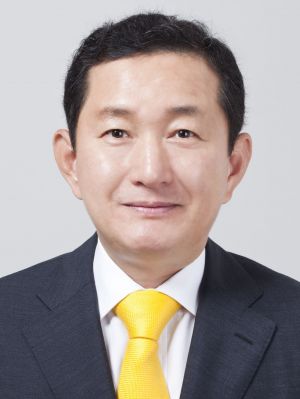
[Asia Economy Reporter Choi Dae-yeol] "The situation is far more serious than during the H1N1 pandemic; it is essentially a war situation. We must undertake a large-scale overhaul to prevent the healthcare system from shutting down."
As confirmed cases of COVID-19 rapidly increase, the government has raised the infectious disease crisis alert to the "serious" level. This is the first time in 11 years since the 2009 H1N1 influenza A (H1N1) outbreak that the serious alert level has been issued. Jeon Byeong-yul, Dean of the Graduate School of Health Industry at CHA University and former head of the Infectious Disease Center at the Korea Centers for Disease Control and Prevention who was on the front lines during that time (photo), views the current situation as more challenging than before. In an interview with Asia Economy on the 24th, Dean Jeon emphasized, "At this point, we need to create an environment where patients can be identified early and treated as quickly as possible," adding, "We must reorganize the healthcare system to efficiently utilize limited medical resources."
The damage revealed so far, including confirmed cases and deaths from COVID-19, is worse than during the H1N1 pandemic. At that time, about a month after the first domestic case was confirmed, there were around 40 confirmed cases in early June, and the first death occurred about 100 days later in mid-August. For COVID-19, more than 600 cases were confirmed within about a month after the first case on the 20th of last month, with six deaths reported. The government has strengthened quarantine measures for arrivals from China and banned entry for those who had visited Hubei Province, where cases surged, but still, 3,000 to 4,000 people arrive daily from China.
Dean Jeon said, "About a month after the H1N1 outbreak, there were 42 cases, of which 22 were from a cluster infection at a domestic facility, and most of the rest were imported or domestic contacts," adding, "At that time, the outbreak was mainly in the U.S. and Mexico, so the number of people entering Korea was much lower than the current influx from China."
As patients sporadically appear nationwide, the government has decided to combine the past 'containment' strategy with a 'minimization of damage' strategy. However, unlike during the H1N1 pandemic, vaccines or therapeutics have not yet been developed, which complicates the response for health authorities. During the H1N1 outbreak, Tamiflu, developed for other influenza treatments, was available, and vaccine supply was possible from Green Cross, which was expanding its factory domestically. Dean Jeon stated, "When H1N1 cases surged, Tamiflu could be prescribed if symptoms appeared, but this time there is no therapeutic agent," adding, "We have no choice but to respond based on doctors' experience by distinguishing between severe and mild suspected cases."
Dean Jeon emphasized the urgent need to revise the healthcare system to quickly identify and treat patients, especially in the Daegu and Gyeongbuk regions where COVID-19 cases have surged. He said, "Since it is impossible to treat all mild patients as severe cases, when patients appear, we need a system to quickly triage by symptom severity, secure hospital beds, or transfer patients elsewhere," adding, "Given that frontline medical staff are reportedly quite fatigued, appropriately allocating resources is the most important task."
© The Asia Business Daily(www.asiae.co.kr). All rights reserved.

















