Once on the Chart, High Rankings and Views Maintained
Major Agencies Also Tempted
Government Efforts Include Operating Reporting Centers... Need to Improve Revenue Structure
[Asia Economy Reporter Boo Aeri] # Famous singer A, who is about to make a comeback, received secret proposals from several brokers claiming they could 'manipulate the charts.' Introducing themselves as a 'promotion agency,' they confidently promised that if a certain amount of money was paid, A’s new song would rise to the top ranks on major music streaming sites’ charts. Feeling pressured by the rankings, A had several meetings with the brokers but ultimately declined due to a sense of conscience.
As the controversy over 'music chart manipulation (manipulating music chart rankings)' has emerged as a social issue, the real-time charts of music streaming sites have become the center of the debate. Although the government has recognized the seriousness of the situation and has taken measures such as operating a reporting center, the music industry generally agrees that fundamental countermeasures are needed.
According to the Ministry of Culture, Sports and Tourism on the 21st, there have been five reports related to 'music chart manipulation' submitted through the Korea Creative Content Agency’s Fair Coexistence Center over six months since August last year. Considering that the reporting qualifications were limited to music industry workers to prevent excessive reporting, this is a considerable number. The reports mainly stated that 'music rankings fluctuated suspiciously rapidly.' A ministry official said, "Currently, an investigation is underway for one of these cases."
“The Music Industry Also Faces ‘The Rich Get Richer, The Poor Get Poorer’”
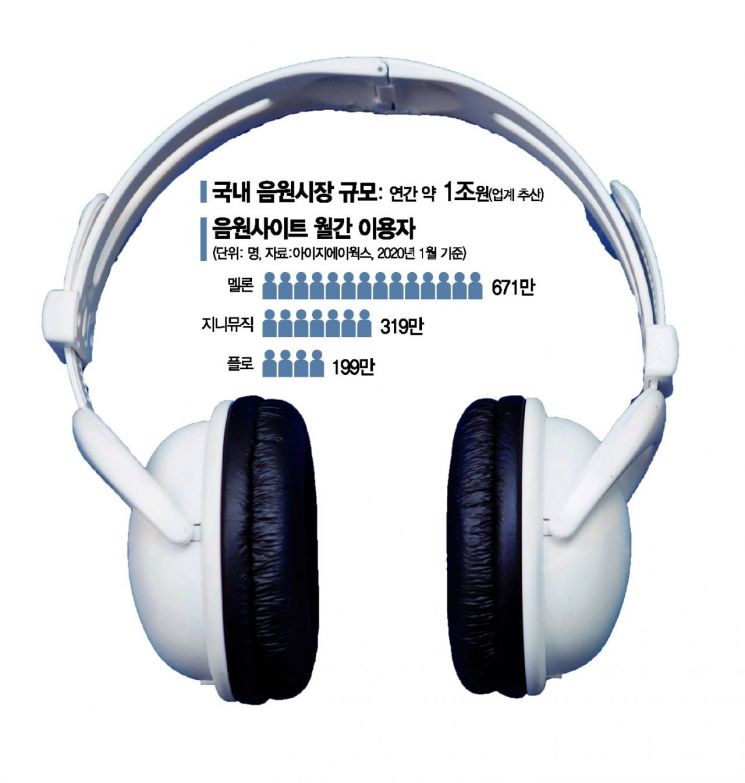
Industry insiders identify the root cause of 'music chart manipulation' in the 'real-time charts.' They recognize the problem that if a song does not stand out on the real-time charts of domestic music sites such as Melon, Genie Music, and Flo, it is inevitably forgotten by fans.
Shin Dae-cheol, a member of the group Sinawe, pointed out in a phone interview with Asia Economy, "If a famous singer does not reach number one on the real-time chart, the market reacts as if 'they are past their prime.'" He added, "This also puts them at a disadvantage in the lucrative concert market." He continued, "Although everyone keeps quiet, large entertainment agencies might be tempted by or actually engage in chart manipulation," adding, "As a result, talented rookie artists lose opportunities."
For example, if a new song rises on the real-time chart through manipulation, users who repeatedly play the real-time chart or street cafes maintain high rankings and view counts. Ultimately, chart manipulation and viral marketing block talented rookie artists from entering the market.
There are also criticisms that the revenue distribution structure of major music streaming sites worsens the situation. Currently, most domestic music sites adopt a 'proportional distribution' settlement method, which distributes the total revenue?consisting of users’ monthly subscription fees for streaming services and advertising fees?according to each singer’s streaming share. In this system, a user who only listens to indie band music ends up having their monthly subscription fee allocated to idol singers at the top of the charts.
"Charts Should Be Improved to Focus on Interest"
Some suggest abolishing real-time charts and introducing authoritative and reliable alternatives like the U.S. 'Billboard Chart.' Billboard considers various factors such as YouTube views, album sales, and radio airplay, whereas domestic music sites rank songs simply by streaming counts or digital sales, making manipulation easier.
Professor Lee Gyu-tak of George Mason University Korea criticized, "From the perspective of major music sites, it is important to increase revenue by attracting more streams," adding, "The hourly real-time chart is a device to attract people’s interest, but it has many side effects."
There are also calls to change the revenue distribution structure of music sites from a 'proportional system' to a 'user-centric payment' system. The user-centric structure distributes royalties only for the music actually listened to by the user. An industry insider pointed out, "The reason music sites choose the proportional distribution system is because it is easier to settle accounts."
As the controversy continues, domestic music sites have explained that they are making ongoing efforts to improve chart culture. A Melon representative said, "We are continuously strengthening monitoring and response measures against abnormal usage patterns such as manipulation," and added, "We will actively cooperate with the Ministry of Culture, Sports and Tourism’s official data requests for investigations."
© The Asia Business Daily(www.asiae.co.kr). All rights reserved.

















