KMA Announces 3-Month Weather Forecast
Cherry Blossom Blooming Period Advanced by 5-8 Days
[Asia Economy Reporter Hyunju Lee] Except for the two or three occurrences of 'kkotsemchuwi' (cold spells in early spring), temperatures this spring are expected to be generally higher. The occurrence of 'hwangsa' (yellow dust) is expected to be somewhat less than in previous years.
The Korea Meteorological Administration (KMA) announced the 'March-May 2020 (3-month) Weather Outlook' on the 21st. According to the report, March temperatures will be higher than the average (5.5?6.3°C), but there will be one or two occasions when cold air from the north causes a sharp drop in temperature. April will show a similar trend to March, with temperatures higher than the average (11.8?12.6°C), but early April may see a significant temperature drop due to the influence of continental high pressure.
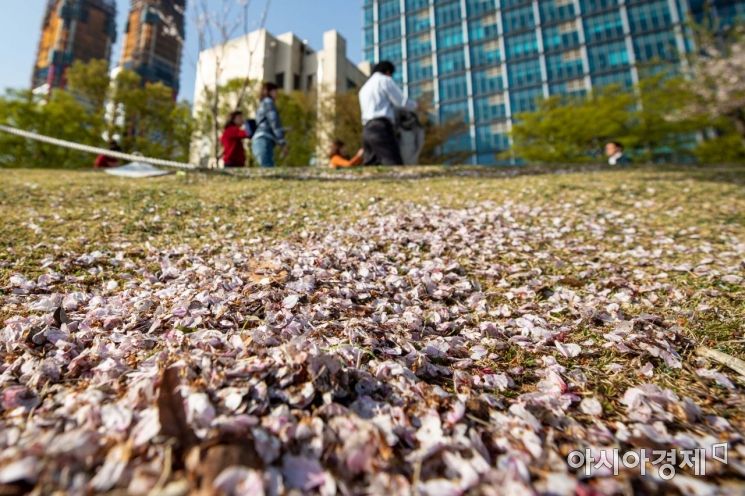
Since this winter was warm and March temperatures are expected to be higher than average, the blooming period for spring flowers is anticipated to be 5 to 8 days earlier. The private weather company Kweather forecasts cherry blossoms to start blooming on Jeju Island around March 20, the southern regions between March 22 and 29, and the central regions between March 28 and April 6. The average blooming dates are March 25 for Jeju (Seogwipo) and April 10 for Seoul.
In May, temperatures are expected to rise sharply, bringing early heat. Last May, the average maximum temperature reached 25.5°C. Due to the influence of mobile high pressure, dry days will continue, and monthly precipitation is expected to be similar to or less than the average (77.9?114.4 mm).
The number of days with spring yellow dust is expected to be fewer than the average (5.4 days). The KMA anticipates that the northwesterly winds that bring yellow dust will be somewhat weaker throughout the early spring but are expected to return to average levels in the latter part of the season. Precipitation levels in the yellow dust source regions are showing distributions close to the average.
© The Asia Business Daily(www.asiae.co.kr). All rights reserved.

















