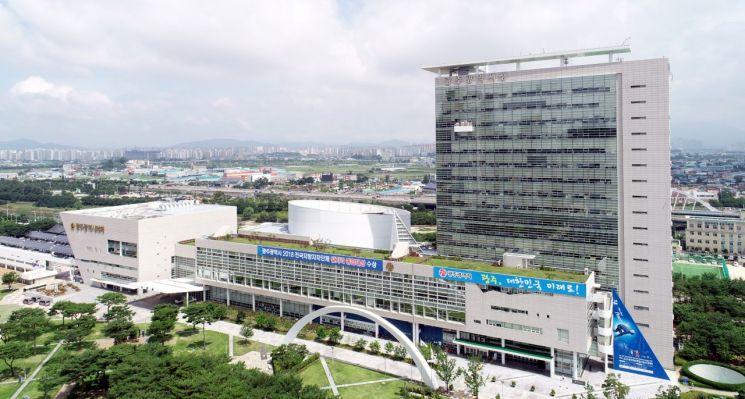
[Asia Economy Honam Reporting Headquarters Reporter Park Seon-gang] Gwangju Metropolitan City announced on the 20th that two items, including the integrated review of architectural review and traffic impact assessment for urban redevelopment projects and the mitigation of penalties for tobacco retailers who sold cigarettes to youth without fault, were selected in the government’s ‘2020 Regional Livelihood Regulation Innovation Plan.’
On the morning of the same day, the government discussed and finalized 50 ‘Regional Livelihood Regulation Innovation Plans’ at the 101st National Policy Issue Inspection and Coordination Meeting (Seoul↔Sejong video conference) chaired by Prime Minister Chung Sye-kyun at the Government Seoul Office.
The Regional Livelihood Regulation Innovation Plan has been promoted since 2017 as part of regulatory innovation for livelihood, one of the three major areas (economy, livelihood, public service innovation) in the government’s 2020 regulatory innovation direction.
This year, following the previous year, the Ministry of the Interior and Safety and the Office for Government Policy Coordination, based on suggestions from local governments, are jointly promoting the plan with related ministries.
The selected task of ‘integrated review of architectural review and traffic impact assessment for urban redevelopment projects’ aims to improve the issue where architectural review and traffic impact assessment had to be conducted separately during redevelopment projects, causing delays, by enabling integrated review of architecture and traffic, which is expected to shorten the project period by up to 18 months.
The task of ‘mitigation of penalties for tobacco retailers without fault’ involves establishing an exemption clause for administrative sanctions for tobacco retailers who were deceived by youth using forged or stolen IDs to purchase cigarettes, similar to the Youth Protection Act and Food Sanitation Act, thereby protecting the rights and interests of tobacco retailers.
Gwangju City plans to continuously discuss follow-up measures so that citizens can feel the effects of regulatory innovation, and this year, in accordance with the government’s regulatory innovation policy, it will focus on revitalizing the local economy by identifying and improving regulations related to local pending projects.
In addition, besides central government regulatory laws, local ordinances and rules that excessively cause resident burdens and inconveniences will also be concurrently revised.
© The Asia Business Daily(www.asiae.co.kr). All rights reserved.
![User Who Sold Erroneously Deposited Bitcoins to Repay Debt and Fund Entertainment... What Did the Supreme Court Decide in 2021? [Legal Issue Check]](https://cwcontent.asiae.co.kr/asiaresize/183/2026020910431234020_1770601391.png)
















