[Asia Economy Reporter Junho Hwang] Domestic researchers have uncovered the physical principles behind the photogenerated force that occurs when various nanomaterials, including semiconductors, interact with light. This breakthrough is expected to open the way to identifying defects or impurities in semiconductor devices and pre-assessing the performance of therapeutic nanoparticles.
The Korea Research Institute of Standards and Science (KRISS) announced on the 20th that a team led by Eunseong Lee, principal researcher at the Nano-Structure Measurement Center, has solved the challenges of photogenerated force.
Unraveling the Secret of Photogenerated Force
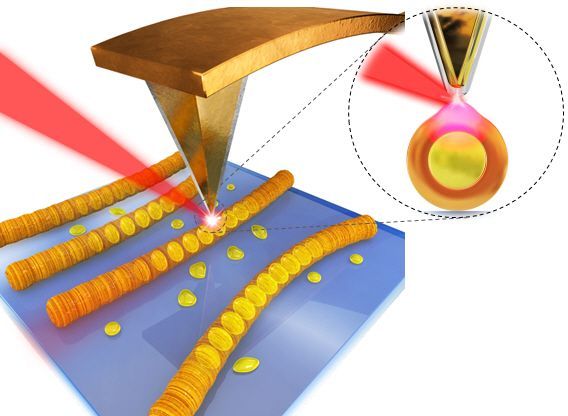
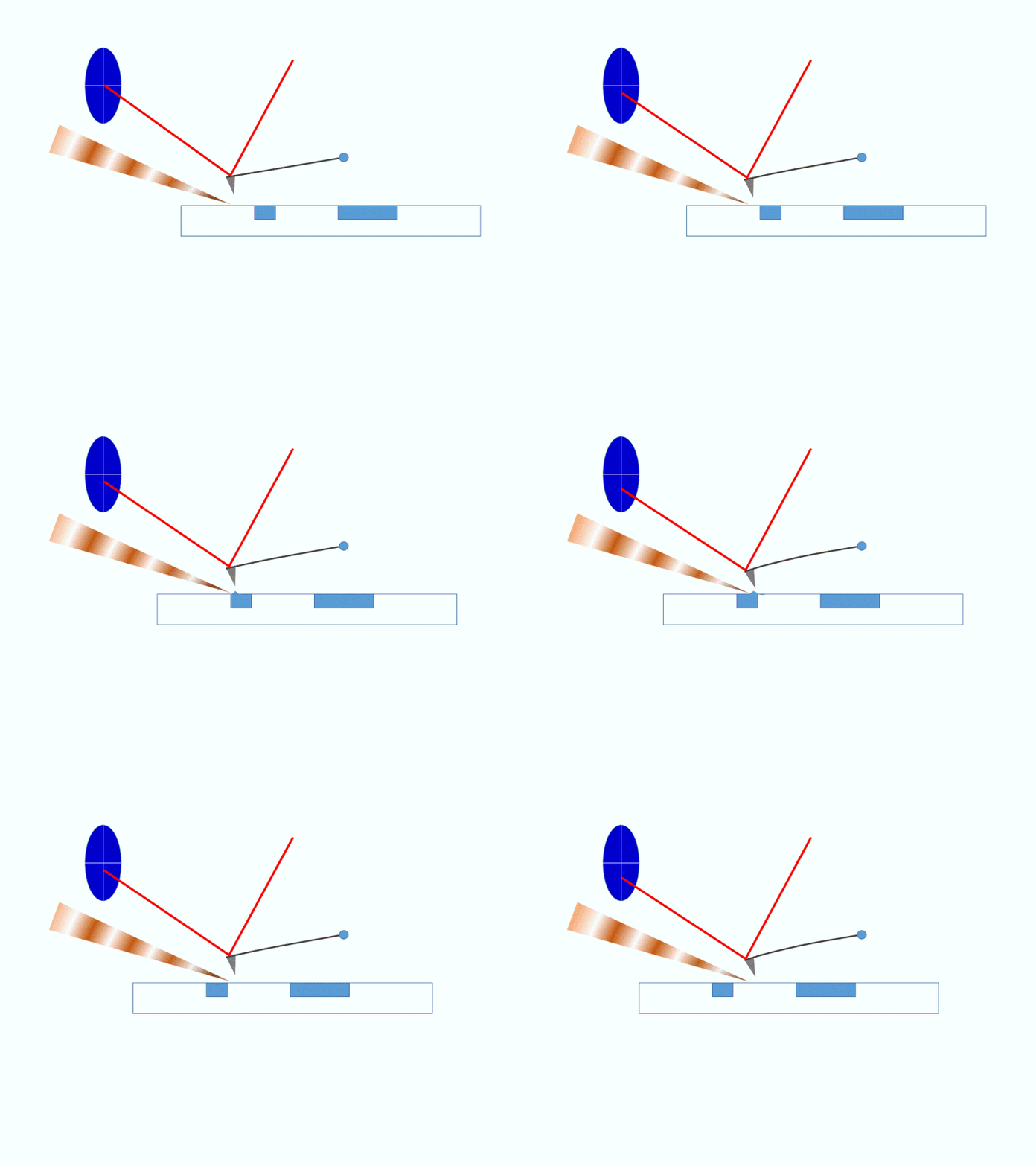
Photogenerated force is an electrical force generated when nanomaterials interact with light. When a laser is shone between a nanoscale (10~20nm) probe and a sample used to explore the shape or properties of nanomaterials, a dipole is created with separated positive and negative poles. This electrical force also forms a dipole on the probe. The subtle pushing and pulling force between these two dipoles is called photogenerated force.
The research team revealed that photogenerated force can be generated purely by electromagnetic force or by electromagnetic force combined with thermodynamic forces. They also discovered that the magnitude of this force varies depending on the type of nanomaterial, meaning that measuring the force’s magnitude can distinguish between different nanomaterials. Based on this, they proposed guidelines for the range of nanomaterials according to photogenerated force.
Non-Destructive Semiconductor Inspection Using Photogenerated Force Microscopy
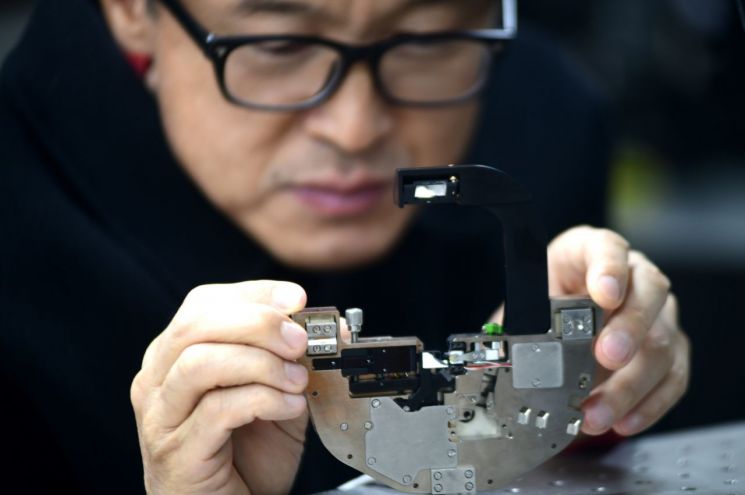
This discovery is expected to lead to the development of photogenerated force microscopy, which measures nanomaterial products with a probe without destruction. Once developed, photogenerated force microscopy can complement the limitations of optical microscopes, which are representative devices for observing the shape or properties of fine materials. Optical microscopes have the drawback of being unable to properly observe nanometer-scale materials smaller than the wavelength of light. In particular, the research team also revealed that coating the probe with functional molecules amplifies thermodynamic interactions, significantly enhancing the image clarity of photogenerated force microscopy.
The research team stated, "For nanoparticles used in diagnosing and treating diseases such as cancer, more accurate photogenerated force microscopy can measure and evaluate the particles’ effectiveness in advance."
KRISS principal researcher Eunseong Lee said, "KRISS has already succeeded in developing photogenerated force microscopy capable of measuring inside materials as small as 150 nanometers, but until now, interpretations of measurement results were unclear due to controversies over the origin of photogenerated force. With this globally recognized result, the issues have been resolved, and we expect active applied research on the microscope."
Meanwhile, this research result was published in the Proceedings of the National Academy of Sciences of the United States of America.
© The Asia Business Daily(www.asiae.co.kr). All rights reserved.



















