KEIP Private Meeting on Foreign Economic Policy
Prolonged Crisis May Negatively Affect Third Term Reappointment↑
Xi Jinping Regime Collapse and Chaos Forecasts Considered 'Unfounded'
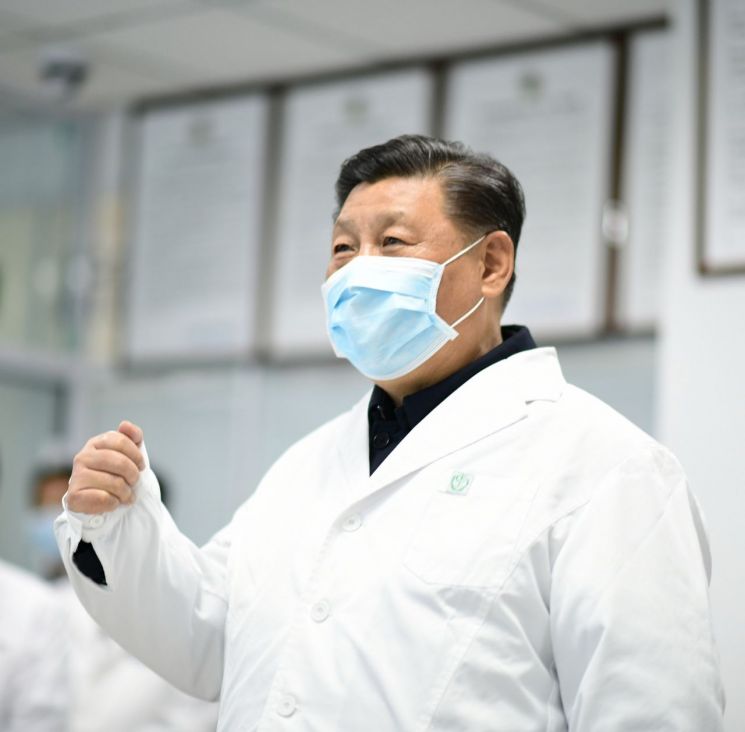
[Asia Economy Reporter Hyunwoo Lee] Domestic China experts predict that if the impact of the novel coronavirus infection (COVID-19) prolongs, it will become difficult for Xi Jinping, the President of China, to secure a third term. However, they assessed that COVID-19 does not have enough influence to shake the Xi Jinping regime itself. They dismissed the view that the failure in the initial response to COVID-19 would increase calls for Xi's responsibility within China and ultimately destabilize China's governance.
This content emerged during a closed-door meeting held on the 18th at the Korea Institute for International Economic Policy (KIEP) in Sejong City. It is unusual for a government research institute to address such a sensitive topic as the Chinese political system amid the persistent COVID-19 situation. The two-hour meeting was attended by Professor An Chiyoung from the Department of Chinese Language and Chinese Studies at Incheon National University, Senior Research Fellow Yang Gap-yong from the National Security Strategy Institute, and Professor Ha Namseok from the Department of Chinese Language and Culture at the University of Seoul.
After the meeting, these experts shared their statements with Asia Economy via phone. There was general consensus that if the COVID-19 crisis prolongs, it would somewhat impact President Xi's plan for long-term rule. In March 2018, China removed Article 79, Clause 3 of the constitution, which limited the presidency to two terms, through the National People's Congress, thereby establishing a system for long-term rule. Xi, who first took office in November 2012 and is currently in his second term, will have his third term decided at the 20th Central Committee of the Communist Party of China scheduled for October 2022.
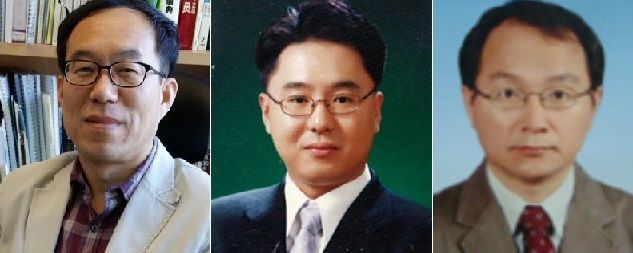 From the left, Yang Gap-yong, Senior Research Fellow at the Korea Institute for National Security Strategy; Han Nam-seok, Professor in the Department of Chinese Language and Culture at the University of Seoul; An Chi-young, Professor in the Department of Chinese Language and Literature at Incheon National University.
Professor An said, "In an authoritarian system like China’s, the leadership shown by the leader on the ground is important, and in that regard, Xi Jinping’s actions might have been somewhat disappointing," adding, "It will not be easy to talk about reappointment after public sentiment turns against him and his authority collapses." He predicted, "If this situation prolongs, discussions about a successor might arise around next year, centered on the Politburo Standing Committee." This implies that even though the constitution allows long-term rule, if Xi’s authority is severely shaken due to the prolonged COVID-19 crisis, securing another term might be difficult.
However, the experts evaluated that the current COVID-19 crisis is unlikely to escalate to a level that would significantly shake or threaten the Xi Jinping regime, contrary to some foreign media reports. Senior Research Fellow Yang said, "The forecast that COVID-19 will shake the Chinese system and Xi Jinping’s entire leadership is an excessive worry," explaining, "While there was certainly initial response failure and resulting public discontent, the Chinese authorities are addressing public sentiment and accepting most of the requests coming from below to resolve the issue." He added, "For public sentiment to truly turn, we would need to see signs of the leadership fleeing, but currently, there is no such movement at all."
Professor Ha also explained, "Even when looking at public declarations by Chinese intellectuals criticizing the government’s COVID-19 response, there is no direct attack on the current regime or open calls for Xi Jinping’s resignation," adding, "China lacks alternatives capable of overturning the system, and in situations like this natural disaster, there tends to be stronger cohesion." Chinese intellectuals submitted an online petition to the National People's Congress on the 12th containing five demands: ▲ protection of freedom of expression rights ▲ discussion of freedom of expression at the NPC ▲ designation of a day for press freedom ▲ prohibition of penalties for speeches and assemblies ▲ fair treatment of Hubei residents.
© The Asia Business Daily(www.asiae.co.kr). All rights reserved.
![User Who Sold Erroneously Deposited Bitcoins to Repay Debt and Fund Entertainment... What Did the Supreme Court Decide in 2021? [Legal Issue Check]](https://cwcontent.asiae.co.kr/asiaresize/183/2026020910431234020_1770601391.png)

















