Analysis of 15 Million Civil Complaints Big Data Over 3 Years and 4 Months of the 20th National Assembly
Main Keywords
Apartment, Education, Transportation, School Order
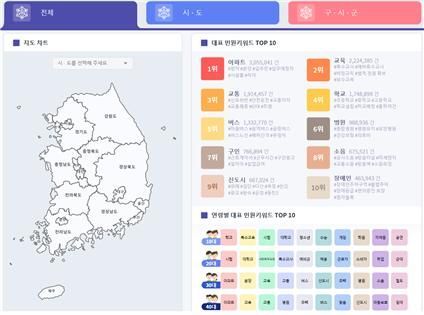
[Asia Economy Reporter Moon Chaeseok] During the 20th National Assembly, the issue that garnered the highest public interest and generated various complaints was identified as 'apartment.' This is the result of analyzing big data on complaints raised by citizens from different regions in the 'Republic of Korea Pledge Issue Map.'
On the 19th, the Anti-Corruption and Civil Rights Commission (ACRC) announced the launch of the 'Republic of Korea Pledge Issue Map' website, jointly promoted with the National Election Commission. Previously, in November last year, the two organizations signed a memorandum of understanding to jointly promote a policy big data analysis project using complaints.
The ACRC operates the 'People’s Petition,' a government-wide communication channel jointly used by 1,008 major public institutions. Since establishing a dedicated complaint analysis department in 2009, it has analyzed data collected through the People’s Petition and other channels to provide over 1,270 public institutions with monthly and weekly complaint trends, analyses of various social issues, and major policy-related complaint data.
This project analyzed approximately 15 million complaints submitted to the People’s Petition from June 1, 2016, when the 20th National Assembly term began, until September of last year. It enables election candidates and voters to check complaint keywords by region, gender, and age group through the 'Pledge Issue Map.'
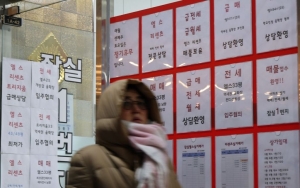
The big data analysis of complaints over the past three years and four months showed that the top keyword was 'apartment.' It revealed that citizens have the greatest interest in real estate value and residential environment improvements, including housing subscription and sales.
The second most frequent keyword was 'education,' which included issues related to non-regular workers in schools and safety and health training in industrial sites. It was found that many current and prospective teachers demanded securing special education teacher quotas and improving treatment for the education of students with disabilities.
The third and fourth keywords were 'transportation' and 'school,' respectively.
Regarding the demographics of complainants, the distribution was ▲30s 37.9% (3,923,799 cases) ▲40s 30.1% (3,110,022 cases) ▲50s 14.0% (1,451,875 cases).
Depending on generational circumstances, the main keywords were 'CSAT (College Scholastic Ability Test), employment, military service' for those in their teens and twenties; 'apartment, education, transportation' for those in their thirties to fifties; and 'tax, income, farmland' for those in their sixties and seventies.
By region, the distribution was ▲Gyeonggi 41.7% (5,190,612 cases) ▲Seoul 20.6% (2,564,164 cases) ▲Incheon 6.3% (780,376 cases) ▲Busan 4.9% (609,629 cases). The three metropolitan areas with large populations and concentrated apartment supply and new town development accounted for about 70% of the total.
Kwon Seok-won, Director of the Policy Improvement Bureau at the ACRC, stated, "Complaints are important data that must be considered not only in government policies but also in the legislative process of the National Assembly. We will continue to promote various complaint data linkages and collaborative projects to realize citizen-centered policies."
© The Asia Business Daily(www.asiae.co.kr). All rights reserved.
![User Who Sold Erroneously Deposited Bitcoins to Repay Debt and Fund Entertainment... What Did the Supreme Court Decide in 2021? [Legal Issue Check]](https://cwcontent.asiae.co.kr/asiaresize/183/2026020910431234020_1770601391.png)