'Memory of Absence' Director Lee Seung-jun's Return Report Press Conference
"Possible to Submit for Oscars with US Production Company... Government Support Needed"

[Asia Economy Reporter Lee Jong-gil] “I wanted to promote it widely overseas, and I feel satisfied that I kept that promise.”
This is the sentiment of director Lee Seung-jun, whose documentary film Memory of Absence became the first Korean documentary to be nominated for an Academy Award in the United States. On the 18th, he held a press conference at the Press Center in Jung-gu upon returning to Korea, saying, “Although we did not win, I am happy that the film received favorable reviews.”
Memory of Absence is a 29-minute documentary about the Sewol ferry disaster. It lists on-site footage and call records from the time, raising questions about the absence of the state. It proves that the tragedy occurred due to inadequate rescue efforts and states, “On that day, in that sea, the country we trusted was not there.”
Director Lee walked the red carpet with two families of Sewol victims when Memory of Absence was nominated for the Academy Award in the short documentary category. They were Oh Hyun-joo, mother of Jang Jun-hyung from Danwon High School, and Kim Mina, mother of Kim Geon-woo. They traveled to the U.S. at their own expense, wearing name tags of the students who perished in the Sewol disaster, standing in front of the cameras.
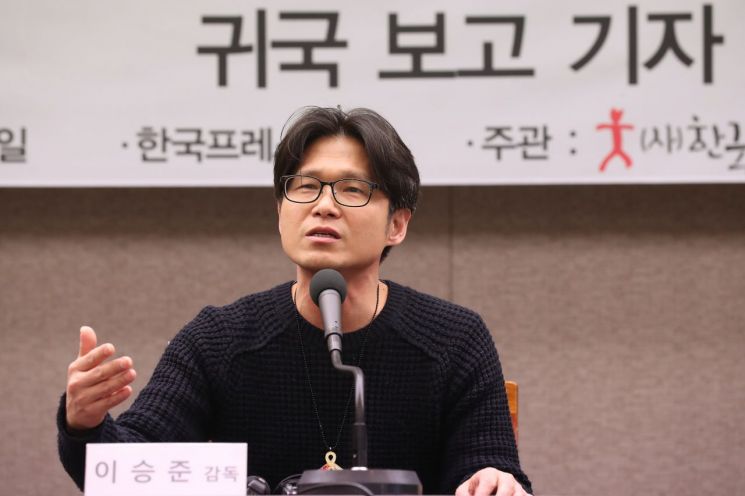
Director Lee recalled, “At the local screenings, the audience empathized deeply and shared the anger where it was due.” He added, “There were many interviews with local media, and quite a few articles praised it as an excellent work. They appreciated the part edited in chronological order covering the two hours after the accident occurred.”
Kim Mina, who was also present, said, “Originally, we were not supposed to walk the red carpet, but the director and the producer’s spouse kindly gave up their spots. Before walking the red carpet, the Korean community lent us dresses and helped with makeup. Holding photos of about 250 children proudly and taking pictures made me very happy,” she recalled.
Oh Hyun-joo said, “From the moment I heard that Memory of Absence was nominated, I hoped the whole world would take an interest in the truth of the Sewol disaster. Because it is necessary to reveal the truth and punish those responsible, we have fought tirelessly for six years. I was glad that the fight of these parents was remembered and supported, even if only partially realized.”
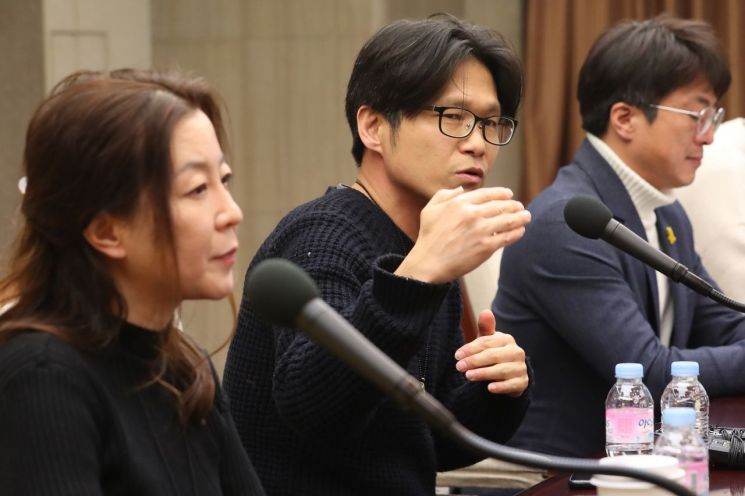
Director Lee pointed to the editing as the reason for the Academy Award nomination. He explained, “Editing was difficult, perhaps because I originally thought it had to be made for an overseas audience. I wondered if they could understand the story surrounding the Sewol accident. A U.S. production company suggested hiring a local editor, and as a result, we were able to edit it calmly.”
Director Lee said that through this Academy Award nomination, he was able to glimpse both the possibilities and limitations of Korean documentaries. He said, “There is no issue with having to produce it in the U.S. or with the subject matter. Because the way people see and feel is similar, any story can gain empathy.” However, he emphasized, “Memory of Absence was able to be submitted to the Academy Awards because there was a U.S. production company. Without government-level support, it would not be possible. The Academy Awards are different from other film festivals.”
© The Asia Business Daily(www.asiae.co.kr). All rights reserved.
![User Who Sold Erroneously Deposited Bitcoins to Repay Debt and Fund Entertainment... What Did the Supreme Court Decide in 2021? [Legal Issue Check]](https://cwcontent.asiae.co.kr/asiaresize/183/2026020910431234020_1770601391.png)

















