14 Korean Passengers, Discussions with Japanese Government on Flight Operations... 4 Koreans and 1 Japanese Spouse to be Transported Domestically
Quarantine and Observation at Incheon Airport Quarantine Station for 14 Days
Two US Charter Flights to Transport Over 300 People
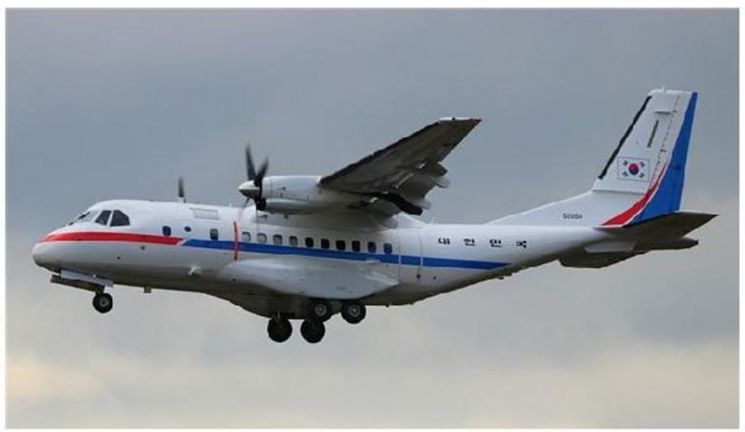
[Asia Economy Reporter Lim Cheol-young] The government plans to deploy the presidential aircraft (Air Force One No. 3) on the afternoon of the 18th to transport four Koreans and one Japanese spouse aboard a Japanese cruise ship, where confirmed cases of the novel coronavirus infection (COVID-19) are rapidly increasing. The government is currently consulting with the Japanese government to finalize a more detailed flight plan. The Koreans arriving this time will be quarantined at the Incheon Airport quarantine observation facility for 14 days.
According to the Central Disaster and Safety Countermeasure Headquarters (CDSCH) and related ministries, the government will deploy the presidential aircraft to Haneda Airport, Japan, this afternoon to transport some of the 14 Koreans aboard the "Diamond Princess," which is forcibly docked at Yokohama Port, Japan, due to the surge in COVID-19 confirmed cases. The presidential aircraft will depart Seoul Airport at noon and is scheduled to arrive at Gimpo Airport at 8 a.m. tomorrow.
Kim Kang-rip, deputy head of the CDSCH, explained, "We have decided to transport our nationals aboard the cruise ship docked at Yokohama Port, Japan, back to Korea and to deploy the presidential aircraft. We confirmed the intention to return with the passengers and are proceeding with this domestic transport."
There are a total of 14 Koreans on the Diamond Princess, including 9 passengers and 5 crew members. This is the first time the government has sent Air Force One No. 3 overseas to transport Koreans. The reason for sending the modified transport aircraft Air Force One No. 3 to Japan is that the number of Korean passengers on the Japanese cruise ship is not large. Since the number of passengers is small, it was decided not to send a regular aircraft or a transport aircraft like the C-130.
The Ministry of Foreign Affairs stated that the Korean Consulate General in Yokohama contacted the Korean passengers to survey their willingness to be transported, and some passengers expressed their desire to be transported. Deputy Head Kim said, "The presidential aircraft will depart Seoul Airport this afternoon and arrive at Gimpo Airport tomorrow morning. It plans to transport up to five people, including four Koreans who wish to return and one Japanese spouse among the 14 Koreans aboard the cruise ship."
As of the 17th, the number of confirmed cases on the Diamond Princess docked at Yokohama Port has increased to 454. Although the total number of passengers is about 3,700, only about 1,700 have been tested for COVID-19, which means about one in four is infected. The number of confirmed cases is expected to rise sharply in the future.
The United States has already deployed two charter planes to transport about 300 of its nationals. About 300 Americans who were aboard the cruise ship moved to Haneda Airport by bus arranged by the U.S. Embassy in Tokyo and arrived at Travis Air Force Base in California and Lackland Air Force Base in Texas. This decision reflects that the U.S., Japan's closest ally, no longer trusts Japan's quarantine system. Among the approximately 380 Americans aboard the cruise ship, 44 are known to have already been infected with COVID-19.
Following the U.S., Australia also plans to transport about 200 of its nationals. Additionally, Hong Kong, Taiwan, Canada, and Italy have announced plans to send charter planes to evacuate their nationals aboard the cruise ship. The Japanese government plans to test all passengers for COVID-19 and sequentially disembark those who test negative starting from the 19th.
◆ What is the presidential aircraft deployed this time?= The Air Force One No. 3 deployed to transport Koreans aboard the Japanese cruise ship is one of the four presidential aircraft.
Air Force One No. 1 is the aircraft used for the president's overseas trips, commonly called "Code One." It is a leased Boeing 747-400 (2001 model) from Korean Air. "Code One" is the call sign used by the airport control tower for the plane carrying the president. Air Force One No. 2 is a backup aircraft prepared for emergencies such as patient emergencies or No. 1 aircraft malfunctions. Air Force One No. 2 is a Boeing 737-3Z8 introduced in 1985. It was used in March 2018 when National Security Office Chief Chung Eui-yong and the special envoy to North Korea visited North Korea.
The models of Air Force One No. 3 and No. 5 are VCN-235. There is no Air Force One No. 4 because the number "4" is considered unlucky. Air Force One No. 3 and No. 5 are modified CN-235 transport aircraft introduced from Indonesia in 1990 and classified as presidential aircraft. The "V" (VIP) prefix before CN-235 indicates that the president uses them. However, since 2008, they have been opened for use by the prime minister and ministers. Currently, it is known that key aides accompanying the president also use these transport aircraft. In May 2018, South Korean journalists used it to cover the dismantling event of the North Korean Punggye-ri nuclear test site.
The VCN-235 is a light transport aircraft jointly developed by Spain's CASA and Indonesia's IPTN. It has large propellers on both wings and can carry up to 22 passengers. South Korea has introduced about 20 units, with two currently used as government transport aircraft. Its maximum cruising range is 3,500 km, allowing it to operate throughout Northeast Asia. It measures 21.4 m in length, 25.8 m in wingspan, and 8.2 m in height, with a maximum speed of 509 km/h. It is equipped with two GE CT7-9C engines and can fly at altitudes up to 7.6 km.
This is the first time Air Force One No. 3 is visiting overseas. The government's decision to deploy Air Force One No. 3 was possible because the Japanese government approved the entry of our military aircraft into its airspace. For our military aircraft to go to Japan, prior consultations with the Japanese government are required regarding airspace passage, selection of landing airports, immigration inspection for pilots and crew, refueling and ground support at local airports, and airport usage fees.
However, our Air Force transport aircraft C-130 has been deployed overseas before. The C-130 transported relief supplies to countries affected by the South Asia earthquake and tsunami in 2004, the Great East Japan Earthquake in 2011, and Typhoon Haiyan in the Philippines in November 2013. In April 2016, it flew to Kumamoto Airport during the Kumamoto earthquake in Japan to deliver about $100,000 worth of relief supplies such as tents and bottled water. In October 2018, it evacuated Koreans stranded in Saipan due to Typhoon Wutip.
© The Asia Business Daily(www.asiae.co.kr). All rights reserved.
![User Who Sold Erroneously Deposited Bitcoins to Repay Debt and Fund Entertainment... What Did the Supreme Court Decide in 2021? [Legal Issue Check]](https://cwcontent.asiae.co.kr/asiaresize/183/2026020910431234020_1770601391.png)