Seoul City-Korea Energy Foundation to Conduct Customized Home Repairs for Over 1,500 Semi-Basement Houses This Year
①Insulation ②Boiler ③Air Conditioner ④Windows ⑤Flooring Five Customized Processes
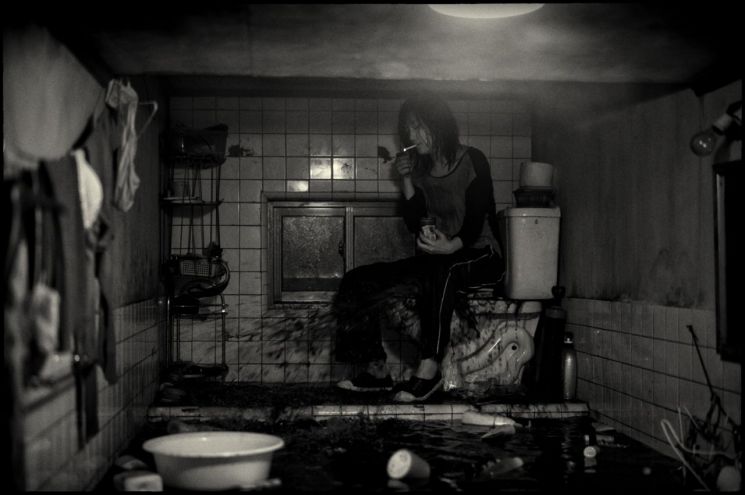
[Asia Economy Reporter Onyu Lim] The Seoul Metropolitan Government is improving the poor conditions of the 'ban jiha' (semi-basement) spaces featured in the movie "Parasite." Among households living in ban jiha in Seoul, 55.3% have an average income below 50%, indicating that most have low income levels and insufficient capacity to remove indoor pollutants such as mold on their own.
On the 18th, Seoul announced it will provide customized home repairs for ban jiha housing types. In collaboration with the Korea Energy Foundation, Seoul plans to support customized home repair work such as insulation and cooling for more than 1,500 low-income households living in ban jiha this year.
Problems faced by ban jiha households include indoor pollution caused by moisture and mold, leading to asthma, allergies, and depression. Since mental and physical health continuously deteriorate, the goal is to improve these conditions. Seoul stated, "Indoor pollution caused by poor conditions such as sunlight, ventilation, and moisture threatens the health of ban jiha residents," adding, "Especially after flood damage recovery during the monsoon season, environmental improvements such as moisture removal become more difficult."
Last year, Dobong-gu conducted a sample survey of 100 ban jiha households and selected additional support items based on frequently requested needs. The survey revealed high demand for 'dehumidifiers' and 'ventilators' to remove moisture and mold, 'window screens' for privacy protection, and 'fire alarms' for fire prevention.
Accordingly, Seoul will provide additional support for items in high demand among ban jiha households, including ① insulation installation ② boiler installation ③ air conditioner installation ④ window installation ⑤ floor replacement, as well as ‘window screens,’ ‘dehumidifiers,’ ‘fire alarms,’ and ‘ventilators.’ Seoul plans to include these additional support items within the existing 13 categories of the Seoul Hope Home Repair program?such as wallpaper, flooring, window frames, LED lighting, sinks, tiles, and sanitary fixtures (washbasins, toilets)?allowing recipients to select items within a budget limit of 1.2 million KRW.
The home repair support targets low-income households earning 60% or less of the median income. Seoul will accept applications on an ongoing basis from March through announcements by autonomous districts in the first and second halves of the year, reviewing eligibility and providing continuous support. To encourage more residents to apply and benefit, Seoul will actively identify case managers at local community centers and housing welfare centers to assist with applications. Citizens wishing to apply can inquire at the relevant departments of their autonomous district, such as the Social Welfare Division, or apply at their local community center, where eligibility will be reviewed for support.
Ryu Hoon, Director of the Seoul Housing and Architecture Headquarters, said, “Through collaboration with the Korea Energy Foundation, we expect to organically link the previously fragmented home repair projects and implement more effective repairs for more ban jiha residents, thereby making a tangible contribution to improving poor housing conditions.”
© The Asia Business Daily(www.asiae.co.kr). All rights reserved.
![User Who Sold Erroneously Deposited Bitcoins to Repay Debt and Fund Entertainment... What Did the Supreme Court Decide in 2021? [Legal Issue Check]](https://cwcontent.asiae.co.kr/asiaresize/183/2026020910431234020_1770601391.png)















