[Asia Economy Reporter Seungjin Lee] Consumer reactions to the novel coronavirus infection (COVID-19) have been found to be more sensitive compared to the 2015 MERS (Middle East Respiratory Syndrome) outbreak.
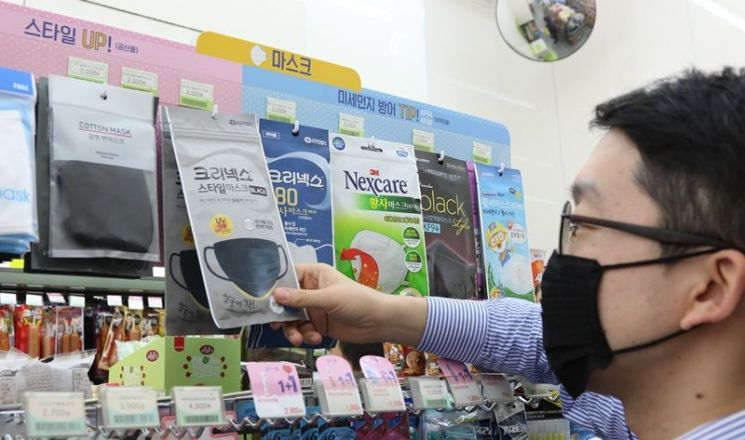
On the 18th, CU analyzed and compared sales of major products for about a month (January 20 to February 16) from the date of the first confirmed domestic COVID-19 case with the same period during MERS. The results showed that mask sales this year were 67.6% higher.
Despite both being respiratory infectious diseases, consumers reacted more sensitively to COVID-19. Although no deaths from COVID-19 have occurred domestically yet, this is analyzed to be due to the high fatality rate of about 30% during MERS and the learning effect from the recent large-scale infection outbreak in China.
Along with this, sales of other hygiene products such as hand sanitizers increased by 30.2%, soap by 21.9%, and gargling products by 18.9%, significantly higher than during MERS. Sales of safety over-the-counter medicines such as cold medicine and antipyretics also rose sharply by 57.2%.
The product with the highest sales growth rate compared to MERS was health functional foods, soaring by an astonishing 864.7%. It appears that consumers seeking to boost immunity purchased many products containing red ginseng, probiotics, and vitamins. Functional beverages such as herbal drinks also saw a 20.6% increase in sales.
Demand for conveniently resolving meals at nearby convenience stores increased as people refrained from outdoor activities to avoid face-to-face contact.
In the recent month, CU’s lunchbox sales were 32.2% higher compared to the MERS period, with kimbap up 65.9%, instant meals 93.9%, cereal 61.6%, and processed meat products 29.2%. Additionally, as dining out decreased, sales of side dishes rose by 29.0%, agricultural ingredients by 27.4%, and fruits by 27.2%.
Furthermore, the number of delivery service orders operated by CU through Yogiyo jumped 68.5% over the usual in the past month. The delivery orders for Valentine’s Day products last week, uniquely conducted by the industry, were more than twice as high compared to last year’s Pepero Day season.
Yoon Seok-woo, head of BGF Retail’s Big Data Team, said, “With the government’s swift response, citizens’ awareness of infection prevention guidelines has increased, leading to a noticeable rise in demand for related products compared to during MERS. We will pay even more attention to securing inventory of related products and store hygiene management to prevent and contain the spread of COVID-19.”
© The Asia Business Daily(www.asiae.co.kr). All rights reserved.
![User Who Sold Erroneously Deposited Bitcoins to Repay Debt and Fund Entertainment... What Did the Supreme Court Decide in 2021? [Legal Issue Check]](https://cwcontent.asiae.co.kr/asiaresize/183/2026020910431234020_1770601391.png)















