Government "Designation of Adjustment Areas" vs Party "Negative Impact on General Election"
Painful Debate Just Three Days After Acceptance of Regulatory Expansion Policy
Limitations of Pinpoint Regulation... Fluctuating According to Political Calculations
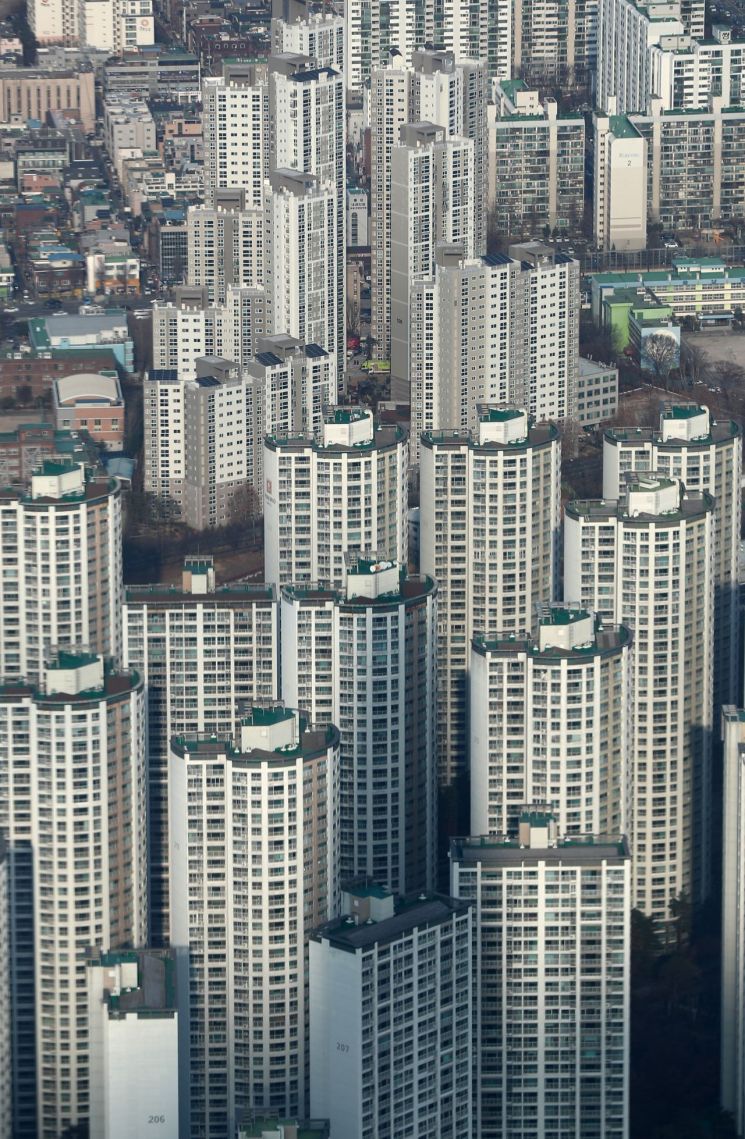
[Asia Economy Reporter Moon Jiwon] The cooperative system between the government and the ruling party regarding real estate measures is showing signs of cracks. Recently, discord has been growing among the ruling party, government, and the Blue House over the designation of Suwon, Yongin, and Seongnam (collectively known as Su-Yong-Seong) as regulated areas due to the rapid surge in real estate prices in these regions.
While the Blue House and the government intend to impose regulations citing 'housing price stabilization,' the ruling party is putting the brakes, concerned that such measures could negatively impact the upcoming general election. Industry insiders point out that the government’s decision-making on the intensity of regulations, based on political judgment without clear criteria, is undermining the credibility of the policy.
◆Requirements Met but Ruling Party Opposes Regulation= According to industry sources on the 17th, the Blue House, the Democratic Party of Korea, and the government held a confidential regular high-level meeting at the Prime Minister’s official residence in Samcheong-dong, Seoul, the previous day to discuss designating the Su-Yong-Seong area as a regulated zone but reportedly failed to reach a conclusion. This internal conflict arose just three days after the government discussed expanding regulations on the Su-Yong-Seong area at a recent meeting of related ministries.
It is reported that the Su-Yong-Seong area meets all the preliminary quantitative requirements for designation as a regulated area. According to relevant laws, the Minister of Land, Infrastructure and Transport must designate a regulated area through deliberation by the Housing Policy Deliberation Committee, which requires conditions such as the housing price increase rate in the area exceeding 1.3 times the consumer price inflation rate over three months.
A Ministry of Land official explained, "Recently, some areas have experienced overheating in housing prices, so the government is closely monitoring the situation," adding, "If necessary, we plan to convene the Housing Policy Deliberation Committee to take measures such as designating regulated areas." According to the Korea Real Estate Board’s survey results, as of the second week of February, apartment prices rose by 2.04% in Suwon and 0.73% in Yongin. Compared to Seoul, where prices are declining mainly in the Gangnam area, this is interpreted as a clear 'balloon effect' in the southern Gyeonggi region.
◆Real Estate Policy at a Crossroads Due to Political Calculations= However, even though these conditions are met, there is speculation that the government will find it difficult to immediately designate parts of the Su-Yong-Seong area as regulated zones. During the recent meeting among the ruling party, government, and Blue House, some members of the Democratic Party reportedly expressed concerns that expanding regulated areas ahead of the general election could negatively affect voter sentiment.
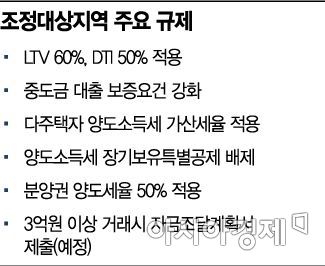
Designation as a regulated area limits the loan-to-value ratio (LTV) for mortgage loans to 60%, and capital gains tax on multiple homeowners is increased, significantly raising the tax burden on housing transactions. Kim Deok-rye, head of the Housing Policy Office at the Korea Research Institute for Housing and Urban Affairs, said, "When regulations are applied, market constraints inevitably increase compared to when there were none," adding, "For households without sufficient assets, the burden related to housing transactions is expected to rise significantly."
Industry insiders also point out that such discord highlights the limitations of 'pinpoint regulations,' which impose tailored restrictions whenever real estate prices surge in specific areas. Although the designation of regulated areas and speculative overheating districts requires deliberation by the Housing Policy Deliberation Committee, many criticize that since a significant number of committee members are appointed by the Ministry of Land, the designations effectively align with government preferences.
Moreover, the industry criticizes that the committee’s decisions are heavily influenced by 'qualitative judgments' beyond quantitative criteria. Because the standards themselves are unclear, policies may show inconsistent and erratic behavior depending on the administration or political preferences, leading to repeated problems.
Meanwhile, there are forecasts that designating Su-Yong-Seong as regulated or speculative overheating areas could trigger another balloon effect. In fact, when the possibility of government regulation on Su-Yong-Seong was raised last week, housing prices in Guri, Gwangmyeong, and Hwaseong cities in Gyeonggi Province notably increased. Some in the industry even speculate that the balloon effect could expand to outer metropolitan areas such as Ansan and Pyeongtaek. These areas have received relatively less attention due to being overshadowed by Seoul but have steadily seen price increases since the December 16 real estate measures announcement, along with favorable factors like transportation improvements, suggesting that funds with nowhere else to go could concentrate there in the future.
© The Asia Business Daily(www.asiae.co.kr). All rights reserved.
![User Who Sold Erroneously Deposited Bitcoins to Repay Debt and Fund Entertainment... What Did the Supreme Court Decide in 2021? [Legal Issue Check]](https://cwcontent.asiae.co.kr/asiaresize/183/2026020910431234020_1770601391.png)
















