Convenience Store Sales of Qingdao Beer Plummet... Spread of China Phobia
Visits to Malatang and Huoguo Restaurants Also Drop... Growing Concerns Over Chinese Ingredients
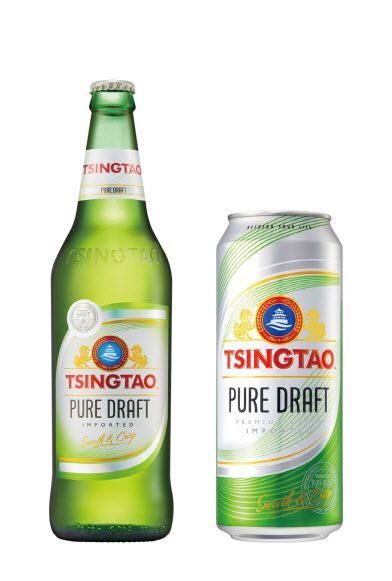
[Asia Economy Reporter Lee Seon-ae] Fear and anxiety caused by the novel coronavirus infection (COVID-19) have led to the spread of China phobia in various places. Even 'Qingdao Beer,' a representative Chinese beer loved by domestic consumers, is being avoided.
According to the convenience store industry on the 16th, sales of Qingdao beer have decreased by an average of about 15% since COVID-19 confirmed cases appeared in major domestic convenience stores. Sales of imported beers other than Qingdao also declined. However, the sales decline rate of Qingdao is about three times higher on average.
A convenience store industry official said, "Due to last year's boycott of Japanese products, Chinese beer enjoyed a significant rebound, and Qingdao beer threatened Asahi beer, but now the situation seems to have changed," adding, "COVID-19 has become a variable, and if the situation prolongs, a decrease in demand for Chinese beer this year is inevitable."
Concerns about Chinese food ingredients are also intensifying. There is a clear tendency to avoid kimchi served in restaurants, as it is widely perceived to be all Chinese-made. Kim Mo, who runs a meat restaurant in Jongno, said, "We use Chinese-made kimchi, but many customers ask if it is Chinese and leave, which is difficult."
Kim Hee-young (43) said, "Honestly, isn't all the kimchi served in restaurants Chinese-made? I don't want to eat it during times like this, so I don't hold gatherings and don't go to restaurants."

The majority of small restaurants rely on Chinese-made vegetables, red pepper powder, and spices. In the case of kimchi, half of the annual sales volume (about 300,000 tons) is imported from China. More than 80% of restaurants serve Chinese-made kimchi. Including restaurants that make kimchi themselves but import red pepper powder and salted napa cabbage from China, over 90% serve kimchi made with Chinese ingredients.
Chinese specialty restaurants such as Malatang, lamb skewers, and hot pot are also avoided. Many owners or employees are Chinese or Joseonjok (ethnic Koreans in China), and most ingredients are imported from China, raising fears of infection risk.
China phobia is further spreading through social networking services (SNS) as unverified information circulates. Unconfirmed rumors that the virus can be transmitted through food ingredients or food are spreading. However, according to the Korea Disease Control and Prevention Agency, even if the virus was introduced during the manufacturing of kimchi in China or the packaging of delivery boxes, it takes a considerable amount of time until final transportation, making the possibility of virus survival extremely low. In particular, COVID-19 is not a disease transmitted through food, so the possibility of infection transmission is minimal.
Meanwhile, due to the spread of COVID-19, one out of two companies is experiencing operational difficulties, and eight out of ten companies expect that 'China phobia' will negatively affect the overall South Korean economy. According to a survey of 202 companies conducted by Saramin, a job matching platform, the most significant impacts were 'domestic demand contraction due to reduced external activities' (58.8%, multiple responses) and 'decreased domestic production due to supply disruptions of Chinese materials' (56.3%). This was followed by decreased sales of companies operating in China (51.3%), reduced overseas exports (41.9%), decreased inbound tourists (38.1%), and reduced corporate investment due to economic uncertainty (32.5%).
© The Asia Business Daily(www.asiae.co.kr). All rights reserved.
![User Who Sold Erroneously Deposited Bitcoins to Repay Debt and Fund Entertainment... What Did the Supreme Court Decide in 2021? [Legal Issue Check]](https://cwcontent.asiae.co.kr/asiaresize/183/2026020910431234020_1770601391.png)
















