Government Focuses on Improving Consumption Contraction and Supporting Export Companies
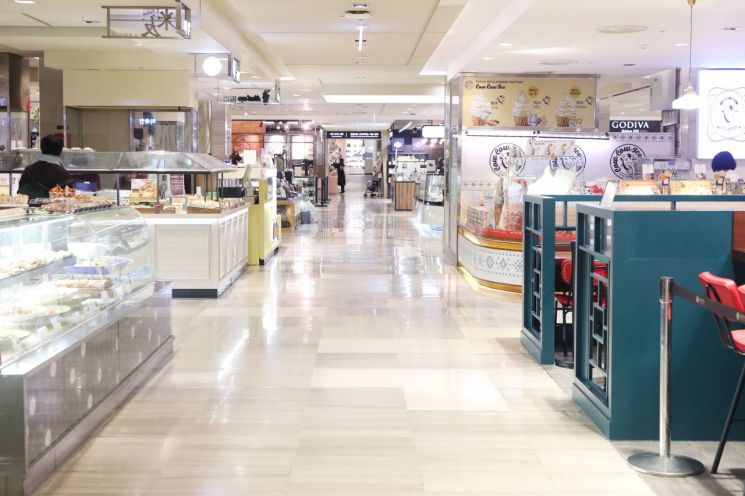
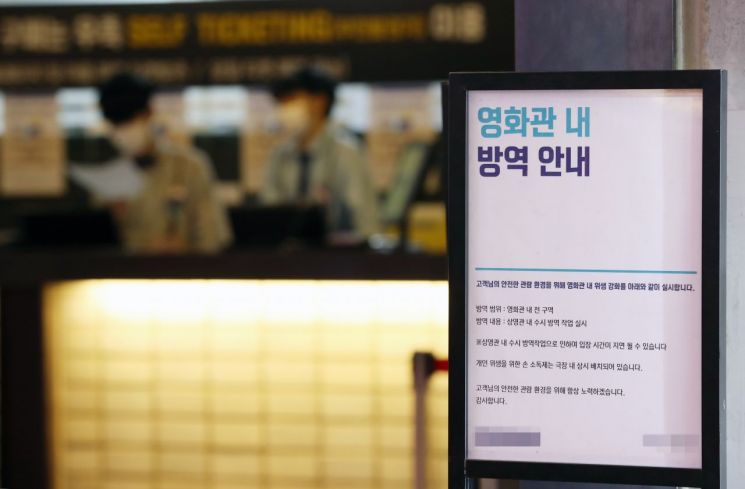
[Asia Economy Reporter Kim Eun-byeol] There are forecasts that South Korea's first-quarter growth rate will record a negative figure due to the novel coronavirus infection (COVID-19) crisis. Although the growth rate could sharply rebound from the second quarter once the COVID-19 outbreak is contained, it is inevitable that downward pressure will be applied to the first-quarter growth rate immediately.
According to the industry on the 15th, Morgan Stanley recently stated in a report, "If production in China rapidly resumes from around the 10th of this month, the impact of this crisis on the global gross domestic product (GDP) growth rate in the first quarter of this year will be around 0.15 to 0.30 percentage points," adding, "In this case, South Korea's growth rate is expected to fall by 0.8 to 1.1 percentage points."
If COVID-19 gradually normalizes, South Korea's first-quarter growth rate is expected to drop by 1.1 to 1.4 percentage points, and if the impact prolongs, it could fall by 1.4 to -1.7 percentage points. It is analyzed that countries with much higher economic ties to China than in the past, including South Korea, Taiwan, and Thailand, will be particularly negatively affected.
Earlier, JP Morgan also forecasted that South Korea's first-quarter growth rate this year would be -0.3% quarter-on-quarter, with an annual growth rate of 2.2% (previously 2.3%).
The GDP growth rate announced by the Bank of Korea is calculated by comparing it with the previous quarter. Last year's GDP growth rate recorded a contraction of -0.4% in the first quarter. It was the worst growth rate in over a decade since the financial crisis. At that time, the negative growth rate was recorded, and it was significantly below market experts' expectations, leading to analyses describing it as a 'shock.'
If there is negative growth again in the first quarter of this year, it means that the first-quarter GDP will have sharply declined for two consecutive years. Considering that the semiconductor industry was sluggish in the first quarter of last year, the shock caused by COVID-19 this year can be felt. On the previous day, Koo Yoon-chul, Vice Minister of Strategy and Finance, held the '1st Public Institution Investment Execution Inspection Meeting' for 2020 at the Korea Trade Insurance Corporation and said, "There is a concern that adjustments may occur in the first-quarter growth rate this year due to the COVID-19 crisis."
However, the fact that the economy was on a rebound trend in the second half of last year is somewhat positive. Last year's GDP growth rates were 1.0% in the second quarter, 0.4% in the third quarter, and 1.2% in the fourth quarter. The government increased its contribution through fiscal execution, showing some recovery in the fourth quarter. Therefore, economic authorities analyze that if the COVID-19 crisis eases to some extent, the contracted consumption could also revive.
The government is focusing on revitalizing private consumption and minimizing the damage to export companies for this reason. Although the first-quarter growth rate recorded a negative figure, if it rebounds from the second quarter, it is expected that there will be no significant damage to the government's target growth rate of 2.4% for this year.
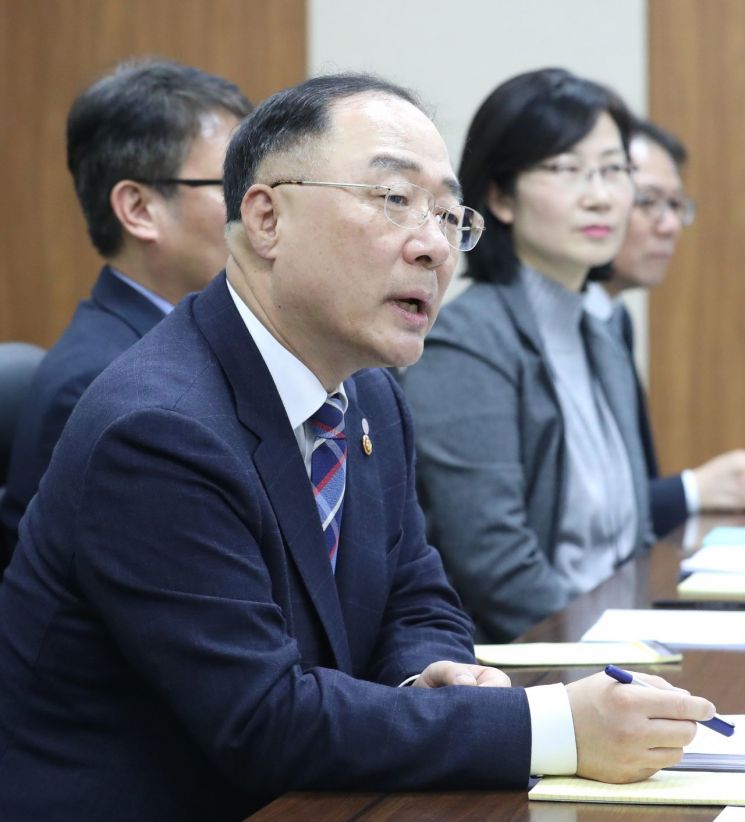
Deputy Prime Minister and Minister of Strategy and Finance Hong Nam-ki stated, "We will promptly prepare and implement support measures by industry and sector, such as aviation, shipping, tourism, and export support." He emphasized, "We will continuously prepare emergency support measures to alleviate the difficulties faced by affected industries and companies as much as possible," and added, "We will greatly expand communication opportunities with economic organizations, private companies, and small business owners to make comprehensive efforts to resolve or ease difficulties on the ground."
He also expressed regret that COVID-19 occurred while the Korean economy was showing signs of improvement and urged the public to engage in normal economic activities. Deputy Prime Minister Hong said, "(The COVID-19 crisis) has a significant impact not only from the actual ripple effects but also from excessive fear and anxiety leading to a contraction in economic consumption sentiment," and requested, "We ask the public to now engage in normal economic and consumption activities."
There are also concerns that demand will not easily recover while COVID-19 fears persist, but regarding this, he said that plans to stimulate consumption and revitalize the domestic market will be prepared.
© The Asia Business Daily(www.asiae.co.kr). All rights reserved.



















