Response from the North remains uncertain
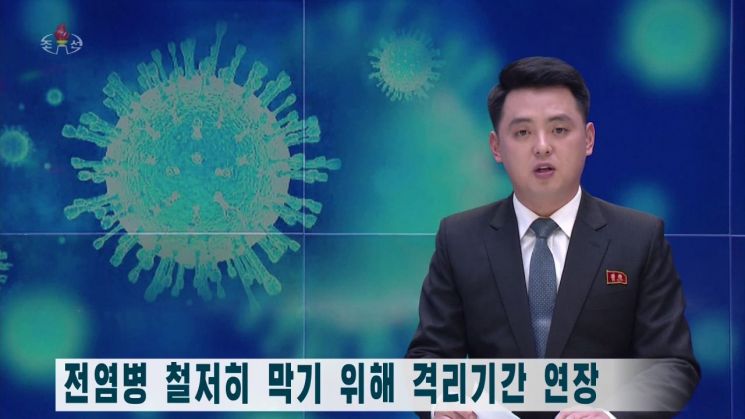 North Korean media reported on the 12th that the Standing Committee of the Supreme People's Assembly urgently adopted a decision to extend the quarantine period for the novel coronavirus infection (COVID-19) to 30 days.
 The U.S. Department of State expressed concern about the vulnerability of North Korean residents to COVID-19 and stated that it would ensure rapid support if necessary. This statement conveyed the U.S.'s willingness to provide humanitarian aid to North Korea and to cooperate so that sanctions related to North Korea do not hinder efforts, keeping in mind the North Korea-U.S. denuclearization negotiations.
Morgan Ortagus, spokesperson for the U.S. Department of State, said in a statement on the 13th (local time), "The United States is deeply concerned about the vulnerability of North Korean residents to the COVID-19 outbreak." Ortagus added, "We support and encourage efforts by the U.S. and international aid and health organizations to respond to and contain the spread of COVID-19 in North Korea," and stated, "The United States is prepared to ensure that approvals for support from these organizations are expedited." This is the first time the U.S. has officially expressed its position on North Korea's COVID-19 situation.
North Korea has previously claimed that COVID-19 has not occurred within its borders. The World Health Organization (WHO) has also stated that it has not received reports of confirmed cases from North Korea, but there is growing speculation about the actual situation inside the country.
It is unusual for the U.S. to issue such a statement, and the timing is also notable. The State Department's statement came after the International Federation of Red Cross and Red Crescent Societies requested an urgent lifting of sanctions to prevent the spread of COVID-19 in North Korea. The U.S. response can be seen as a willingness to actively cooperate to ensure that humanitarian aid, such as securing supplies necessary for prevention and testing, is not hindered by U.S.-led sanctions. While exemptions from both U.S. and United Nations (UN) sanctions are necessary for lifting sanctions, ultimately, the U.S.'s will is the most crucial.
As the North Korea-U.S. dialogue remains deadlocked, the U.S. continues its maximum pressure policy against North Korea. Expressing a willingness to provide humanitarian medical aid to North Korea at this time may indicate an intention to expand contact with North Korea and lay the groundwork for North Korea-U.S. dialogue.
Our government is also considering inter-Korean quarantine cooperation to respond to COVID-19, seeking solutions to the stalled inter-Korean relations. Cho Hye-sil, deputy spokesperson for the Ministry of Unification, said at a regular briefing on the 14th, "The government believes that cooperation between the South and North is necessary to block and respond to the spread of infectious diseases."
The key issue is whether North Korea will respond. Even China, where COVID-19 has spread widely, is reluctant to accept overseas aid, so unless a serious situation arises, it seems unlikely that Kim Jong-un, Chairman of the State Affairs Commission of North Korea, will easily allow external aid from the U.S., South Korea, or others.
© The Asia Business Daily(www.asiae.co.kr). All rights reserved.
![User Who Sold Erroneously Deposited Bitcoins to Repay Debt and Fund Entertainment... What Did the Supreme Court Decide in 2021? [Legal Issue Check]](https://cwcontent.asiae.co.kr/asiaresize/183/2026020910431234020_1770601391.png)
















