Gwangjin-gu, Full-Scale Discussions with Seoul City on 'Urban Planning for Future Development'... January 2020, Results of 'Urban Planning Service for Gwangjin-gu's Future Development' Released; Gwangjin-gu Mayor Kim Seon-gap Visits Seoul Mayor Park Won-soon on the 12th to Discuss Urban Management Plan Adjustments for Gwangjin-gu
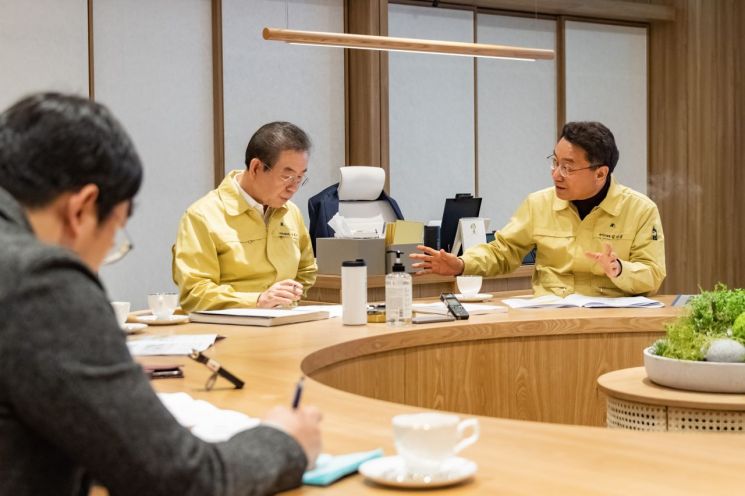
[Asia Economy Reporter Park Jong-il] Kim Seon-gap, Mayor of Gwangjin-gu, visited Park Won-soon, Mayor of Seoul, on the 12th to convey requests regarding the ‘Adjustment of Urban Management Plans’ following the establishment of urban planning for the future development of Gwangjin-gu.
This visit was arranged to communicate the urgent position of Gwangjin-gu by mentioning the need to upgrade the undervalued urban planning of Gwangjin-gu and fairness based on the results of the ‘Urban Planning Service for the Future Development of Gwangjin-gu’ that was carefully promoted over the past year.
Mayor Kim Seon-gap explained the necessity of upgrading Gwangjin-gu’s urban planning, stating, “Although Gwangjin-gu was formed as a low-rise residential area through land readjustment projects in the 1960s and 70s and has undergone various changes during Seoul’s urbanization process, its zoning areas remain undervalued, making it vulnerable in terms of self-sufficiency functions.”
◇Request for Expansion of Commercial Areas and Zoning Upgrades in Gwangjin-gu
Mayor Kim pointed out that the commercial area ratio in Gwangjin-gu is 1.18% of the total area, which is significantly lower than neighboring districts, ranking 24th out of 25 autonomous districts. Despite having 11 subway stations, the commercial area ratio is nearly four times lower than that of a specific district with only six stations (4.56%). This imbalance is unfair in terms of the city’s external changes and balanced development, and he requested an expansion of commercial area coverage.
He further emphasized that the five station areas in Gwangjin-gu (Gangbyeon Station, Junggok Station, Ttukseom Resort Station, Achasan Station, Gwangnaru Station) have no commercial zones at all. In particular, Achasan Station has a daily floating population of 30,000, and nearby Gwangwoon University Station in an adjacent district has 19,000 daily visitors but a commercial area of 229,000㎡, showing a huge imbalance. To serve as a living center for local residents, an upgrade in zoning is absolutely necessary.
Additionally, he requested the activation of the commercial area allocation distributed to autonomous districts through the living zone plan in March 2018, as progress has been slow over two years, suggesting the simplification of procedures.
◇Request to Lift the Maximum Height Zone Designation around Children’s Grand Park
Mayor Kim stated, “Among the ten major flatland parks in Seoul, including Seoul Forest, Boramae, and World Cup Park, only the area around Children’s Grand Park is managed as a maximum height zone, limiting building heights to 16 meters. Despite being a key station area in Gwangjin-gu (Children’s Grand Park, Gunja Station, Achasan Station), the area is designated as a Type 1 General Residential Zone, which greatly hinders regional development and has caused residents’ complaints for decades.” He appealed for the lifting of the maximum height zone designation and zoning upgrades around Children’s Grand Park and the Achasan foothills.
In response, Mayor Park Won-soon empathized with the poor urban planning situation in Gwangjin-gu and said that the time seems ripe to consider lifting the maximum height zone designation now.
He also noted that while apartments alone cannot be seen as the solution to housing problems, a new maintenance approach is needed at this point.
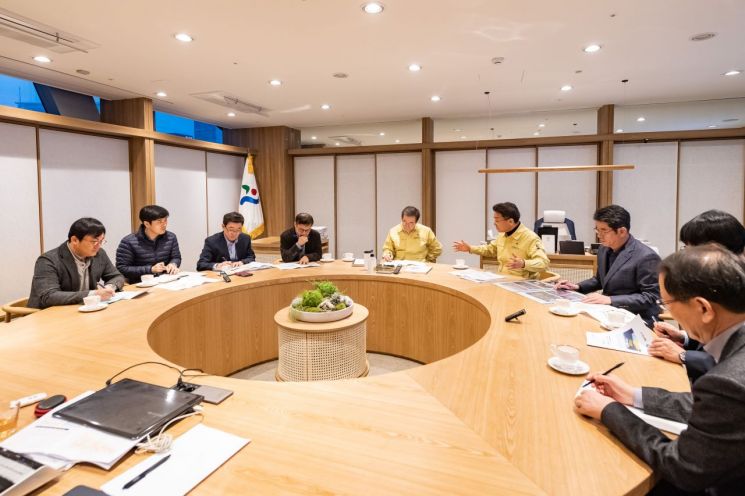
Kim Seon-gap, Mayor of Gwangjin-gu, said, “With the completion of the ‘Urban Planning Service for the Future Development of Gwangjin-gu’ last December, I will continue to visit and persuade related officials, including Mayor Park Won-soon, based on this.”
He also stated, “Since comprehensive maintenance of the low-rise residential areas along the Han River is necessary, we plan to promote the creation of regional value that local residents earnestly desire by establishing a comprehensive district unit plan, including small-scale maintenance projects, SOC projects, and designation of special planning zones.”
© The Asia Business Daily(www.asiae.co.kr). All rights reserved.
![User Who Sold Erroneously Deposited Bitcoins to Repay Debt and Fund Entertainment... What Did the Supreme Court Decide in 2021? [Legal Issue Check]](https://cwcontent.asiae.co.kr/asiaresize/183/2026020910431234020_1770601391.png)

















