[Hidden Business Story] US Top 3 Department Store 'Kohl's' Grows 1800% Over 20 Years
Sales Growth Rate Declines and New Customer Inflow Decreases Due to Amazon's Emergence and Millennial Generation Absence
Chooses Cooperation Over Competition... Free Amazon Returns Service Implemented at 82 Stores
Expanded to Over 1,100 Stores Nationwide in July 2019
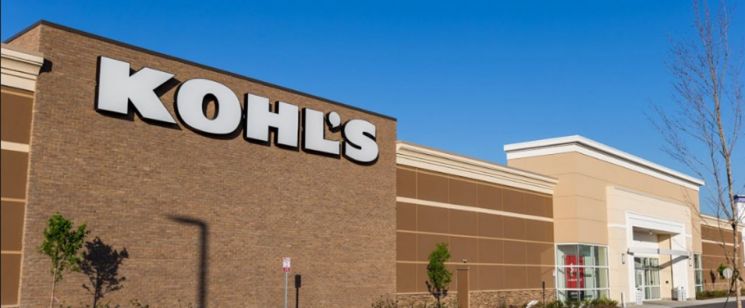
[Asia Economy Reporter Shinwon Yoon] It is truly the golden age of Amazon. Giant companies that once dominated the global retail industry have disappeared or fallen into crisis one after another with the emergence of Amazon. Only companies with sufficient financial resources remain, investing billions of dollars to compete against Amazon. However, the American department store chain Kohl's has survived the Amazon era in a different way?not by competing against Amazon, but by 'collaborating' with it.
Kohl's is a department store chain established in Wisconsin, USA, in 1962. Its predecessor was Maxwell Kohl, a grocery store founded in 1927. While aiming for department store quality, Kohl's emphasized affordable prices and ranked among the top three department stores in the United States alongside traditional industry leaders Macy's and Nordstrom. By number of stores, it ranked first, and by sales, it secured third place. Sales also showed continuous growth. When it was listed on the New York Stock Exchange in 1992, its annual sales were only $1 billion (about 1.18 trillion KRW), but by 2012, annual sales surpassed $19 billion (about 22.54 trillion KRW), growing 1800% over 20 years.
However, after peaking in 2012, sales growth began to decline. The reason was 'Amazon.' At that time, Kohl's tried strategies to compete against Amazon. It invested $3 billion (about 3.55 trillion KRW) by creating an online store, changing its point accumulation system, and implementing in-store pickup services. Despite these efforts, sales grew only 5% annually, and the rate of new customer acquisition remained around 1%.
Moreover, the millennial generation, which emerged as a major consumer group, was not Kohl's customer base. The average age of Kohl's main customers was 50 years old. With an outdated brand image added, Kohl's needed to attract younger customers.

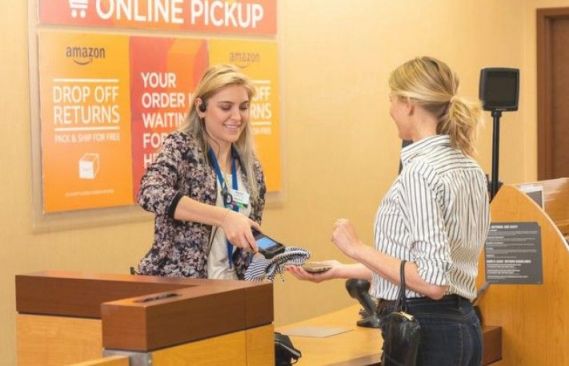
To overcome all this, in 2017, Kohl's announced a plan that shocked the industry. It declared a pilot program to allow Amazon product returns at 82 Kohl's department stores in Los Angeles (LA) and Chicago. The service did not charge return fees, allowed returns without boxes or packaging, and even provided parking spaces dedicated to Amazon return customers. Booths selling Amazon's private label products were also installed inside the department stores. At the time, analysts and major economic media outlets criticized the move, saying, "Kohl's is hoping to be bought by Amazon," and "It's crazy."
Contrary to concerns, the two-year pilot program results were quite positive. The performance of stores offering Amazon return services contrasted sharply with regular stores. Customer visit rates were 13.5% higher, and 56% of customers were either new or had not visited Kohl's for over a year. Furthermore, geolocation data collected from smartphones showed that customers visiting to return Amazon products stayed in the stores for a significant amount of time. Among them, 20% made purchases at Kohl's. Additionally, the influx of younger consumers in their 20s and 30s, a key demographic for Amazon, increased.
Moreover, Kohl's has partnered with Germany's largest supermarket chain Aldi and the United States' largest fitness company Planet Fitness to introduce markets and fitness facilities inside its stores, encouraging more and younger customers to visit Kohl's.
After confirming the potential of the Amazon return service, Kohl's announced in April last year that it would expand the service to over 1,100 Kohl's stores across the United States, excluding Anchorage and Alaska. The service has been in operation nationwide since July.
Although the pilot program was quite successful, it remains uncertain whether the nationwide expansion will be a boon or a bane for Kohl's. Market outlooks are divided. Oliver Chen, an analyst at financial research firm Cowen, offered a positive view, stating, "Kohl's has the space, and Amazon has ambitions to enter offline retail. Their combination seems to fit well." In contrast, the American economic magazine Forbes predicted, "The collaboration between Kohl's and Amazon will ultimately end in Amazon's victory and Kohl's defeat."
© The Asia Business Daily(www.asiae.co.kr). All rights reserved.



















