Less Infectious MERS, Super Spreaders Visited Medical Institutions Infecting Many
New Coronavirus, Weak Evidence of In-Hospital Transmission... Future Trends Need to Be Watched
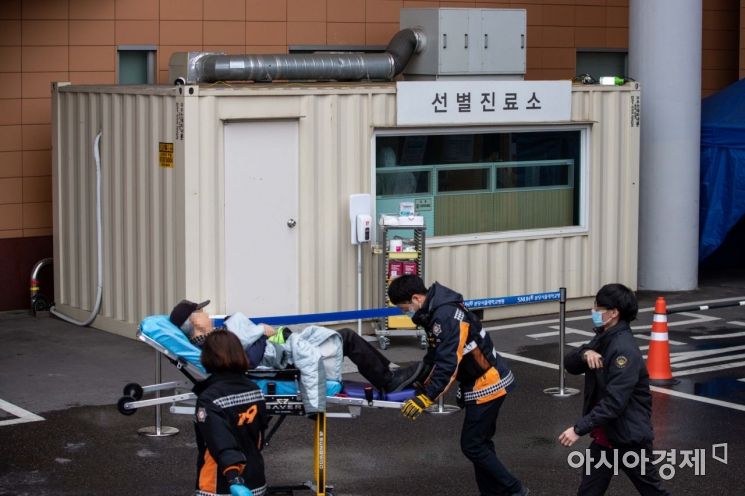 On the 28th, as fear of the novel coronavirus infection known as 'Wuhan pneumonia' spreads, a screening clinic is operating at Bundang Seoul National University Hospital in Seongnam, Gyeonggi Province. Photo by Jinhyung Kang, Seongnam aymsdream@
[Asia Economy Reporter Cho Hyun-ui] Secondary infection cases of the novel coronavirus infection (Wuhan pneumonia) have emerged in some overseas countries without traveling to China, raising concerns about community transmission in South Korea. Since it is known that some super spreaders infected dozens of people during the Middle East Respiratory Syndrome (MERS) outbreak in the past, there are worries that a similar event might occur this time. However, experts point out that it is too early to make a hasty judgment as the quarantine network is now more thorough than before, and misinformation among the public has decreased compared to the past.
Professor Si Hye-jin of the Department of Infectious Diseases at Gachon University Gil Medical Center said, "During the MERS outbreak, there were patients in South Korea who carried a large amount of the bacteria, so-called super spreaders, and problems arose as in-hospital infections occurred early on. On the other hand, there is no evidence of in-hospital transmission or super spreaders with the novel coronavirus, so we need to observe future trends."
In the case of MERS, the fatality rate was as high as about 40%, but compared to Severe Acute Respiratory Syndrome (SARS) or the current novel coronavirus, its transmissibility to infect surrounding people was relatively lower. However, when it spread in South Korea in 2015, some patients, including the first confirmed case, visited frontline medical institutions while infected, and the number of confirmed in-hospital infections increased significantly, causing problems.
Since then, health authorities have actively promoted measures to prevent further spread, such as advising suspected cases of novel viral infections to report first to the Korea Centers for Disease Control and Prevention or public health centers before visiting hospitals. The establishment of screening clinics for suspected patients is based on the same rationale. Although some patients who were later confirmed after passing through quarantine engaged in community activities and had many contacts, epidemiological investigations were promptly conducted to activate surveillance systems and prevent community spread.
Chinese Authorities Mention Possibility of Infection During Asymptomatic Incubation Period with Fever and Cough Symptoms Absent
Experts Say "It Is Currently Impossible to Conclusively Determine Infection During Asymptomatic State"
Avoid Excessive Anxiety and Fear; Calm Response Is Important
Chinese health authorities have explained that infection is possible even during the asymptomatic incubation period, but it is generally agreed that it is difficult to draw a definitive conclusion on this. During MERS, there were some asymptomatic infected individuals, but there were no cases of them infecting others. The absence of symptoms means the virus quantity is low, and even if tested, it may not be confirmed as positive despite infection.
Jeon Byung-yul, former director of the Korea Centers for Disease Control and Prevention and dean of the Graduate School of Health Industry at CHA University, said, "It is currently impossible to definitively state whether infection occurs during the asymptomatic state. We need to distinguish between simple contact and close contact and observe the situation, then discuss the possibility of asymptomatic individuals as infection sources by analyzing domestic cases."
To cause transmission, a certain level of virus quantity is required, and Chinese health authorities have not informed the Korean government of scientific evidence supporting transmission during the incubation period when the virus quantity is extremely low. Jeong Eun-kyung, director of the Korea Centers for Disease Control and Prevention, explained, "When the virus enters the body, it replicates and increases inside, causing inflammation that leads to coughing and other symptoms. The period before symptoms appear is called the incubation period, during which the virus quantity is low."
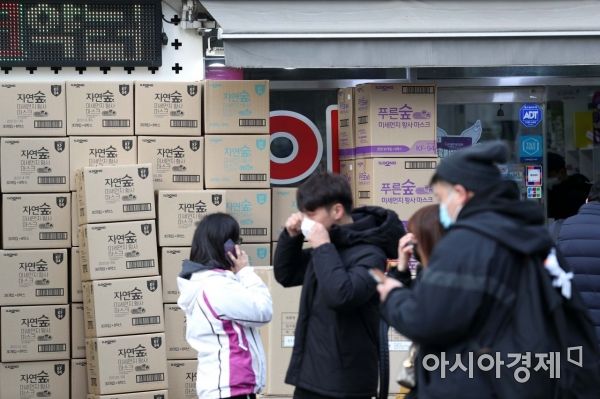 On the 29th, amid growing concerns over the spread of the novel coronavirus infection (Wuhan pneumonia), Chinese tourists are lining up to buy masks at a pharmacy on Myeongdong Street in Seoul. Photo by Moon Honam munonam@
Professor Si also said, "There are some reports of such content within China, but the evidence is at a level that can be inferred from circumstances. It is too early to confirm as there is no definite evidence of transmission."
Experts unanimously agreed that a calm response is important as quarantine systems are being strengthened and surveillance systems for domestic patients, their contacts, and symptomatic individuals are enhanced. Former director Jeon said, "It is important to block community transmission early by efforts and publicity to prevent the influx of foreign patients and by accurately identifying and monitoring contacts of confirmed infected individuals. Although anxiety may arise due to the increasing number of patients in China, voluntary reporting of symptomatic individuals and thorough monitoring of contacts should minimize anxiety."
Professor Si said, "Prematurely predicting 'everyone will die' or criticizing the government’s measures or advocating for the exclusion of Chinese people are extreme thoughts that could hinder appropriate responses by authorities. If mild patients who need proper treatment flood medical facilities, problems in manpower allocation may occur."
© The Asia Business Daily(www.asiae.co.kr). All rights reserved.


















